Uranium Resources Distribution
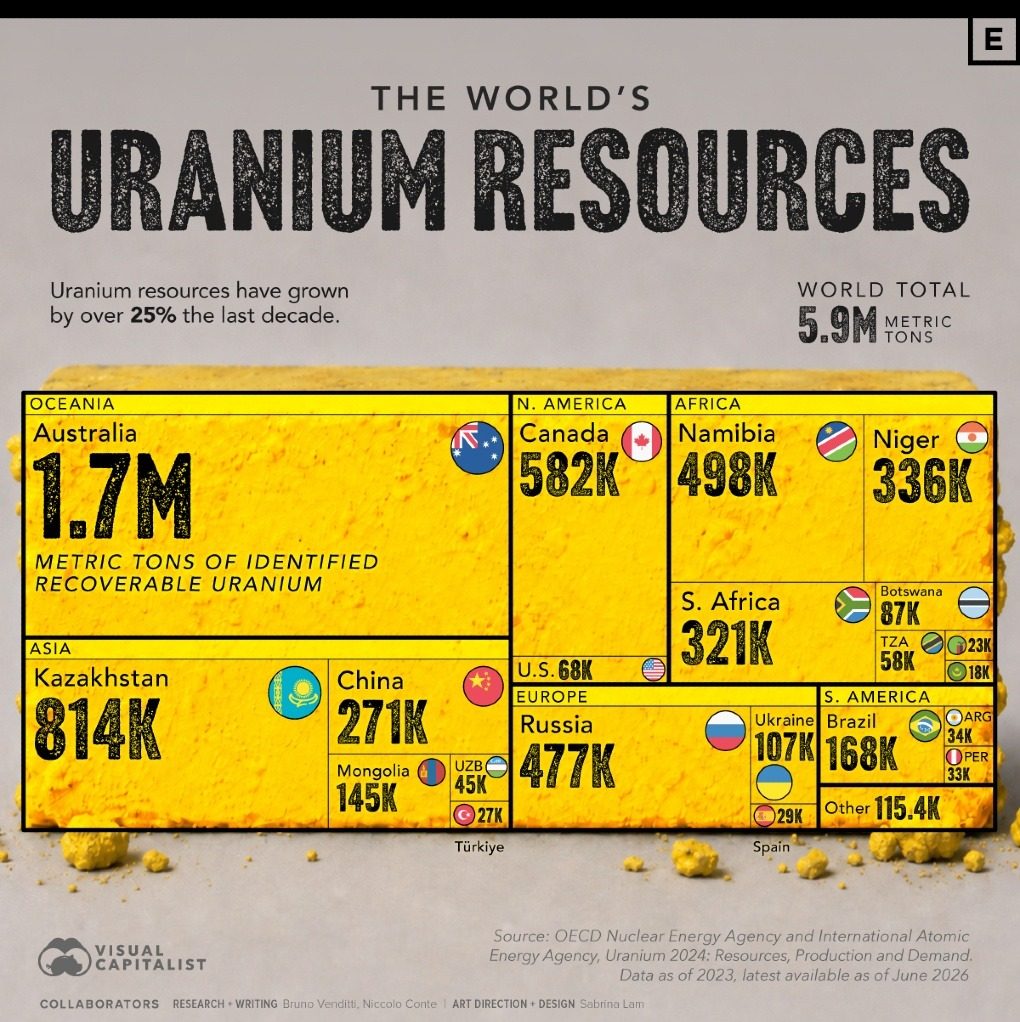
Uranium, a key fuel for nuclear power, plays a crucial role in generating low-carbon electricity. Understanding the distribution of uranium resources globally is essential for strategic planning and ensuring a stable energy supply. Australia, Kazakhstan, and Canada are the top three countries holding more than half of the world's known uranium resources, according to data from the OECD Nuclear Energy Agency and the International Atomic Energy Agency.
Why This Matters
The global distribution of uranium resources significantly influences energy policies and the viability of nuclear power as a sustainable energy source. Uranium's role in low-carbon electricity production is reinforced by its steady supply and the increasing exploration efforts that have expanded known reserves by at least 25% over the past decade.
Global Uranium Resources by Region
Oceania
Uranium resources in Oceania are dominated by Australia, which holds the largest known reserves in the world. Australia's uranium deposits amount to approximately 1.7 million metric tons, making it a critical player in the global uranium market. This significant resource allows Australia to be a key supplier to countries relying on nuclear power.
North America
Canada is another major contributor to global uranium resources, with about 582,000 metric tons identified. The United States follows with 68,000 metric tons, making North America a significant region for uranium mining and supply. Both countries are pivotal in ensuring a stable nuclear energy sector.
Africa
Africa's uranium resources are substantial, with Namibia leading the continent with 498,000 metric tons. Niger follows closely with 336,000 metric tons, making these two countries key players in Africa's uranium production. South Africa, with 321,000 metric tons, and Botswana, with 34,000 metric tons, also contribute to the continent's uranium reserves. These resources are crucial for both local energy production and exports.
Asia
Asia's uranium resources are diverse, with Kazakhstan holding the largest reserves in the region at 814,000 metric tons. China's uranium resources are estimated at 271,000 metric tons, making it a significant player in the region. Mongolia and Turkey also contribute to Asia's uranium reserves, with 45,000 and 11,000 metric tons, respectively. These resources are essential for ensuring energy security in the region.
Europe
Europe's uranium resources are primarily concentrated in Russia, which holds 477,000 metric tons. Ukraine and Spain also have notable uranium reserves, with 107,000 and 11,000 metric tons, respectively. The region's uranium resources are vital for its nuclear energy programs and contribute to the global supply.
South America
South America's uranium reserves are led by Brazil, which holds 115,400 metric tons. Argentina follows with 33,000 metric tons, contributing to the region's overall uranium production. These reserves are essential for the countries' nuclear energy programs and exports.
Practical Tips for Understanding Uranium Resources
- Stay Informed: Keep up with the latest data from the OECD Nuclear Energy Agency and the International Atomic Energy Agency to understand shifts in uranium resources and production.
- Explore Further: Dig deeper into the geopolitical implications of uranium reserves and how they impact global energy policies.
- Engage with Experts: Follow organizations like Visual Capitalist for insightful analysis and visual representations of global uranium resources.
- Monitor Trends: Pay attention to trends in uranium exploration and mining to anticipate future supply and demand dynamics.
Geo-Political Implications
The distribution of uranium resources has significant geo-political implications. Countries with large uranium reserves often have a strategic advantage in global energy markets. For example, Australia and Canada's significant reserves allow them to be major exporters, influencing global energy policies and trade relationships.
Economic Impact
Uranium mining and production contribute to the economies of countries with large reserves. These activities create jobs, stimulate local economies, and generate significant revenue through exports. The economic impact is particularly pronounced in countries like Kazakhstan and Namibia, where uranium mining is a key industry.
Environmental Considerations
Uranium mining and processing have environmental impacts that must be carefully managed. Ensuring sustainable mining practices and waste management is crucial for minimizing environmental harm. Countries with large uranium reserves must implement stringent regulations and technologies to mitigate environmental risks.
Important Takeaways
- Australia, Kazakhstan, and Canada hold more than half of the world's known uranium resources, making them critical players in the global uranium market.
- Uranium resources have grown by over 25% in the last decade, reinforcing the fuel's long-term role in powering low-carbon electricity.
- The distribution of uranium resources has significant geo-political, economic, and environmental implications.
- Understanding the global distribution of uranium resources is essential for strategic energy planning and ensuring a stable supply of nuclear fuel.
Conclusion
Uranium resources are a vital component of the global energy landscape, particularly in the context of low-carbon electricity production. The distribution of these resources, with Australia, Kazakhstan, and Canada leading the way, underscores the importance of strategic planning and sustainable mining practices. By understanding the global distribution of uranium resources, countries can better plan their energy policies and ensure a stable supply of nuclear fuel for the future.
Watch the Reel
Questions readers ask
Which countries hold the majority of the world's uranium reserves?
Australia, Kazakhstan, and Canada collectively possess over 50% of the world's known uranium reserves. These countries play a pivotal role in global uranium distribution and influence nuclear energy resources worldwide.
What is the significance of Australia's uranium reserves in the global context?
Australia holds a substantial portion of the world's uranium reserves, making it a key player in the global uranium market. The country's significant uranium resources contribute to its influence on world uranium distribution and nuclear energy resources.
How does Kazakhstan's uranium industry impact global energy policies?
Kazakhstan is a major producer and exporter of uranium, significantly influencing global energy policies. The country's uranium in Kazakhstan resources and production capabilities make it a critical factor in the supply and demand of uranium nuclear fuel.
What role does Canada play in the global uranium market?
Canada is one of the top countries in uranium reserves, contributing significantly to world uranium distribution. The country's uranium in Canada reserves and production capabilities are crucial for maintaining a stable supply of nuclear energy resources globally.
What are the current trends in uranium exploration and how do they affect the global supply?
Uranium exploration trends have been expanding known uranium reserves, which is vital for the sustainability of nuclear power. These efforts help reinforce the role of uranium in low-carbon electricity production and ensure a steady supply of uranium nuclear fuel.
How does the distribution of uranium resources influence energy policies?
The unequal distribution of uranium resources significantly impacts global energy policies. Countries with substantial uranium reserves, such as Australia, Kazakhstan, and Canada, have a strong influence on the viability and sustainability of nuclear power as a primary source of energy.
What is the impact of uranium supply and demand on nuclear power sustainability?
The balance between uranium supply and demand is crucial for the sustainability of nuclear power. Recent expansion of uranium exploration has reinforced the role of uranium in low-carbon electricity production, which helps in maintaining a stable and sufficient supply of nuclear energy resources.
Related deep dives
Similar reads based on topic and creator.

Recent articles
Fresh deep dives from the latest Reels we unpacked.




Comments
Be the first to comment.