Global Happiness Report 2024: A Deep Dive into Happiness Levels Across the Globe
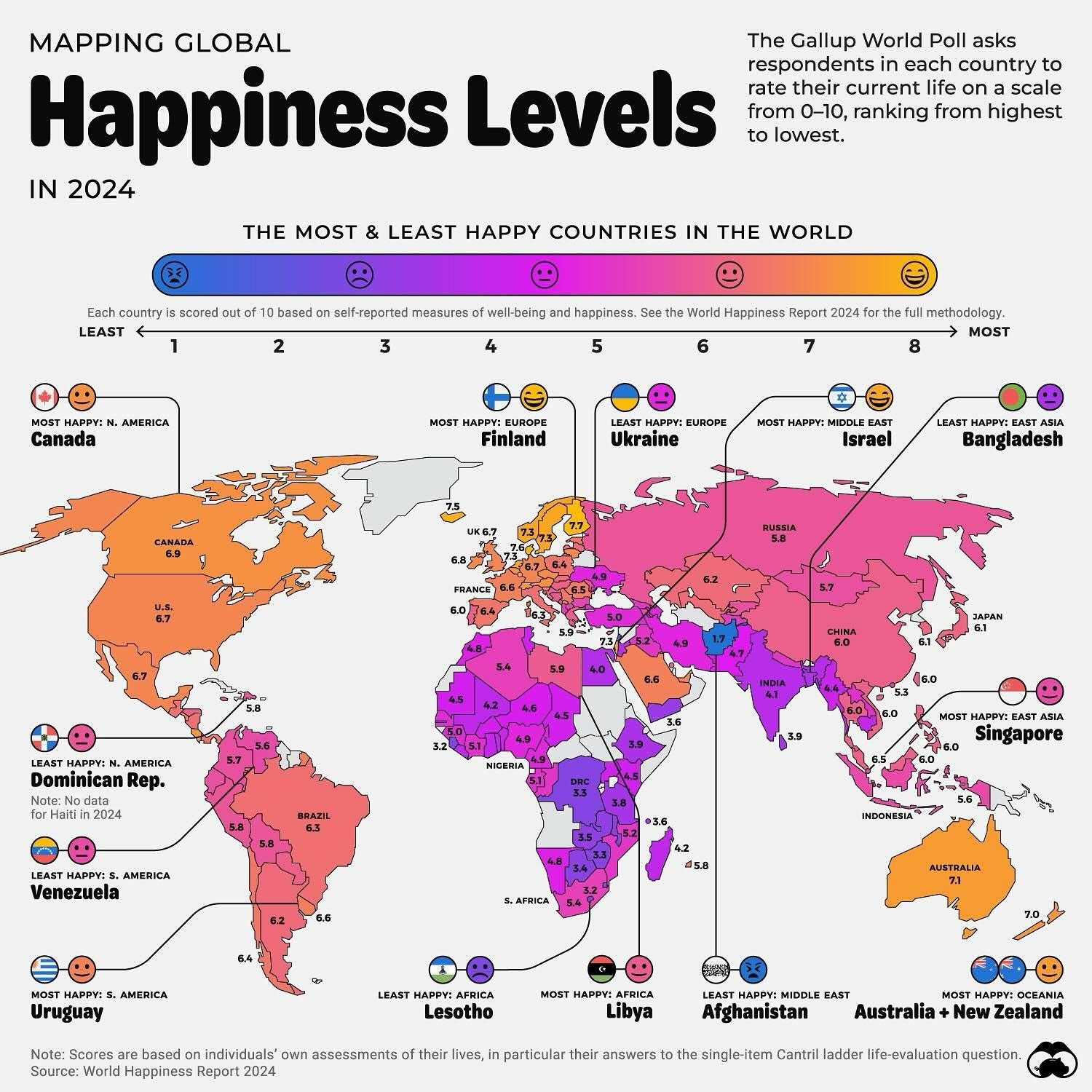
Happiness is a subjective measure, but it can also be quantified on a collective scale. The Global Happiness Report 2024 presents a fascinating look at how different countries rank in terms of happiness. This report is based on data from the Gallup World Poll, which surveys individuals to rate their current life on a scale of 0 to 10. The latest findings reveal some interesting shifts and continuities in global happiness levels.
Why This Matters
Understanding global happiness levels is more than just a curious exercise; it provides insights into the well-being of populations around the world. Happiness, as measured by the Cantril ladder life-evaluation question, reflects people's satisfaction with their lives, which can be influenced by a variety of factors including economic stability, social support, and personal freedom. By examining these trends, we can gain a deeper understanding of what contributes to a happier society and identify areas where improvements might be needed.
Main Discussion
The Top 10 Countries
Finland continues to hold the top spot as the happiest country in the world, with a score of 7.8. This Nordic nation has consistently ranked high in previous years, thanks to its strong social support systems, high-quality healthcare, and excellent work-life balance. Other countries that have maintained their positions in the top 10 include:
- Denmark
- Iceland
- Switzerland
- Netherlands
- Luxembourg
- Sweden
- Norway
- Israel
- New Zealand
New Entrants in the Top 20
While the top 10 countries have remained relatively stable, there are some new entrants in the top 20 for 2024. Countries like Estonia and Costa Rica have made significant strides, reflecting positive changes in their social and economic conditions. These new entries highlight the dynamic nature of global happiness and the potential for improvement in various regions.
Regional Highlights
North America
Canada tops the list in North America, with a happiness score of 6.9. The country's strong social safety net, diverse population, and high standards of living contribute to its high ranking. The Dominican Republic, on the other hand, is the least happy country in the region, with a score of 5.3. Economic disparities and social challenges likely play a significant role in this lower ranking.
Europe
Europe is home to several of the happiest countries in the world. Finland, Denmark, and Iceland lead the way, with their strong social support systems and high standards of living. These countries prioritize work-life balance, healthcare, and education, which contribute to higher levels of happiness among their citizens.
East Asia
Bangladesh is ranked as the least happy country in East Asia, with a score of 5.3. Challenges such as poverty, lack of access to healthcare, and political instability likely impact the overall happiness of the population. However, there are also positive stories within the region, with countries like Singapore and Taiwan making strides in improving their social and economic conditions.
Africa
Africa presents a mixed picture, with some countries showing significant progress while others face ongoing challenges. South Africa and Botswana have made notable improvements, reflecting efforts to enhance social support systems and economic opportunities. These changes highlight the potential for positive transformation in the region, despite the challenges that persist.
Practical Tips
While the Global Happiness Report provides a broad overview, it's also valuable to consider what individual countries and communities can do to enhance happiness levels.
-
Strengthen Social Support Systems: Investing in social programs that provide support for vulnerable populations can significantly improve overall happiness. This includes healthcare, education, and social welfare initiatives.
-
Promote Work-Life Balance: Encouraging a healthy work-life balance can reduce stress and improve mental well-being. This can be achieved through flexible work hours, remote work options, and supportive workplace policies.
-
Enhance Economic Opportunities: Creating a robust and inclusive economy can provide better job opportunities and reduce poverty. This includes investing in education, infrastructure, and entrepreneurship.
-
Foster Social Connections: Strong social connections and a sense of community are vital for happiness. Encouraging community engagement, volunteerism, and social activities can enhance social bonds and support networks.
-
Prioritize Mental Health: Mental health is a crucial component of overall well-being. Providing access to mental health services, reducing stigma, and promoting mental health awareness can have a significant impact on happiness levels.
Important Takeaways
The Global Happiness Report 2024 offers several important insights:
- Consistency in Top Performers: Countries like Finland, Denmark, and Iceland continue to lead the way in happiness, highlighting the effectiveness of their social and economic policies.
- Dynamic Nature of Global Happiness: The inclusion of new countries in the top 20 reflects the potential for improvement in various regions, driven by positive changes in social and economic conditions.
- Regional Variations: Different regions face unique challenges and opportunities. Understanding these regional dynamics is crucial for addressing specific issues and promoting happiness.
Conclusion
The Global Happiness Report 2024 provides a comprehensive look at happiness levels around the world, highlighting both the successes and the challenges faced by different countries. By understanding these trends, we can gain valuable insights into what contributes to a happier society and identify areas where improvements are needed. Whether through strengthening social support systems, promoting work-life balance, or fostering social connections, there are many ways to enhance happiness on a collective scale. As we move forward, it's essential to continue monitoring these trends and implementing policies that support the well-being of all individuals.
Watch the Reel
Questions readers ask
Which country ranked as the happiest in the 2024 Global Happiness Report?
Finland maintained its top position in the 2024 Global Happiness Report, continuing to rank as the happiest country in the world.
What are the key factors that influence global well-being as per the 2024 report?
The report highlights several factors that significantly influence global well-being, including economic stability, social support, and overall life satisfaction as assessed by the Gallup World Poll.
How does the Gallup World Poll contribute to the Global Happiness Report 2024?
The Gallup World Poll plays a crucial role by surveying individuals worldwide to rate their current life on a scale of 0 to 10, providing the data foundation for the report’s rankings.
What new changes are noted in the top 20 happiest countries for 2024?
The 2024 report identifies new entrants in the top 20 happiest countries, reflecting shifts in global happiness levels and changing dynamics in well-being across different nations.
Why is understanding global happiness levels important?
Understanding global happiness levels offers valuable insights into the well-being of populations, reflecting people's satisfaction with life and the broader social and economic conditions that influence happiness.
Which countries are considered the least happy in the 2024 report?
The 2024 Global Happiness Report also includes data on the least happy countries, providing a comprehensive view of global happiness levels and the factors contributing to lower well-being in certain regions.
Related deep dives
Similar reads based on topic and creator.




Recent articles
Fresh deep dives from the latest Reels we unpacked.




Comments
Be the first to comment.