Popular American Girl Names
Context / Why this matters
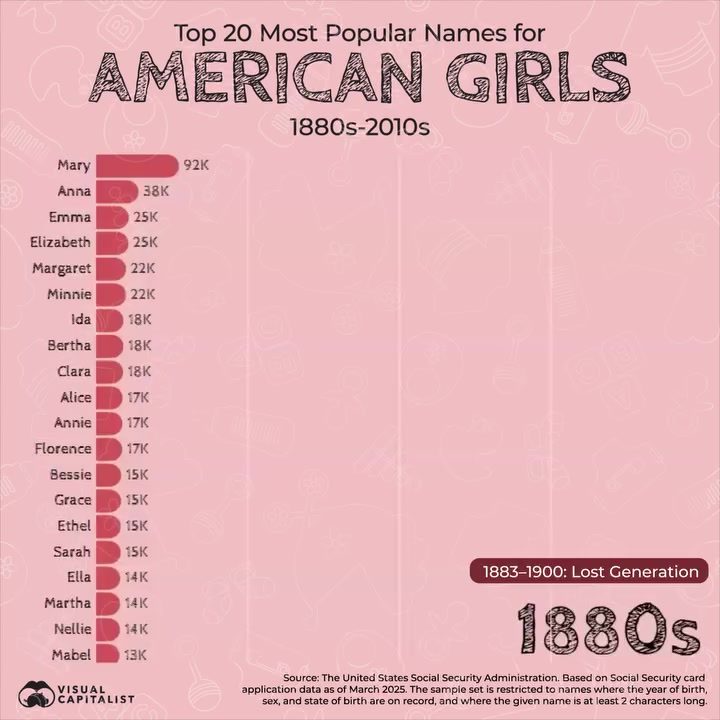
The names given to girls in the United States have evolved significantly over the past century. These trends reflect societal shifts, cultural influences, and generational changes. Understanding these trends can provide insights into the cultural and historical context of different eras, as well as how naming preferences have changed over time. Data from the United States Social Security Administration offers a comprehensive look at these trends, revealing the most popular names for girls from the 1880s to the present.
Main discussion
The Early 20th Century
In the late 19th and early 20th centuries, names like Mary, Dorothy, and Helen dominated the charts. These names were inspired by biblical and traditional influences. Mary, for example, was the most popular name for much of the 20th century, reflecting its religious and cultural significance.
- Mary was an enduring favorite, consistently topping the charts from the 1880s through the 1950s.
- Dorothy and Helen also held strong positions, reflecting the timeless appeal of these names.
Mid-20th Century
The mid-20th century saw a transition in naming trends. While traditional names like Mary, Elizabeth, and Dorothy were still popular, new names began to emerge. The Silent Generation (born 1925–1945) and the Greatest Generation (born 1901–1927) were particularly influential in shaping the naming landscape of this era. Names like Barbara, Marjorie, and Lisa gained popularity, reflecting the changing cultural norms and societal values of the time.
Late 20th Century
The latter half of the 20th century brought a wave of new names that reflected the evolving cultural landscape. Generation X (born 1965–1980) saw the rise of names like Kimberly, Karen, and Jennifer. These names were more modern and diverse, reflecting the increasing cultural diversity and individualism of the era.
- Kimberly and Karen were particularly popular, often associated with the cultural shifts of the 1970s and 1980s.
- Names like Jennifer and Grace also gained traction, reflecting a blend of traditional and modern influences.
Early 21st Century
The turn of the millennium marked a new era in naming trends. Names like Emma, Olivia, and Sophia became increasingly popular, reflecting a shift towards more global and multicultural influences. Generation Z (born 1997–2012) and Gen Alpha (born 2013–2024) have embraced names that are both modern and timeless, often chosen for their cultural diversity and financial success.
- Emma and Olivia have consistently topped the charts in recent years, reflecting their enduring appeal and global popularity.
- Sophia and Isabella are also popular, often chosen for their cultural significance and timeless charm.
Cultural and Historical Context
The evolution of girls' names in the United States reflects broader cultural and historical trends. For example, the popularity of biblical and traditional names in the early 20th century can be attributed to the strong influence of religion and cultural values of the time. As society became more diverse and individualistic, naming trends began to reflect this shift, with a greater variety of names and influences.
Practical Tips
When choosing a name for a child, it's helpful to consider the cultural and historical context of the name. Names have meaning and significance, and choosing a name that resonates with your values and heritage can be a meaningful way to honor your cultural background. Additionally, considering the popularity of the name and how it might be perceived in different contexts can be helpful in making an informed decision.
Important takeaways
Understanding the trends in girls' names over the past century provides valuable insights into the cultural and historical context of different eras. From the dominance of traditional names like Mary and Elizabeth to the rise of modern names like Emma and Olivia, naming trends reflect societal shifts, cultural influences, and generational changes. By examining these trends, we can gain a deeper understanding of how naming preferences have evolved and what drives the popularity of certain names.
Conclusion
The evolution of girls' names in the United States is a fascinating reflection of cultural and historical trends. From the dominance of traditional names in the early 20th century to the rise of modern and multicultural names in the 21st century, naming trends have evolved significantly. Understanding these trends can provide valuable insights into the cultural and historical context of different eras and help individuals make informed decisions when choosing a name for their child.
Watch the Reel
Questions readers ask
What were the most popular American girl names in the 1880s and 1900s?
In the 1880s and 1900s, traditional and biblical names were favored. Mary was the most popular, often accompanied by names like Dorothy, Helen, and Margaret. These names reflected the cultural and religious influences of the time.
How did girl names change in the mid-20th century?
The mid-20th century saw a shift towards names like Barbara, Linda, and Marjorie. This period marked a move away from traditional biblical names, influenced by Hollywood and popular culture.
Which girl names rose to popularity in the late 20th century?
From the 1970s through the 1990s, names like Jennifer, Kimberly, and Jessica became extremely popular. This trend is likely due to the influence of television, music, and other forms of entertainment on naming choices.
Why do American girl names change so much over time?
American girl names change due to a variety of factors, including cultural shifts, influential figures in media, and generational preferences. These trends often mirror the societal changes and popular influences of each era.
What data source provides the most comprehensive look at popular American girl names?
The United States Social Security Administration (SSA) offers a comprehensive dataset on popular American girl names. This data spans from the late 1800s to the present day, providing a clear picture of how naming trends have evolved.
What trends can be observed in the most popular girl names from 1880 to 1940?
From 1880 to 1940, traditional and biblical names were prevalent. Many of the names were of European origin, reflecting the heritage of the majority of the population at the time. Names like Mary, Helen, and Dorothy were consistent top choices.
How can understanding popular girl names from the past help today?
Exploring popular girl names from the past provides valuable insights into cultural and historical contexts from each period. These trends offer a glimpse into societal changes, influences, and generational shifts, making them relevant for historical research, genealogy, and cultural studies.
Related deep dives
Similar reads based on topic and creator.


Recent articles
Fresh deep dives from the latest Reels we unpacked.




Comments
Be the first to comment.