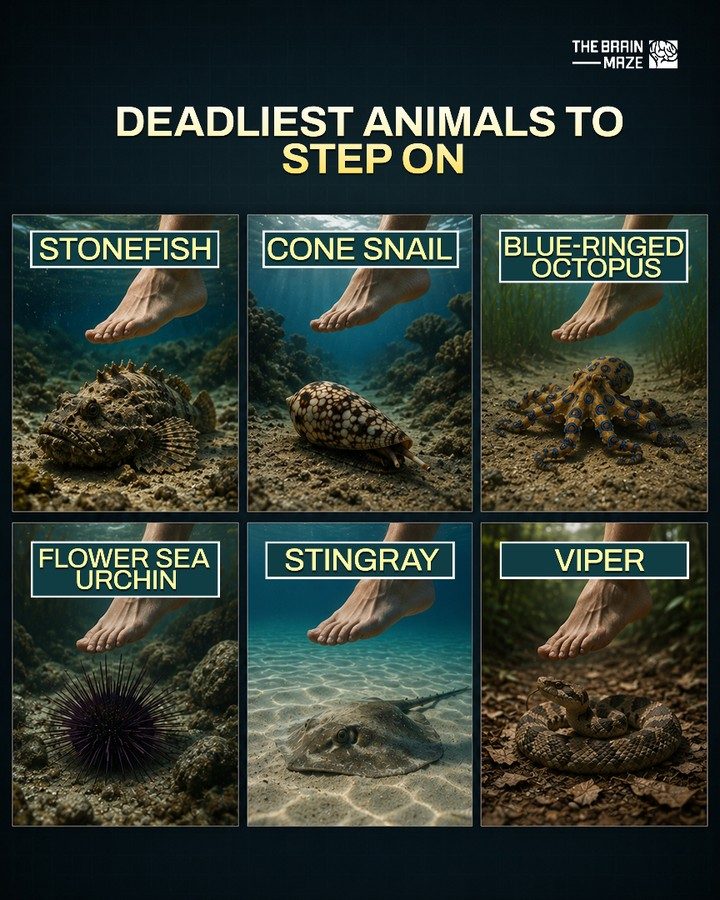
Deadliest Animals: Hidden Dangers in Sand, Rocks, and Shallow Water
Many of the world's deadliest animals can cause serious injury if you accidentally step on them. These creatures often hide in sand, rocks, forests, or shallow water, using venom or sharp spines to defend themselves. Understanding where these animals live and being cautious about where you step can significantly reduce the risk of dangerous encounters.
Context: The Importance of Awareness
Encounters with dangerous animals can occur anywhere, from tropical beaches to local forests. Knowing which animals to watch out for and where they are likely to be found is crucial for both personal safety and enjoyment of outdoor activities. Whether you're a seasoned hiker, a beachgoer, or someone who enjoys exploring nature, being informed can make a significant difference.
Main Discussion
Stonefish: Masters of Camouflage
Stonefish are venomous fish known for their exceptional camouflage abilities. They blend seamlessly with rocks and coral, making them nearly invisible to the naked eye. A step on a stonefish can result in severe pain and even fatalities if not treated promptly. Their venom is delivered through spines on their back, which inject a potent toxin into the victim.
Cone Snails: Silent Predators
Cone snails are another dangerous sea creature, often found in shallow waters. They possess a harpoon-like structure that they use to inject venom into their prey, and sometimes into unwary humans. The venom can cause paralysis and even death. Cone snails are particularly dangerous because their shells are often attractive and can be mistaken for harmless shells.
Blue-Ringed Octopuses: Beautiful but Deadly
Blue-ringed octopuses are small but highly venomous creatures. They possess a potent neurotoxin that can cause respiratory failure and death. Their distinctive blue rings serve as a warning signal, but their small size and ability to hide make them a significant threat. Encounters with these octopuses are rare but can be fatal if not treated immediately.
Flower Sea Urchins: Venomous Spines
Flower sea urchins are known for their vibrant, colorful spines, which are not only sharp but also venomous. Stepping on one of these urchins can result in severe pain and swelling. The venom can cause a range of symptoms, from mild discomfort to more serious reactions. These urchins are commonly found in shallow waters and rocky areas, making them a common hazard for beachgoers.
Stingrays: Hidden Danger
Stingrays are another common sea creature that can cause injury if stepped on. They have barbed tails that deliver a painful sting, which can be particularly dangerous if it strikes a vital area. Stingrays are often found in shallow waters and can be difficult to spot due to their camouflage. The most famous example of a stingray injury is the one that Steve Irwin, the Crocodile Hunter, suffered.
Vipers: Venomous Snakes
Vipers are a group of venomous snakes found in various parts of the world. Known for their distinctive fangs, vipers inject venom into their victims through a bite. These snakes often hide in rocks and forests. Their venom can cause severe symptoms, including swelling, tissue damage, and even death if not treated promptly. Being aware of their habitats and how to recognize them is essential for avoiding dangerous encounters.
Practical Tips
Stay Alert and Watch Where You Step
When exploring beaches, forests, or rocky areas, always stay alert and watch where you step. Avoid stepping on rocks, coral, or sand without checking first. If you're unsure, it's better to err on the side of caution and stick to clear paths or well-known safe areas.
Wear Appropriate Footwear
Wearing sturdy, closed-toe shoes can provide an extra layer of protection against accidental steps on dangerous animals. For beachgoers, water shoes can be particularly useful in shallow waters where creatures like stonefish and stingrays are known to hide.
Learn to Recognize Dangerous Animals
Familiarize yourself with the appearance and habits of dangerous animals in the areas you plan to visit. Knowing what to look for can help you avoid stepping on or disturbing these creatures.
Carry a First Aid Kit
If you plan to spend a lot of time in areas known for dangerous animals, carrying a basic first aid kit can be a lifesaver. Include items like antivenom (if available and applicable), pain relievers, and bandages. Knowing basic first aid techniques can also be crucial.
Seek Medical Attention Immediately
If you are bitten or stung by a dangerous animal, seek medical attention immediately. Even if the symptoms seem mild, it's important to get professional help as quickly as possible to ensure proper treatment and prevent complications.
Use Natural Repellents and Deterrents
Some natural repellents and deterrents can help keep dangerous animals away. For example, certain scents and substances can repel snakes and other venomous creatures. Always research and use these products as recommended.
Stay on Marked Paths
Sticking to marked paths and trails can reduce the risk of encountering dangerous animals. These paths are typically cleared of hazards and are less likely to harbor venomous creatures.
Important Takeaways
Avoiding dangerous animals requires a combination of awareness, caution, and knowledge. Always stay alert, watch where you step, and wear appropriate footwear. Learning to recognize dangerous animals and their habitats can also significantly reduce the risk of encountering them. If you do come across a dangerous animal, staying calm and seeking medical attention immediately is crucial. Carrying a basic first aid kit and knowing basic first aid techniques can also be lifesaving. By following these guidelines, you can enjoy the outdoors safely and minimize the risk of dangerous encounters.
Conclusion
Understanding the habitats and characteristics of some of the world's deadliest animals can make a significant difference in preventing dangerous encounters. By staying alert, wearing appropriate footwear, and being aware of where you step, you can enjoy outdoor activities with greater peace of mind. Whether you're exploring a tropical beach or a rocky forest, being informed and cautious is key to staying safe.
Watch the Reel
Questions readers ask
What should I do if I accidentally step on a venomous marine animal like a blue-ringed octopus?
If you suspect you've stepped on a blue-ringed octopus or similar venomous marine life, remain calm and seek immediate medical attention. Do not attempt to capture or handle the creature, as this can increase the risk of further injury. Inform others around you to avoid the area until appropriate measures are taken to ensure safety.
Which underwater animals should I be most cautious about in shallow waters?
In shallow waters, be particularly cautious of creatures like stonefish, cone snails, and stingrays. These animals often camouflage themselves in sand and rocks, making them hard to spot. Always shuffle your feet when walking in shallow water to alert these creatures to your presence and encourage them to move away.
Why is it important to be aware of hidden sea creatures in rocky areas?
Rocky areas are common habitats for dangerous sea creatures like sea urchins and scorpionfish. These animals can deliver painful stings or bites if disturbed. Be mindful of where you place your hands and feet, and always wear appropriate footwear to protect yourself from potential injuries.
How can I avoid stepping on dangerous sea creatures in sand?
To avoid stepping on dangerous sea creatures in sand, such as cone snails or stingrays, always shuffle your feet or walk carefully. This action helps to disturb the sand and alert hidden creatures to your presence, giving them a chance to move away before you step on them.
What are the signs of a venomous cone snail?
Cone snails are often found in shallow waters and can be hard to spot due to their camouflage. They have a distinctive conical shell and a harpoon-like radula, which can inject venom if you step on them. If you notice small, conical shells in the sand, avoid the area and do not handle the shells directly.
What precautions should I take when exploring sea rocks?
When exploring sea rocks, wear protective footwear and gloves to minimize the risk of injury from hidden creatures. Look closely before placing your hands or feet on any surface, as animals like sea urchins and scorpionfish often hide in these areas. If you notice any unusual shapes or objects, avoid touching them.
Are there any specific behaviors I should avoid to prevent stepping on venomous marine animals?
To minimize the risk of stepping on venomous marine animals, avoid walking barefoot in areas known to harbor these creatures. Do not disturb or handle any marine life, and always pay attention to your surroundings. If you must walk through areas with hidden dangers, shuffle your feet to alert the creatures to your presence.
Recent articles
Fresh deep dives from the latest Reels we unpacked.




Comments
Be the first to comment.