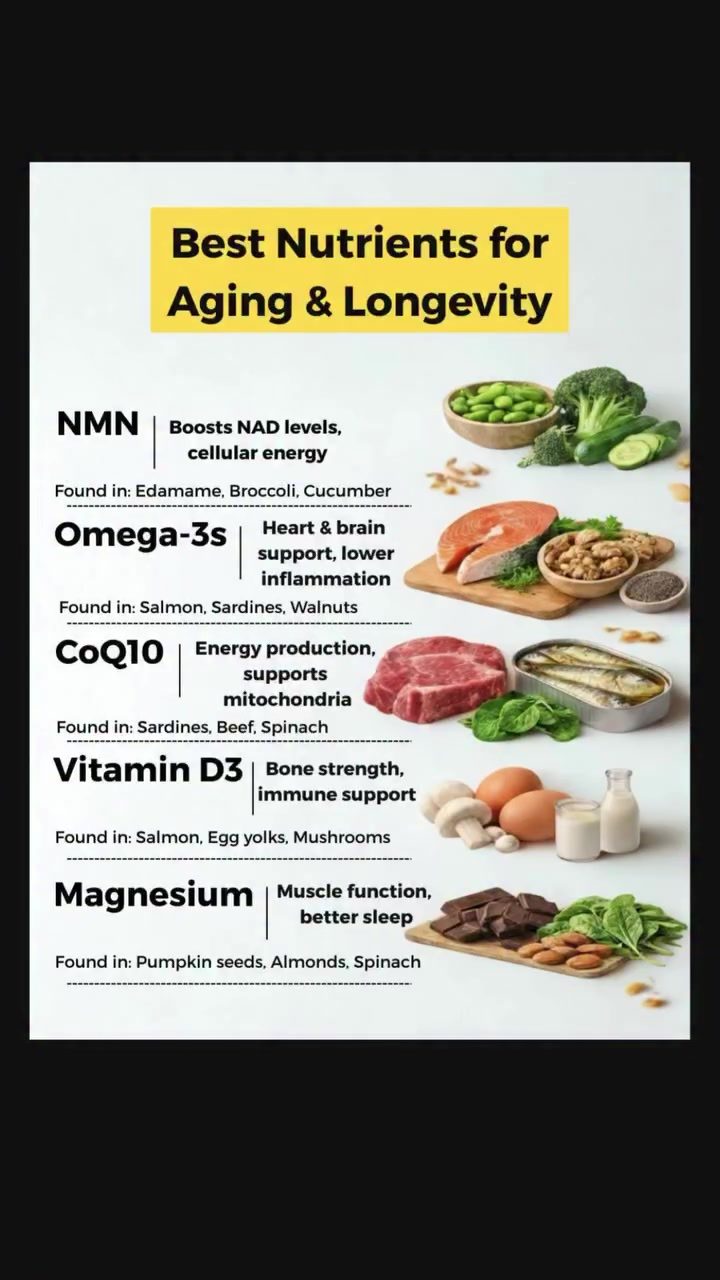
Nutrients for Aging and Longevity
Longevity is a goal for many, and a key part of that journey is maintaining optimal nutrient levels. The right nutrients support cellular function, energy production, and overall health, which are vital for healthy aging. This guide will explore five key nutrients that play a significant role in aging and longevity: NMN, Omega-3s, CoQ10, Vitamin D3, and Magnesium.
Why This Matters
Maintaining a well-balanced diet rich in essential nutrients is crucial for healthy aging. As we age, our bodies undergo various changes that can affect nutrient absorption and metabolism. Ensuring that we get the right nutrients can help mitigate some of these changes, supporting overall health and longevity.
Main Discussion
NMN: Boosting Cellular Energy
Nicotinamide mononucleotide (NMN) is a compound that plays a critical role in cellular energy production. It supports NAD-related pathways, which are essential for cellular metabolism and energy generation. NMN levels can decrease with age, making it an important nutrient to focus on for maintaining cellular health.
Food Sources:
NMN can be found in small amounts in foods like edamame, broccoli, and cucumber. While these foods provide some NMN, it's important to note that dietary intake alone may not be sufficient to meet the body's needs, especially as we age. Supplements can be a practical way to ensure adequate NMN levels.
Omega-3s: Heart and Brain Health
Omega-3 fatty acids are well-known for their role in supporting heart and brain health. They help reduce inflammation, which is a key factor in many age-related diseases. Regular consumption of omega-3s can support cardiovascular function and cognitive health, making them crucial for healthy aging.
Food Sources:
Omega-3s are found in fatty fish like salmon and sardines, as well as in plant-based sources like walnuts. Incorporating these foods into your diet can help ensure you get the necessary amounts of omega-3s. Plant-based options can be especially useful for those who do not consume fish.
CoQ10: Energy Production and Mitochondrial Support
Coenzyme Q10 (CoQ10) is essential for energy production in the body, particularly in tissues with high energy demands, such as the heart and muscles. Levels of CoQ10 can decline with age, so maintaining adequate intake is crucial for maintaining energy production and overall health.
Food Sources:
CoQ10 can be found in foods like sardines, beef, and spinach. While these foods provide some CoQ10, supplements may be necessary to achieve optimal levels, especially for those with higher energy needs or age-related declines in production.
Vitamin D3: Immune and Bone Support
Vitamin D3 is vital for bone health and immune function. It aids in calcium absorption, which is essential for maintaining strong bones. Many people are deficient in vitamin D3, especially those who spend limited time in the sun, making it important to incorporate this nutrient into the diet.
Food Sources:
Vitamin D3 is found in foods like salmon, egg yolks, and mushrooms. While these foods can provide some vitamin D3, sun exposure and supplements are often necessary to meet the body's needs, especially for those who live in areas with limited sunlight.
Magnesium: Muscle Function and Sleep
Magnesium is involved in hundreds of enzymatic reactions in the body, including muscle function, sleep quality, and stress resilience. Adequate magnesium intake is crucial for maintaining muscle health and ensuring restful sleep, which is essential for overall well-being.
Food Sources:
Magnesium can be found in foods like pumpkin seeds, almonds, and spinach. Incorporating these foods into your diet can help ensure you get the necessary amounts of magnesium, which is essential for maintaining muscle function and promoting better sleep.
Practical Tips
-
Dietary Balance: Incorporate a variety of nutrient-rich foods into your diet. Aim for a balanced diet that includes a mix of protein, healthy fats, and complex carbohydrates. This will help ensure you get a wide range of nutrients.
-
Supplementation: Consider supplementing with key nutrients like NMN, CoQ10, and vitamin D3, especially if dietary intake is insufficient. Consult with a healthcare provider before starting any new supplement regimen.
-
Regular Check-Ups: Regularly monitor your nutrient levels through blood tests. This can help identify any deficiencies and guide your dietary and supplement choices.
-
Lifestyle Changes: Maintain a healthy lifestyle that includes regular exercise, adequate sleep, and stress management. These factors can support nutrient absorption and overall health.
Important Takeaways
Maintaining optimal levels of key nutrients is essential for healthy aging and longevity. NMN, Omega-3s, CoQ10, Vitamin D3, and Magnesium play crucial roles in supporting cellular energy, heart and brain health, energy production, bone strength, and muscle function. Incorporating these nutrients into your diet and considering supplementation can help ensure you meet your body's needs as you age. Regular monitoring and lifestyle adjustments can further support overall health and longevity.
Conclusion
Nutrients like NMN, Omega-3s, CoQ10, Vitamin D3, and Magnesium are vital for maintaining cellular health, energy production, and overall well-being. By focusing on these key nutrients and incorporating them into your diet, you can support healthy aging and longevity. Prioritize a balanced diet, consider supplementation when necessary, and maintain a healthy lifestyle to optimize your nutrient intake and overall health.
Watch the Reel
Questions readers ask
What are the benefits of NMN for healthy aging?
NMN, or Nicotinamide Mononucleotide, plays a pivotal role in boosting cellular energy by enhancing the production of NAD+, a crucial coenzyme for cellular metabolism. This can help improve energy levels, support DNA repair, and promote overall cellular health, making it a key nutrient for healthy aging.
How do Omega-3s contribute to heart and brain health in older adults?
Omega-3 fatty acids, found in foods like fatty fish and walnuts, are essential for reducing inflammation, supporting heart health by lowering triglyceride levels, and maintaining brain function. Regular intake of Omega-3s can help prevent age-related cognitive decline and reduce the risk of heart disease.
Why is CoQ10 important for muscle health and longevity?
CoQ10, or Coenzyme Q10, is a powerful antioxidant that supports energy production in cells, particularly in muscle tissue. As we age, our bodies produce less CoQ10, which can lead to fatigue and muscle weakness. Supplementing with CoQ10 can help maintain muscle function, reduce inflammation, and support overall cardiovascular health, contributing to longevity.
What role does Vitamin D3 play in healthy aging?
Vitamin D3 is crucial for bone health, immune function, and muscle strength. Adequate levels of Vitamin D3 can help prevent age-related conditions like osteoporosis and muscle weakness. It also supports the immune system, which is vital for maintaining overall health and vitality as we age.
How does Magnesium support healthy aging and longevity?
Magnesium is involved in over 300 biochemical reactions in the body, including energy production, muscle and nerve function, and blood sugar control. Maintaining optimal magnesium levels can help reduce the risk of age-related conditions like heart disease, improve sleep quality, and support overall cellular health, contributing to a longer, healthier life.
What are some natural sources of these key nutrients for longevity?
To support healthy aging, incorporate foods rich in these nutrients into your diet. For example, NMN can be found in broccoli and cucumbers, Omega-3s in fatty fish and walnuts, CoQ10 in organ meats and nuts, Vitamin D3 in fatty fish and fortified dairy products, and Magnesium in leafy greens, nuts, and whole grains. Additionally, consider supplements if dietary intake is insufficient.
How can I maintain optimal cellular health as I age?
Maintaining optimal cellular health involves a balanced diet, regular exercise, and sufficient sleep. Additionally, consider supplements like NMN to boost NAD+ levels, which support cellular energy and DNA repair. Reducing inflammation through adequate intake of Omega-3s and antioxidants, and maintaining optimal levels of CoQ10, Vitamin D3, and Magnesium can also promote cellular health and overall longevity.
Recent articles
Fresh deep dives from the latest Reels we unpacked.




Comments
Be the first to comment.