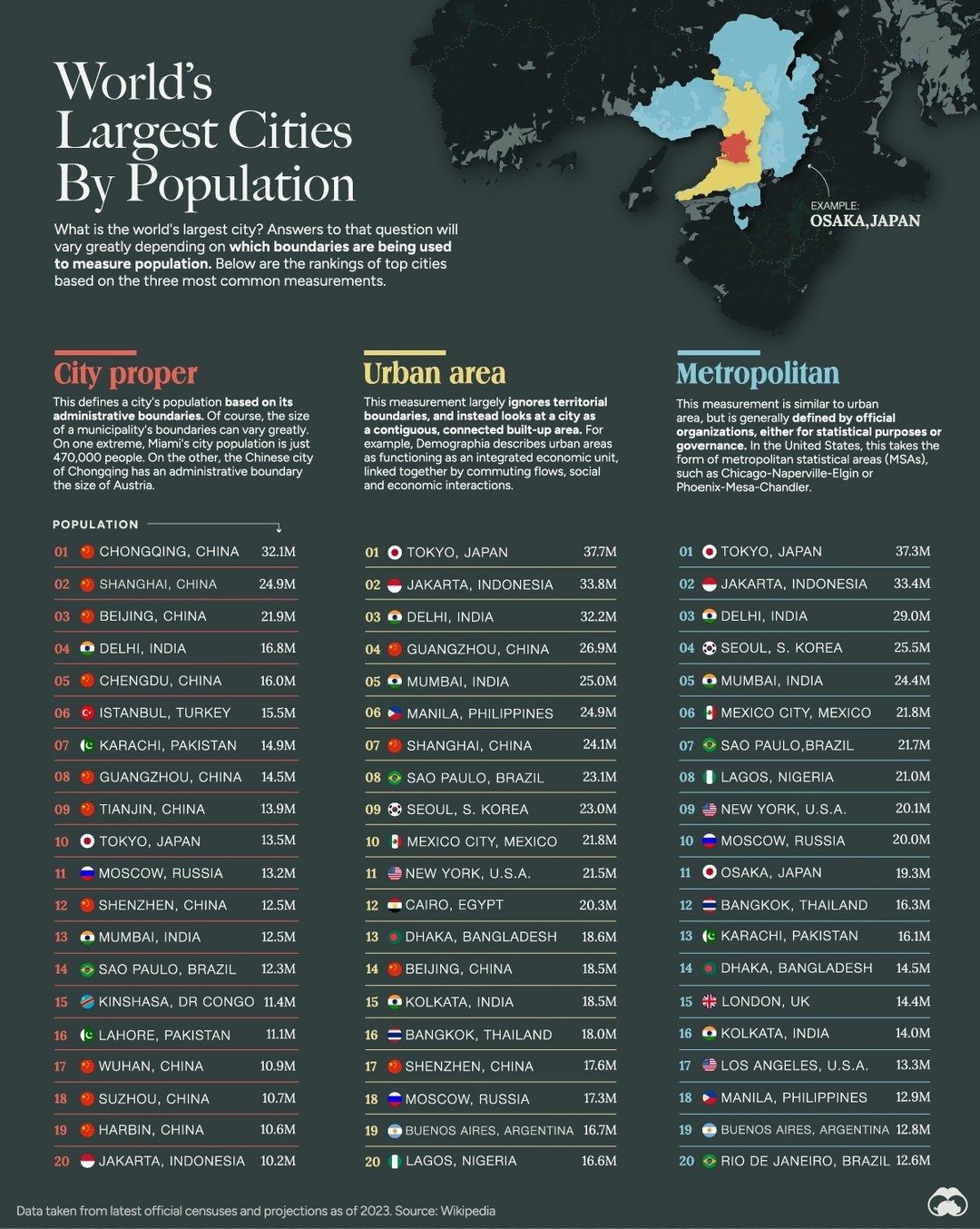
World's Largest Cities
Urbanization is reshaping the global landscape. More than 4.3 billion people, or 55% of the world’s population, now live in urban settings. Identifying the world’s largest city can be a complex task, as it heavily depends on the measurement used to define city boundaries. This complexity is evident in the differing metrics used to rank cities: city proper, urban area, and metropolitan. Let's delve into these distinctions and explore the top cities based on each metric.
Context / Why this matters
Understanding the world's largest cities provides valuable insights into urbanization trends, economic powerhouses, and population distribution. These metrics are crucial for policymakers, urban planners, and businesses looking to understand and navigate the global urban landscape.
Main discussion
City Proper
The "city proper" definition focuses on the core urban area, excluding suburban and surrounding regions. This metric often provides a more concentrated view of urban density and is useful for understanding the central urban areas. For instance, Chongqing in China tops the list with a population of 32.1 million, followed by Shanghai, Beijing, and Delhi.
Urban Area
The "urban area" metric includes the city proper and its contiguous built-up areas, offering a broader perspective of urban living. Cites like Tokyo, Jakarta, and Delhi top the list in this category, reflecting the extensive urban sprawl and continuous development around these cities.
Metropolitan
The "metropolitan" measurement encompasses the entire metropolitan area, including the urban core and its surrounding commuter belts. This metric is useful for evaluating the economic and demographic influence of a city. Tokyo, Jakarta, and Delhi consistently rank high in this category, indicating their significant economic and cultural influence.
Common Trends
Tokyo, consistently ranks high across all three metrics, highlighting its status as one of the world’s most populous and influential cities. Other cities like Delhi, Mumbai, and Mexico City also feature prominently, reflecting the rapid urbanization and growth in these regions. Notably, cities in China, India, and Indonesia are frequently represented, underscoring the significant urban development in these countries.
Practical Tips
For those interested in urban studies, demographics, or simply curious about global urbanization, here are some practical tips for navigating the data:
Understanding the Data
-
Recognize the Metrics: Familiarize yourself with the differences between city proper, urban area, and metropolitan measurements. Each provides a unique perspective on urban population and development.
-
Cross-Reference Data: Use multiple data sources and sources such as official censuses, projections, and demographic studies to cross-verify the ranked data.
-
Track Trends: Monitor how cities' rankings change over time. This can provide insights into urban growth patterns, economic trends, and socio-political dynamics.
Analyzing the Data
-
Contextual Analysis: Consider the cultural, economic, and political contexts of the cities. Factors such as government policies, infrastructure development, and economic stability significantly influence urban growth.
-
Comparative Studies: Compare cities within the same region or similar economic status to identify patterns and disparities. This comparative analysis can reveal broader trends and regional differences.
Important Takeaways
Understanding the world’s largest cities based on different metrics provides a comprehensive view of urban development and population distribution. Tokyo stands out as a consistent leader, while cities in China, India, and Indonesia highlight the significant urban growth in these regions. The metrics used to rank cities—city proper, urban area, and metropolitan—offer different perspectives on urban living and economic influence.
Conclusion
The world's largest cities are a dynamic and evolving phenomenon. By understanding the nuances of different measurement metrics, we can gain a more nuanced view of global urbanization trends. Whether focusing on the concentrated urban core, the broader urban area, or the extensive metropolitan region, each metric tells a unique story about the world's urban landscape. This knowledge is invaluable for policymakers, urban planners, and anyone interested in the future of cities.
Watch the Reel
Questions readers ask
What are the three different metrics used to rank the world's largest cities?
The three main metrics used to rank cities are city proper, urban area, and metropolitan area. City proper refers to the population within the official city limits, urban area includes the city proper and adjacent urbanized areas, and metropolitan area encompasses the city, suburbs, and surrounding regions.
Why do rankings of the world's largest cities vary?
Rankings vary due to the different metrics used to define a city's population. Depending on whether city proper, urban area, or metropolitan area is considered, the size of the population can change significantly, leading to differences in rankings.
What is the significance of identifying the world's largest cities?
Identifying the largest cities offers insights into global urbanization trends, economic power, and population distribution. This information is vital for policymakers, urban planners, and businesses to make informed decisions and strategies.
Which metric is typically the largest when considering a city's population?
The metropolitan area metric typically yields the largest population figure. This is because it includes the city proper, suburbs, and surrounding regions, providing a comprehensive view of the total population in the area.
How has urbanization impacted global population distribution?
Urbanization has significantly reshaped global population distribution. More than 55% of the world's population now resides in urban settings, with over 4.3 billion people living in cities, highlighting the shift towards urban living.
Why is it important to understand the distinctions between city proper, urban area, and metropolitan area?
Understanding these distinctions is crucial for accurate comparisons and informed decision-making. Each metric provides a different perspective on a city's size and influence, affecting how we interpret urban growth and economic power.
Related deep dives
Similar reads based on topic and creator.




Recent articles
Fresh deep dives from the latest Reels we unpacked.




Comments
Be the first to comment.