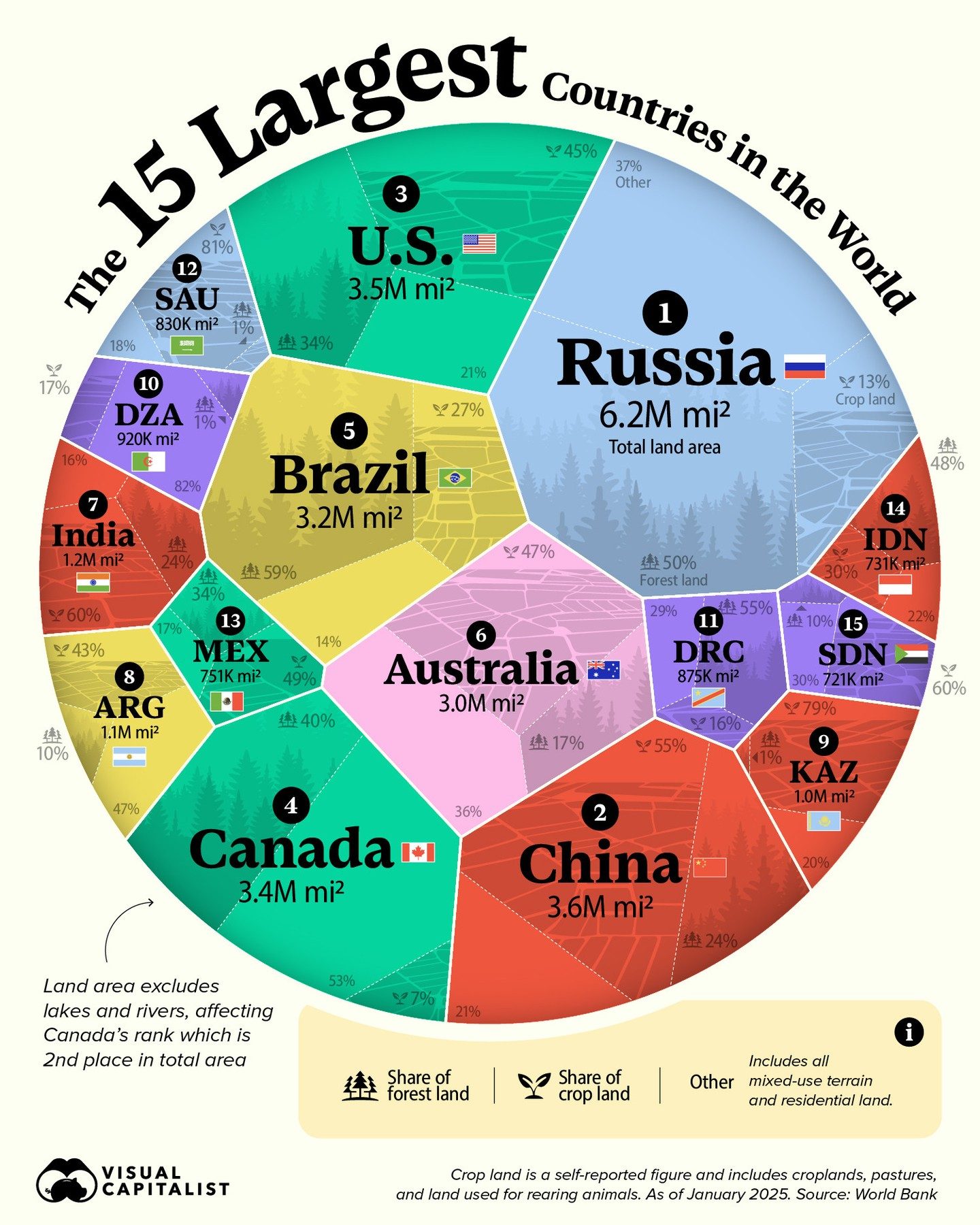
The 15 Largest Countries by Land Area
Land area is a compelling metric for understanding the geographical and environmental facets of a country. It provides insights into the available resources, agricultural potential, and ecological diversity. Recently, an analysis of the latest World Bank data (January 2025) revealed the 15 largest countries by land area, excluding lakes and rivers.
Why This Matters
Measuring land area offers a clear picture of a country's expansiveness and the distribution of its natural resources. This data is invaluable for various sectors, including agriculture, forestry, and urban planning. By understanding the land distribution, countries can better manage their resources, plan for sustainable development, and protect their natural habitats.
The Top Countries by Land Area
Russia: The World's Largest Country
Russia tops the list with a staggering 6.2 million square miles. This vast expanse encompasses a diverse range of landscapes, from dense forests to expansive tundras. Russia's extensive land area plays a crucial role in its agricultural and forestry sectors, making it a global leader in both.
Canada: The Second Largest
Canada follows closely with 3.4 million square miles. Its land area is characterized by a mix of forest land, crop land, and other types. Canada's immense forests not only contribute to its economy but also serve as a significant carbon sink, mitigating climate change impacts.
China: The Third Largest
China ranks third with 3.6 million square miles. The country’s land area is strategically important, given its role in global agriculture and urban development. China's vast land area supports a significant portion of the world's agricultural production and is crucial for its economic growth.
United States: The Fourth Largest
The United States comes in fourth with 3.5 million square miles. The U.S. is known for its diverse landscapes, from expansive farmlands to towering mountains. Its land area supports a wide range of industries, making it a prominent player in global agriculture and forestry.
Brazil: The Fifth Largest
Brazil holds the fifth spot with 3.2 million square miles. This South American giant is renowned for its lush rainforests and rich agricultural lands. The Amazon rainforest, a significant portion of Brazil's land area, is a critical ecological hotspot, housing a vast array of plant and animal species.
Other Notable Countries
Following these giants are several other countries with substantial land areas:
- Australia: Ranked sixth with approximately 2.97 million square miles, Australia is known for its vast outback and diverse ecosystems.
- India: With 1.27 million square miles, India is a significant player in global agriculture and has dense forest areas.
- Argentina: Ranked eighth with 1.1 million square miles, Argentina’s fertile lands support extensive agricultural activities.
- Algeria: With 919,000 square miles, Algeria's arid and semi-arid regions contrast with its vast desert landscapes.
Detailed Breakdown of Land Use
The infographic highlights not just the total land area but also the breakdown of land use types—forest land, crop land, and other land types. This detailed analysis is crucial for understanding the ecological and agricultural potential of each country.
Forest Land
Forest land is a critical component of a country's land area, influencing climate, biodiversity, and water cycles. Countries like Canada and Brazil have extensive forest areas, making them key players in global ecological sustainability.
Crop Land
Crop land is essential for agricultural production. Countries with vast crop lands, such as the United States and China, play a significant role in global food security and agricultural exports. Understanding the distribution of crop land helps in planning for future agricultural needs and sustainability.
Other Land Types
Other land types, including urban areas, grasslands, and deserts, contribute to the overall land use and resource management of a country. These areas are crucial for various sectors, from urban development to conservation efforts.
Practical Tips for Understanding Land Area Data
Utilize Comprehensive Data Sources
Leverage data from reliable sources like the World Bank for accurate and up-to-date information on land areas and land use types. This ensures that your analysis is grounded in credible data.
Consider Environmental Factors
When analyzing land area, consider the environmental impact of land use. Factors like deforestation, urbanization, and agricultural practices significantly affect the ecological balance and resource management of a country.
Analyze Regional Variations
Land use and area distribution can vary significantly within a country. Conducting regional analyses can provide deeper insights into how different areas contribute to the overall land use and resource management.
Important Takeaways
Understanding the land area and distribution of the world's largest countries provides valuable insights into their ecological, agricultural, and economic potential. By analyzing the data from the latest World Bank report, we can gain a clearer picture of how these countries manage their resources and contribute to global sustainability.
Russia
Russia's vast land area and diverse landscapes make it a global leader in forestry and agriculture.
Canada
Canada's extensive forests play a crucial role in its ecological and economic development.
China
China's strategic land use supports its agricultural and urban development goals.
United States
The U.S. diverse landscapes support a wide range of industries, making it a prominent player in global agriculture and forestry.
Brazil
Brazil's Amazon rainforest is a critical ecological hotspot, influencing global biodiversity and climate.
Other Notable Countries
Countries like Australia, India, Argentina, and Algeria each have unique land use challenges and opportunities that contribute to their global significance.
Conclusion
The 15 largest countries by land area offer a glimpse into the diverse and expansive landscapes that define our world. By understanding their land use and resource management strategies, we can appreciate the complexities and challenges of ecological and agricultural sustainability. This analysis underscores the importance of land area data in shaping our global perspective on resource management and sustainability.
Watch the Reel
Questions readers ask
What is the significance of ranking countries by land area?
Ranking countries by land area provides a straightforward way to understand each country's geographical footprint. This metric helps identify the distribution of natural resources, agricultural potential, and ecological diversity. It also assists in planning for sustainable development and managing resources effectively.
How does the land area of Russia compare to other large countries?
Russia is the largest country by land area, spanning over 17.1 million square kilometers. This is significantly larger than the second-largest country, Canada, which has a land area of approximately 9.985 million square kilometers.
Which countries round out the top five largest countries by total land area?
Following Russia and Canada, the next three largest countries by land area are China, the United States, and Brazil. China has a land area of about 9.597 million square kilometers, the United States has a land area of approximately 9.373 million square kilometers, and Brazil has a land area of around 8.516 million square kilometers.
Are there any notable changes in the ranking of the world's largest countries over time?
While the top five countries by land area have remained relatively stable, there can be slight variations in the ranking of countries further down the list due to updates in measurement techniques or border changes. Regular updates from sources like the World Bank provide the most current data.
How does the land area of a country impact its economy and environment?
The land area of a country significantly influences its economy by determining the availability of resources and agricultural potential. Environmentally, a larger land area often means a greater diversity of ecosystems, which can support a wide range of flora and fauna. However, it also presents challenges in terms of managing and protecting these vast landscapes.
Why are the world's largest countries by area important for resource management?
The vast landscapes of the world's largest countries often contain a wealth of natural resources. Understanding the geographical footprint of these countries helps in assessing the distribution of resources, planning for their sustainable use, and implementing effective conservation strategies for the numerous ecosystems they support.
What are some of the challenges faced by the greatest countries by area?
The greatest countries by area face unique challenges, including managing vast and often remote territories, ensuring equitable distribution of resources, and protecting diverse ecosystems. Additionally, these countries must balance the needs of urban development with the preservation of natural habitats.
Related deep dives
Similar reads based on topic and creator.



Recent articles
Fresh deep dives from the latest Reels we unpacked.




Comments
Be the first to comment.