U.S. Military Personnel Deployment
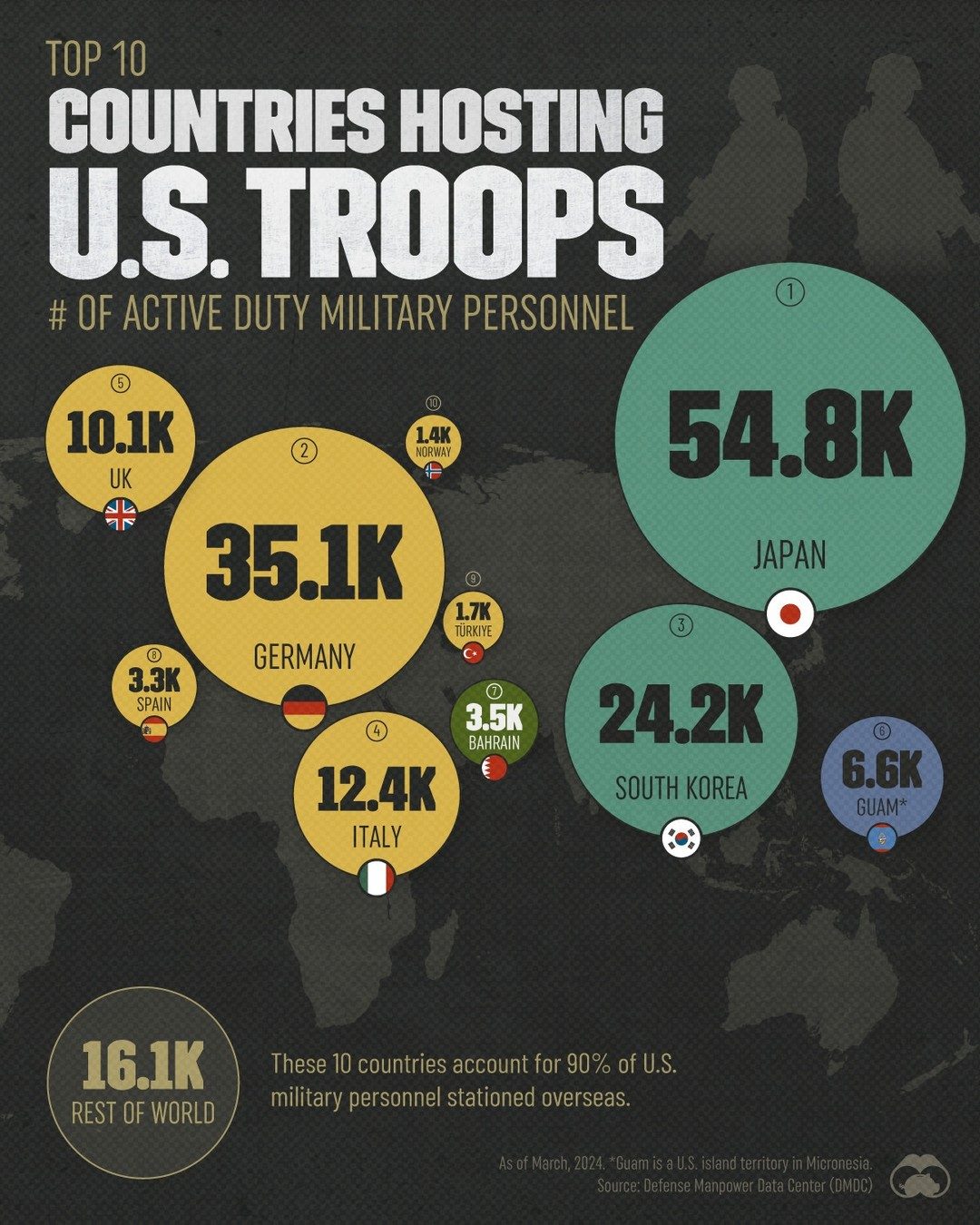
The deployment of U.S. military personnel overseas is a critical aspect of American foreign policy, with Japan and Germany hosting the largest contingents. These deployments are a legacy of World War II and have evolved to support various strategic interests. According to the Defense Manpower Data Center (DMDC), over 50% of active-duty American troops stationed abroad are in these two countries. Here, we explore the top 10 countries hosting U.S. troops, the strategic significance of these deployments, and the current numbers as of March 2024.
Why This Matters
Understanding where U.S. military personnel are stationed globally is crucial for grasping the strategic priorities and geopolitical considerations of the United States. These deployments are not only a result of historical alliances but also reflect ongoing security challenges and international commitments. The presence of U.S. troops in various countries helps maintain regional stability, supports allies, and ensures the protection of American interests worldwide.
Main Discussion
Historical Context
The stationing of U.S. troops in Japan and Germany dates back to the aftermath of World War II. Following the surrender of the Axis powers, the U.S. established military bases in these countries to maintain its influence and ensure the stability of the region. Over time, these deployments have become integral to the broader strategy of containing potential threats and supporting key allies. Japan, in particular, has been a critical ally in the Asia-Pacific region, while Germany has been a cornerstone of European security.
Strategic Importance of Deployments
Japan
With 54,800 active-duty personnel, Japan hosts the largest number of U.S. troops overseas. This substantial presence is driven by several factors:
- Regional Stability: The U.S. military presence in Japan helps maintain stability in the Asia-Pacific region, which is crucial given the ongoing tensions with North Korea and China's growing military capabilities.
- Mutual Defense Treaty: The U.S.-Japan Security Alliance, formalized through the Treaty of Mutual Cooperation and Security, ensures that both countries support each other's defense needs.
- Economic Interests: Japan is a key economic partner for the U.S., and maintaining a strong military presence helps protect shared economic interests.
Germany
Germany is the second-largest host of U.S. troops with 35,100 personnel. The strategic importance of this deployment includes:
- NATO Commitments: Germany is a key member of NATO, and the U.S. military presence supports the alliance's collective defense strategy.
- European Security: The presence of U.S. troops helps deter potential threats from Russia and ensures the stability of Europe.
- Historical Significance: Post-World War II, the U.S. military presence in Germany has played a crucial role in rebuilding the country and fostering democracy.
Other Key Deployments
Beyond Japan and Germany, several other countries host significant numbers of U.S. troops:
- South Korea: With 24,200 personnel, South Korea is another critical ally in the Asia-Pacific region, facing ongoing tensions with North Korea.
- Italy: Hosting 12,400 troops, Italy is strategically important for operations in the Mediterranean and Middle East.
- United Kingdom, Spain, Bahrain, and Guam: These countries collectively host a smaller but still significant number of U.S. personnel, totaling 23,600. Their deployments support various regional operations and strategic interests.
Practical Tips
For those interested in understanding more about U.S. military deployments, consider the following:
- Follow Defense News: Stay updated with news from sources like the Defense Manpower Data Center (DMDC) and the Defense Visual Information Distribution Service (DVIDS) for the latest figures and strategic analyses.
- Explore Military Bases: Many military bases offer guided tours and historical exhibits, providing firsthand insights into the operations and history of U.S. deployments.
- Engage in Public Discourse: Participate in forums and discussions on military strategy and foreign policy to gain various perspectives on the importance of these deployments.
Important Takeaways
- Over 50% of active-duty U.S. military personnel stationed abroad are in Japan and Germany, reflecting historical and strategic alliances.
- The top 10 countries hosting U.S. troops account for 90% of all overseas deployments, highlighting their critical role in U.S. foreign policy.
- These deployments are essential for regional stability, supporting allies, and protecting American interests worldwide.
Conclusion
The deployment of U.S. military personnel overseas is a complex and multifaceted issue, deeply rooted in historical alliances and contemporary security challenges. By understanding where and why these troops are stationed, we gain insight into the strategic priorities and foreign policy objectives of the United States. Whether in Japan, Germany, South Korea, or other key locations, these deployments play a vital role in maintaining global security and stability.
Watch the Reel
Questions readers ask
Which countries host the most U.S. military personnel outside the United States?
Japan and Germany host the most U.S. military personnel, with over 50% of active-duty American troops stationed abroad located in these two countries. This significant presence is a result of historical ties and strategic interests in the Asia-Pacific and European regions.
What is the strategic significance of U.S. military bases in Japan and Germany?
U.S. military bases in Japan and Germany serve as critical hubs for maintaining regional stability, supporting key allies, and protecting American interests in the Asia-Pacific and European regions. These bases allow for rapid response to potential threats and facilitate joint military exercises and operations with host nations.
How many U.S. military personnel are stationed abroad as of March 2024?
As of March 2024, the exact number of U.S. military personnel stationed abroad can vary, but reliable sources like the Defense Manpower Data Center (DMDC) provide regular updates. For the most current figures, it's best to consult official U.S. Department of Defense reports or the DMDC website.
What are the top countries hosting U.S. military personnel besides Japan and Germany?
Besides Japan and Germany, other top countries hosting significant numbers of U.S. military personnel include South Korea, Italy, the United Kingdom, and Bahrain. These countries play a crucial role in U.S. defense strategy, providing bases for military operations, training, and logistical support.
Why are U.S. military bases in Asia and Europe so prominent?
U.S. military bases in Asia and Europe are prominent due to historical alliances and strategic interests. In Asia, bases support stability in the Pacific region and counterbalance potential threats. In Europe, they support NATO allies and contribute to European security, reflecting the U.S. commitment to these regions.
How do these deployments align with U.S. defense strategy?
The deployments align with U.S. defense strategy by ensuring forward presence, deterring potential adversaries, and enabling rapid response to crises. These bases also facilitate joint military exercises with host nations, enhancing interoperability and strengthening alliances.
What are the primary roles of U.S. military personnel stationed overseas?
The primary roles of U.S. military personnel stationed overseas include maintaining regional security, supporting allies through joint exercises and training, and protecting American interests. They also provide humanitarian assistance and disaster relief, contributing to global stability and security.
Related deep dives
Similar reads based on topic and creator.


Recent articles
Fresh deep dives from the latest Reels we unpacked.




Comments
Be the first to comment.