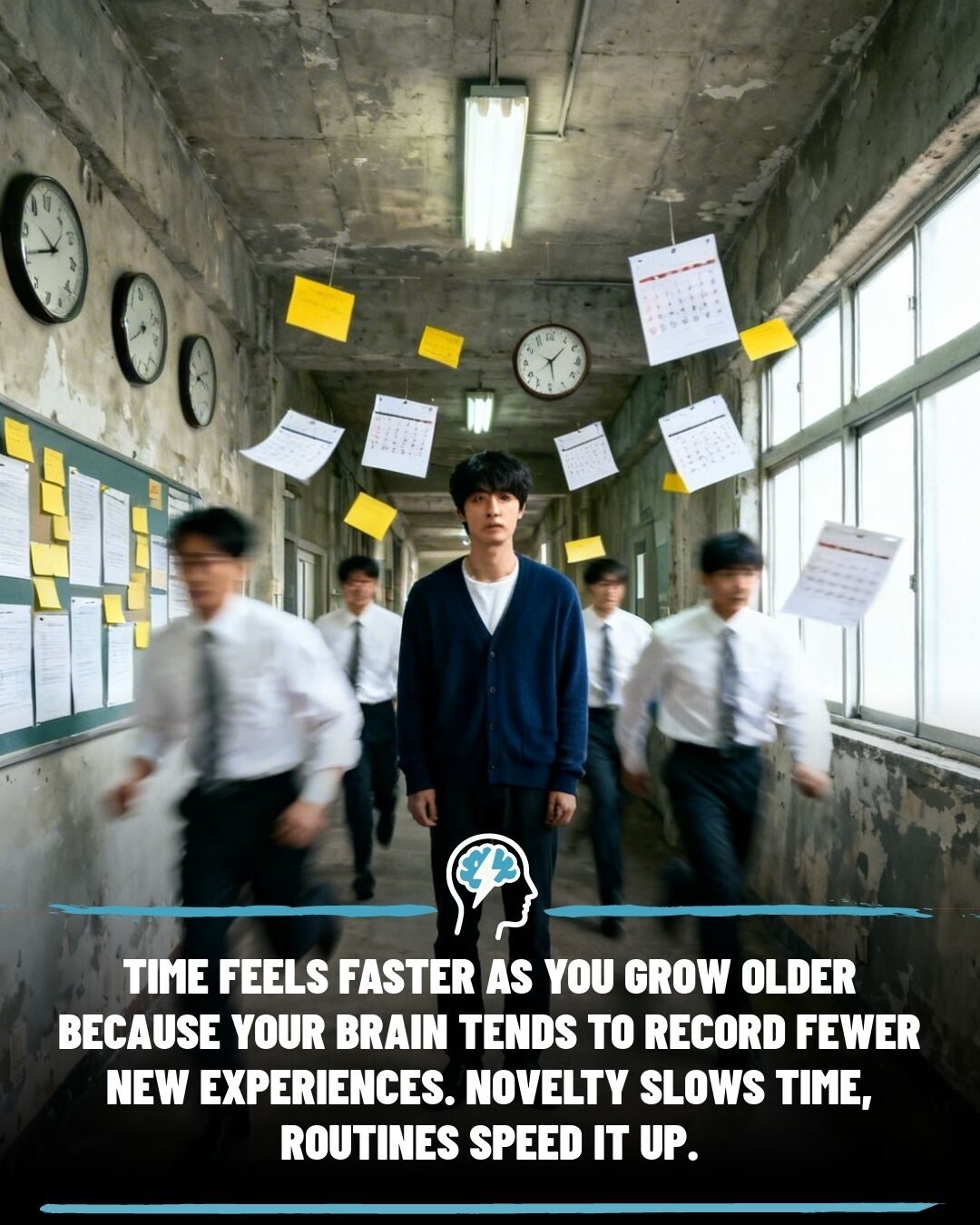
Time Perception and Aging
Have you ever wondered why childhood summers seemed to last forever, while now entire years can feel like they vanish in an instant? This phenomenon is not just a trick of nostalgia; it's deeply rooted in how our brains process novelty and routine.
Context / Why this Matters
Understanding why time feels like it speeds up as we age can help us make more of our days. By delving into the neuroscientific explanations behind this perception, we can uncover practical ways to make our lives feel richer and more expansive.
The Science Behind Time Perception
Our brains are incredibly efficient machines, constantly seeking ways to optimize our experiences. This efficiency, however, can sometimes make time feel like it's slipping away. Here’s a closer look at the mechanisms involved:
Novelty vs. Routine
Novelty and routine play a crucial role in how our brains perceive time. When we experience something new, our brains activate the prefrontal cortex and hippocampus, creating richer, more detailed memories. These memories act as distinct markers in our mental timeline, making time feel slower and more expansive.
In contrast, routines are processed in the basal ganglia, the part of the brain responsible for automatic behaviors. This means that when we do the same things day after day, our brains compress those experiences, resulting in fewer distinct memories. Fewer mental markers to look back on make weeks and months feel like they blur together, causing time to feel like it's speeding up.
Aging and Memory
As we age, our brains tend to log fewer distinct "events" during the same time period. A recent study found that older adults' brains shifted to new activity states less frequently, with those states lasting longer than in younger participants. This reduction in novelty and the corresponding decrease in distinct memories contribute to the feeling that time is passing faster.
Practical Tips to Slow Down Time Perception
If you feel like time is slipping away, there are ways to counteract this effect and make your days feel more expansive. Here are some practical tips:
Engage in Novel Experiences
Novelty doesn't have to mean drastic changes or constant stimulation. Small doses of newness can create the distinct temporal markers that make time feel slower. Try taking a different route to work, exploring a new hobby, or trying a new recipe. These small changes can have a significant impact on how you experience time.
Learn New Skills
Learning a new skill, whether it's a language, a musical instrument, or a craft, can activate different parts of your brain and create more detailed memories. This not only enriches your life but also makes time feel more expansive in retrospect. Studies show that learning new things can enhance recall for other events throughout your day, making the overall experience more memorable.
Travel and Explore
Traveling to new places is one of the best ways to introduce novelty into your life. Exploring new cultures, landscapes, and experiences can create a wealth of rich memories that slow down your perception of time. Even day trips to nearby towns or cities can provide a refreshing change of pace and a new perspective on life.
Change Your Routines
Routines are necessary for efficiency, but they can also make time feel like it's slipping away. Try breaking up your daily routines by changing small things, like your breakfast menu or your evening activities. These subtle changes can create new memories and make your days feel more distinct.
Practice Mindfulness
Mindfulness practices, such as meditation and yoga, can help you stay present and engaged in the current moment. By focusing on the here and now, you can create more vivid memories and make time feel slower. These practices also help reduce stress and improve overall well-being, which can contribute to a more fulfilling life.
Important Takeaways
The feeling that time is speeding up as we age is a common experience, but it's not inevitable. By understanding the mechanisms behind our perception of time, we can take proactive steps to make our lives feel more expansive and fulfilling. Here are some key takeaways:
- Novelty Slows Down Time: Engaging in new experiences activates different parts of the brain, creating rich memories that slow down your perception of time.
- Routines Speed Up Time: Doing the same things day after day can compress experiences, making time feel like it's passing faster.
- Small Changes Matter: Even small doses of novelty, like trying a new recipe or taking a different route, can make a big difference in how you perceive time.
- Learning Keeps You Sharp: Learning new skills and engaging in novel activities can enhance recall and make time feel more expansive.
- Travel and Explore: Traveling to new places is an excellent way to introduce novelty and create rich, lasting memories.
Conclusion
Our brains are remarkable machines, constantly seeking ways to optimize our experiences. Understanding how our brains process novelty and routine can help us make more of our days and live more fulfilling lives. By introducing small doses of novelty and engaging in new experiences, we can counteract the feeling that time is slipping away and make our lives feel richer and more expansive.
Watch the Reel
Questions readers ask
Why does time feel like it's moving faster as we get older?
As we age, our brains become more efficient at processing familiar information, leading to fewer novel experiences. This increased efficiency means that our brains don't need as much time to process routines, which makes time feel like it's moving faster.
How does novelty affect our perception of time?
Novel experiences require more attention and cognitive processing, making them feel longer and more memorable. This is why childhood, filled with new experiences, feels like it moves more slowly compared to adult life, which is often filled with routines.
What role does the brain play in the perception of time?
The brain's prefrontal cortex and basal ganglia are involved in time perception. The prefrontal cortex helps us focus and engage with experiences, while the basal ganglia help in predicting and timing events. Changes in these regions can alter how quickly or slowly we perceive time passing.
Can adjusting our mindset help time feel slower?
Yes, intentionally seeking out novel experiences and engaging more deeply with everyday activities can help make time feel slower. This is because new and engaging experiences require more cognitive processing, making time feel more expansive and memorable.
Why do childhood summers feel like they last forever?
During childhood, our brains are constantly exposed to new and novel experiences. This high level of novelty requires more cognitive processing, making time feel slower. Additionally, childhood memories are often more vivid and emotionally charged, which can make past experiences feel more prolonged.
How can understanding the neuroscience of time perception benefit us?
By understanding how the brain processes time, we can make more informed decisions about how to structure our days and pursue enjoyable activities. This insight can help us appreciate the present moment and make the most of our time, ultimately enriching our lives.
What happens in the brain when time feels like it's speeding up with age?
As we age, our brains become more efficient at processing familiar routines, which means we need less time to complete tasks. This increased efficiency can make it feel like time is passing more quickly. Additionally, a decrease in novel experiences can contribute to this perception, as routine tasks require less cognitive processing.
Related deep dives
Similar reads based on topic and creator.




Recent articles
Fresh deep dives from the latest Reels we unpacked.



Comments
Be the first to comment.