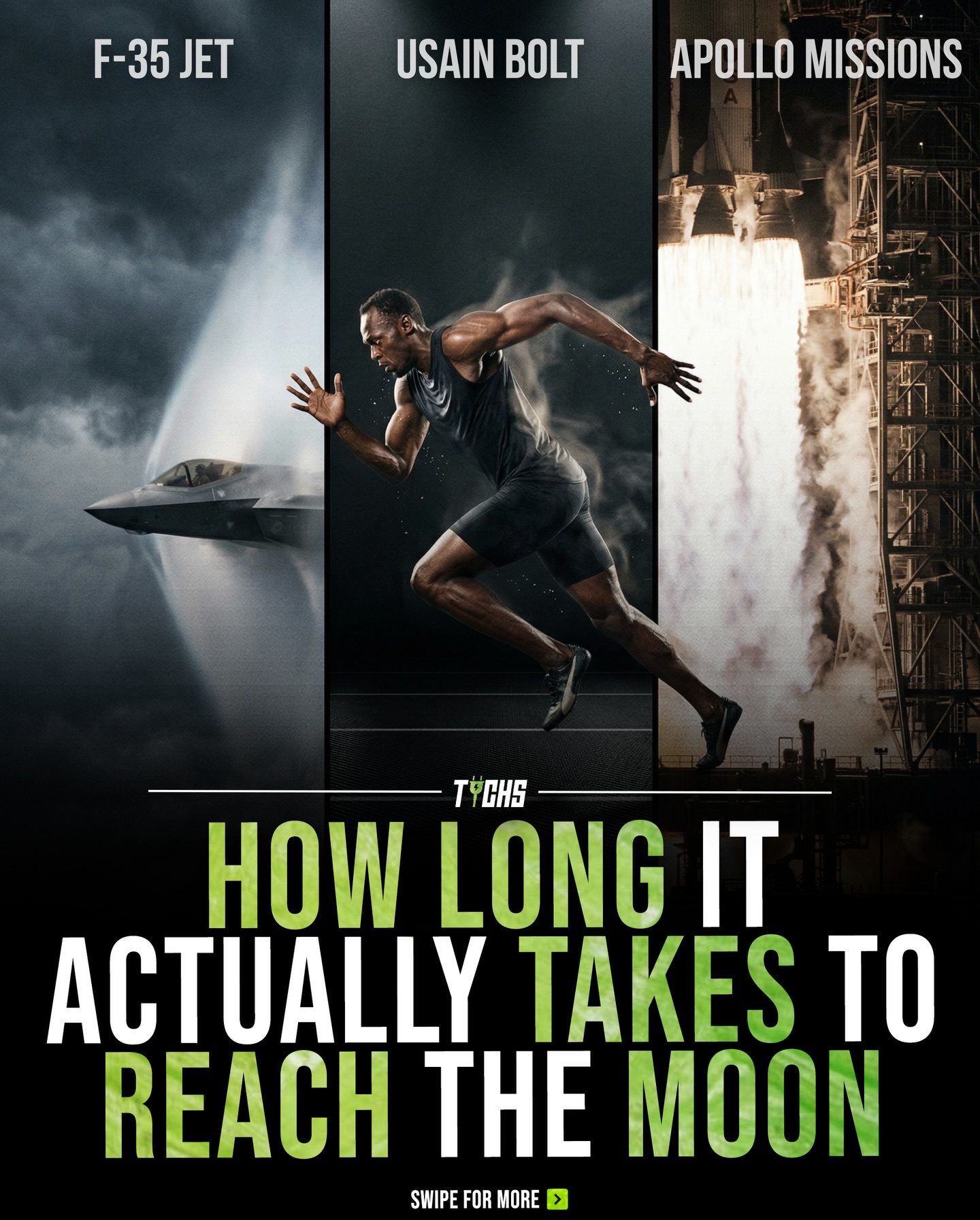
Reaching the Moon: From Seconds to Years
The time it takes to reach the moon can vary dramatically depending on the mode of transportation. Hypothetical comparisons provide a fascinating perspective on how different travel methods would perform over this vast distance. Let's explore these journeys, from the speed of light to the endurance of elite athletes.
Context / Why this matters
Understanding the time it takes to reach the moon using different modes of transportation highlights the incredible advancements in space travel and the limitations of conventional methods. This comparison offers a unique perspective on the challenges and achievements in space exploration.
Main Discussion
The Speed of Light
Light travels incredibly fast, reaching the moon in just about 1.3 seconds. This speed is a benchmark for the swiftest possible journey, showcasing the vast distance between Earth and the moon. While no human or vehicle can travel at the speed of light, it provides a reference point for the extreme efficiency of modern spacecraft.
Hypothetical Journeys
F-35 Lightning II
The F-35 Lightning II, a advanced jet, would hypothetically take around 8 to 9 days to reach the moon. This jet is known for its high speed and maneuverability, making it a compelling example of how far advanced military technology has come. However, even with its impressive capabilities, the journey to the moon would still take nearly a week.
Bugatti Veyron
The Bugatti Veyron, a high-performance sports car, would take approximately 40 days to reach the moon. This journey is purely hypothetical and illustrates the limitations of even the fastest land vehicles. The Bugatti Veyron's speed is impressive on Earth, but the vast distance to the moon requires a different class of technology.
Apollo Missions
In reality, the Apollo missions reached the moon in about three days. This achievement showcases the power and precision of specialized spacecraft. The Apollo missions were a monumental feat of engineering, requiring not only speed but also the ability to navigate and survive the harsh conditions of space. This timeline emphasizes the necessity of dedicated spacecraft for such journeys, unlike conventional modes of transportation.
Comparison of Times
The differences in travel times highlight the vast gap between conventional and specialized modes of transportation. While light, jets, and sports cars offer interesting hypothetical journeys, only specialized spacecraft like those used in the Apollo missions have made space travel a reality. This comparison illustrates the necessity of advanced technology for space exploration.
Usain Bolt
Even elite athletes like Usain Bolt would need years to cover the distance to the moon. This comparison underscores the limitations of human endurance and the need for specialized technology. Usain Bolt, known for his speed and agility, would take approximately 4-5 years to reach the moon if he were to run continuously. This comparison highlights the impracticality of relying on human capabilities alone for such a journey.
Other Hypothetical Journeys
Slower options like the M1 Abrams tank would take even longer, emphasizing the inefficiency of conventional vehicles for space travel. Such comparisons illustrate the need for specialized spacecraft designed for the unique challenges of space exploration.
Practical Tips
When considering the time it takes to reach the moon, it's essential to understand the practical limitations of different modes of transportation. Here are some key takeaways:
- Speed Matters: The speed of light and advanced spacecraft highlight the critical role of speed in space travel.
- Specialized Technology: Only specialized spacecraft, like those used in the Apollo missions, are capable of reaching the moon efficiently.
- Practical Limitations: Conventional modes of transportation, from jets to high-performance cars, are impractical for space travel due to the vast distances involved.
Important Takeaways
The journey to the moon can range from a few days to years, depending on the mode of transportation. This comparison underscores the necessity of specialized spacecraft for space exploration, highlighting the limitations of conventional vehicles and human capabilities. Understanding these timelines provides a deeper appreciation for the achievements of space missions and the challenges of future space travel.
Conclusion
The comparison of different modes of transportation to the moon offers a fascinating look into the challenges and achievements of space exploration. From the speed of light to the endurance of elite athletes, these hypothetical journeys illustrate the need for specialized technology. The Apollo missions stand as a testament to human ingenuity and the power of advanced engineering. As we continue to explore the cosmos, these comparisons serve as a reminder of the incredible advancements and the continuous pursuit of innovation.
Watch the Reel
Questions readers ask
How long did the Apollo missions take to reach the moon?
The Apollo missions, specifically Apollo 11, took approximately 3 days, or 76 hours, to reach the moon. This includes the time from launch to lunar orbit, demonstrating the capabilities and limits of early space travel technology.
What is the time it takes for an F-35 to reach the moon?
An F-35, one of the fastest jets in the world, can travel at speeds up to 1,930 km/h. However, with this speed, it would take around 130 days to reach the moon, assuming it could sustain flight and fuel in space, which it cannot. This highlights the vast difference between atmospheric and space travel.
How long would it take for the fastest car, like a Bugatti Veyron, to reach the moon?
The Bugatti Veyron, with a top speed of about 408 km/h, would take approximately 198 days to reach the moon. This is a hypothetical scenario, as cars are not designed for space travel and cannot sustain such a journey.
If Usain Bolt could run to the moon, how long would it take?
Usain Bolt's top speed is around 44.72 km/h. At this speed, it would take approximately 2,000 days, or about 5.5 years, to reach the moon. This comparison underscores the immense distances involved in space travel and the limitations of human endurance.
Why is the speed of light significant in discussions about moon travel?
The speed of light is significant because it represents the ultimate speed limit for travel, as per Einstein's theory of relativity. Light reaches the moon in just 1.3 seconds, providing a stark contrast to the time it takes for conventional vehicles and highlighting the challenge of space travel.
How do different modes of transportation compare in terms of moon travel time?
Different modes of transportation vary drastically in moon travel time. For instance, while an F-35 would take around 130 days, a Bugatti Veyron would take about 198 days, and Usain Bolt would take approximately 2,000 days. These comparisons illustrate the vast differences in speed and capability among various travel methods.
What can we learn from comparing the Apollo missions to other modes of transportation?
Comparing the Apollo missions to other modes of transportation provides insight into the advancements in space travel technology. It shows how much faster and more efficient the Apollo missions were compared to hypothetical journeys using contemporary vehicles, offering a perspective on the challenges and achievements in space exploration.
Related deep dives
Similar reads based on topic and creator.




Recent articles
Fresh deep dives from the latest Reels we unpacked.




Comments
Be the first to comment.