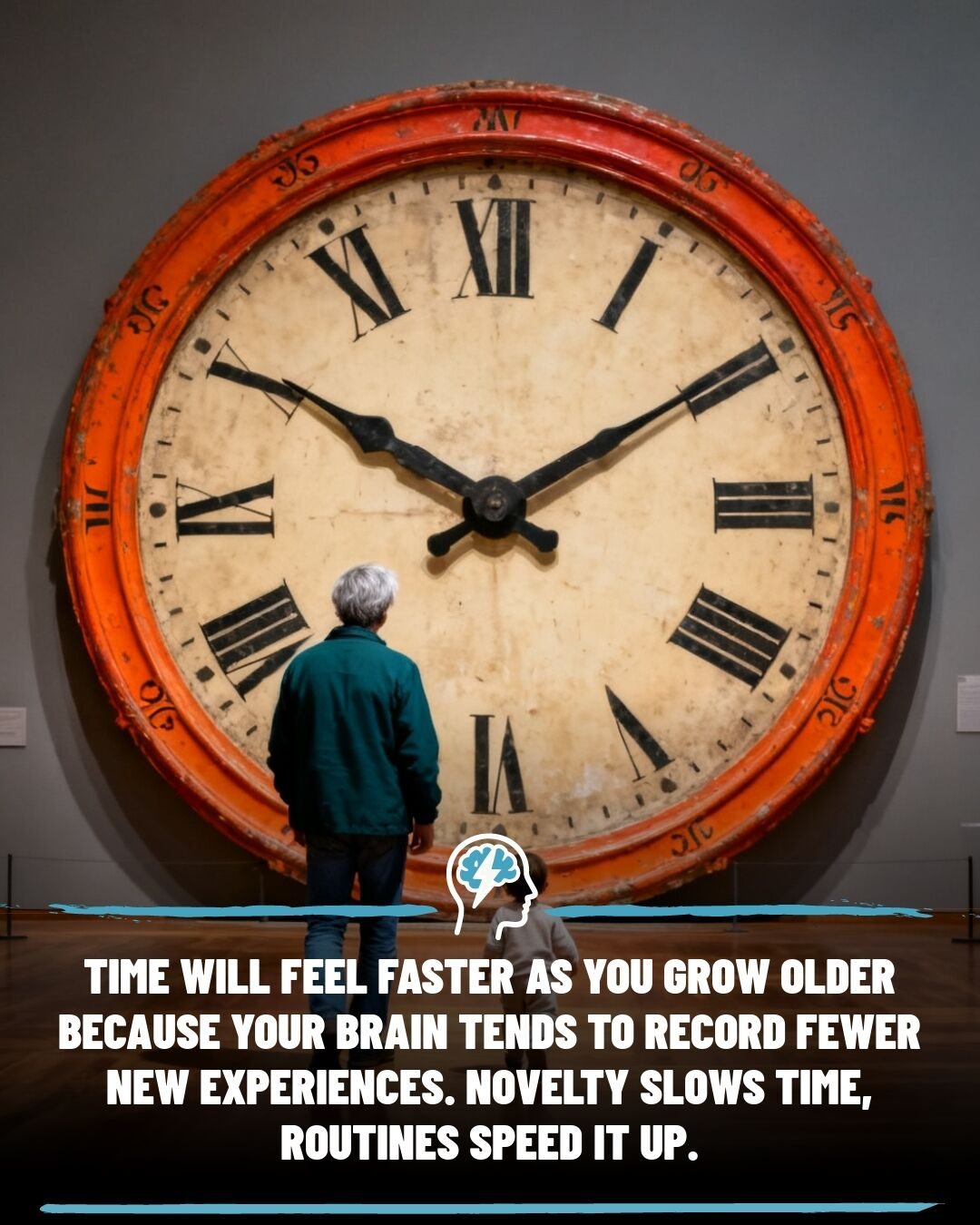
Time Perception and Aging
Time perception is a fascinating aspect of human experience, and it's common to notice how time seems to accelerate as we age. The summer vacations of youth that felt endless now vanish in the blink of an eye. This isn't just a matter of perspective; research suggests that our brains may actually process time differently as we grow older.
Why This Matters
The phenomenon of time feeling faster as we age has significant implications for our daily lives. Understanding why this happens can help us make more informed choices about how we spend our time and what we focus on. It's about optimizing our experiences to make each moment count.
The Science Behind Time Perception
The Brain and New Experiences
Our brain encodes novel experiences much more richly than routine ones. As children, nearly everything is new, so our hippocampus creates countless distinct mental "timestamps" that stretch our perception of time. This is why childhood summers feel so prolonged—each day is filled with new and exciting experiences that create vivid memories.
In contrast, as adults, familiar patterns require less processing. We often fall into routines that don't stimulate the brain as much. Fewer memorable moments can mean that time seems to fly by in retrospect.
Neuroscience and Aging
Studies indicate that aging is associated with reduced dopamine function and slower neural processing. This means that our brain may transition between activity states less frequently, creating longer, less distinct mental "events." Fewer events can equal faster perceived time. This neurochemical shift contributes to the feeling that time is accelerating.
Emotions and Time Perception
Emotions play a significant role in how we perceive time. Research shows that emotionally charged experiences tend to be remembered more vividly and may feel longer in duration. Conversely, routine, emotionally flat days tend to blur together and fade quickly. This is why stressful or joyful moments often stand out in our memory, while monotonous days seem to disappear.
The Logarithmic Relationship
There's also a mathematical element to this. A single year represents 10% of a 10-year-old's entire life, but only 2% of a 50-year-old's. This logarithmic relationship may contribute to why each passing year feels proportionally shorter. As we age, the relative impact of a single year on our total lifespans decreases, making it feel like time is moving faster.
The Role of Novelty
The encouraging news is that novelty may help counteract the effect of time feeling faster. Seeking new experiences, learning unfamiliar skills, or breaking routines can engage your brain more fully and create richer memories. Some research links novelty to neurogenesis, the creation of new brain cells, which can help keep your mind sharp and your perception of time more balanced.
Practical Tips
If you're looking to slow down the perception of time, here are some practical tips:
1. Engage in New Activities
Try hobbies or skills you've never attempted before. Whether it's learning a new language, taking up a musical instrument, or trying a new sport, the novelty will help create more distinct mental "timestamps."
2. Break Your Routines
Shake up your daily schedule. Instead of following the same routines, introduce variations. Change your commute route, try a new restaurant for lunch, or switch up your workout routine.
3. Stay Emotionally Engaged
Seek out experiences that evoke strong emotions, whether positive or negative. These experiences will be remembered more vividly, stretching out your perception of time.
Important Takeaways
Understanding the science behind time perception can help us live more fulfilling lives. By recognizing the factors that speed up or slow down our perception of time, we can make conscious choices to enrich our experiences. The key takeaways are:
- Novelty slows down time perception. Engaging in new activities and breaking routines can help.
- Emotions matter. Experiences that evoke strong emotions will be remembered more vividly.
- Routines speed up time perception. Try to introduce variations in your daily schedule.
Conclusion
Time perception is a complex phenomenon influenced by a variety of factors, including our brain's processing of new experiences, emotional engagement, and the logarithmic relationship between age and time. By understanding these factors and making mindful choices, we can enhance our perception of time and make each moment more meaningful.
Watch the Reel
Questions readers ask
What causes time to feel faster as we age?
As we age, our brains process new experiences differently. The brain encodes novel experiences more richly, so when we experience fewer new things, time appears to speed up. This change in how the brain handles new information contributes to the perception of time accelerating. Additionally, emotional intensity can alter our sense of time, making familiar or routine events feel like they pass quickly.
How does the brain process time differently as we get older?
The brain's processing of time is influenced by the amount of new experiences and emotional intensity. When experiences become routine, the brain devotes less resources to encoding them, leading to a perception of faster passage of time. This is because the brain is less focused on these experiences, so time seems to accelerate.
Can understanding time perception help improve daily life?
Yes, understanding why time feels faster as we age can help us make the most of our time. By recognizing the factors that influence time perception, such as novelty and emotional intensity, we can intentionally seek out new activities and meaningful experiences to enrich our lives and make each moment count.
What role do emotions play in how we perceive time?
Emotional intensity can significantly affect our sense of time. Strong emotions, whether positive or negative, can make time feel like it's passing slowly, while mundane or routine experiences can make time feel like it's flying by. By incorporating more emotionally engaging activities into our daily routines, we can alter our perception of time and enhance our overall experiences.
What is the connection between mental routines and time perception?
Mental routines can lead to a faster perception of time. When activities become repetitive and familiar, the brain requires less effort to process them. This reduction in cognitive engagement results in the feeling that time is passing more quickly, as our brain is not actively encoding the details of these routine experiences.
Can altering daily experiences change our perception of time?
Absolutely. By introducing new activities or elements of excitement and novelty, we can slow down our perception of time. These changes in our routines can make our experiences feel more vivid and engaging, thereby giving us the feeling that time is passing more slowly. This effect is due to the brain's heightened focus and cognitive engagement with these new experiences.
Related deep dives
Similar reads based on topic and creator.


Recent articles
Fresh deep dives from the latest Reels we unpacked.




Comments
Be the first to comment.