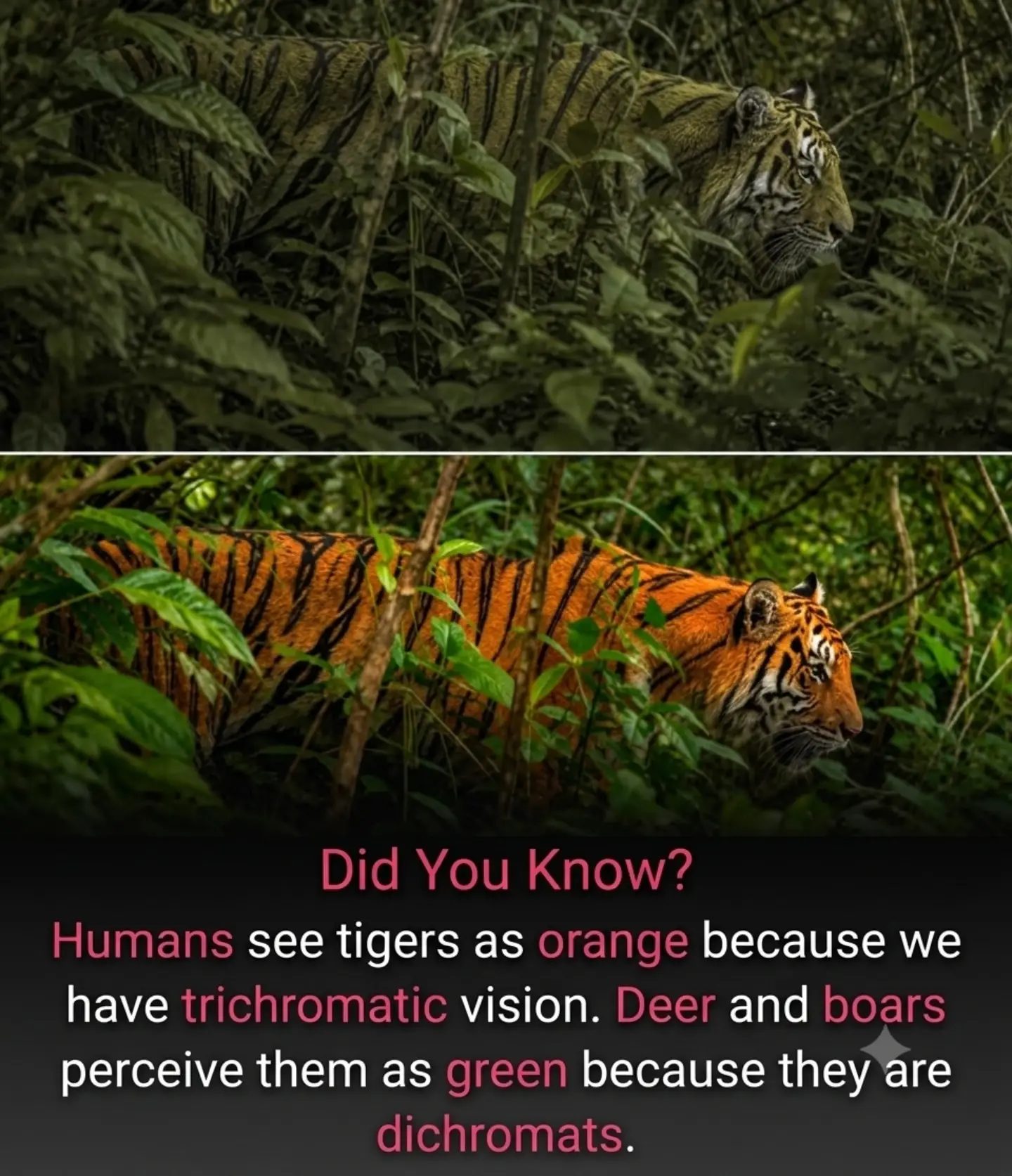
How Humans and Prey Animals Perceive Tiger Camouflage Differently
Tigers are renowned for their striking orange and black striped coats, which serve as both a warning and a form of camouflage in their natural jungle habitats. However, the way these big cats are perceived visually can vary greatly depending on the observer. This difference in color perception is largely due to the variations in the visual systems of humans and certain prey animals, such as deer and wild boars.
Context / Why this matters
Understanding how different species perceive color is not just a fascinating aspect of biology but also a critical factor in the dynamics of predator-prey interactions. For tigers, effective camouflage is essential for hunting success, while for their prey, distinguishing a predator from its surroundings can mean the difference between life and death.
Main discussion
The Role of Trichromatic Vision in Humans
Humans possess trichromatic vision, which means our eyes have three types of color receptors, or cones, that are sensitive to short (blue), medium (green), and long (red) wavelengths of light. This trichromatic vision allows us to perceive a wide range of colors, including the vibrant orange hue of a tiger's coat. When a tiger moves through dense foliage, its orange stripes stand out against the green background, making it easily identifiable to us.
Dichromatic Vision in Deer and Boars
In contrast, many prey animals, including deer and wild boars, have dichromatic vision. This means their eyes lack the receptors for red wavelengths, leaving them unable to distinguish between red and green tones. To these animals, the tiger's orange fur appears as a muted green or brown, blending seamlessly with the surrounding vegetation. This evolutionary adaptation provides tigers with a significant advantage in their hunting strategies, as their prey is less likely to detect them until it's too late.
The Evolutionary Advantage of Camouflage
The difference in color perception between humans and prey animals highlights the evolutionary advantages of camouflage. Tigers have evolved to take full advantage of their prey's visual limitations. Their orange and black stripes not only help them blend into the jungle environment but also create a disruptive pattern that makes it difficult for prey to discern the tiger's shape and movement. This camouflage is so effective that even when a tiger is within striking distance, its prey may not detect it until the last moment.
Practical tips
Understanding Animal Behavior
For wildlife enthusiasts and conservationists, understanding how different animals perceive color can provide valuable insights into their behavior and ecology. By recognizing the limitations and strengths of different visual systems, researchers can develop more effective strategies for studying and protecting these species.
Conservation and Wildlife Management
Knowledge of color perception can also inform conservation efforts. For example, understanding how prey animals perceive predators can help in designing more effective predator control measures or in creating habitats that favor the survival of both predators and prey. This knowledge can also be applied to the design of wildlife reserves and protected areas, ensuring that the natural behaviors and interactions of animals are preserved.
Ethical Considerations
It's important to note that while understanding color perception can provide practical benefits, it should also be used responsibly. Ethical considerations must be at the forefront of any research or conservation effort, ensuring that the well-being and natural behaviors of animals are respected and protected.
Important takeaways
- Humans have trichromatic vision, which allows us to see a wide range of colors and perceive tigers as orange.
- Many prey animals, such as deer and boars, have dichromatic vision, which makes it difficult for them to distinguish between red and green tones, making the tiger's orange fur appear as a muted green or brown.
- This difference in color perception provides tigers with effective camouflage, giving them a significant advantage in hunting their prey.
- Understanding these visual differences can inform wildlife conservation efforts, ethical considerations, and practical applications in animal behavior research.
Conclusion
The fascinating difference in color perception between humans and prey animals like deer and wild boars underscores the intricate adaptations that have evolved in the natural world. For tigers, their ability to blend seamlessly into their environment is a testament to the power of evolutionary camouflage. By understanding these differences, we can gain deeper insights into the complex dynamics of predator-prey interactions and apply this knowledge to conservation and wildlife management practices.
Watch the Reel
Questions readers ask
Why do tigers' stripes appear more vibrant to humans than to their prey?
Humans have trichromatic vision, which means we can perceive a wide range of colors, including the vibrant orange and black stripes of tigers. However, many of the animals that tigers hunt, like deer and wild boars, have dichromatic vision, which limits their ability to see the same spectrum of colors. This makes the tiger's stripes less conspicuous to their prey, enhancing the tiger's camouflage.
How does the tiger's coloration help in hunting?
The tiger's stripes serve as a form of disruptive camouflage, breaking up the tiger's outline and making it blend in with the dappled light and shadows of the jungle. To the dichromatic vision of prey animals, the stripes create a visual confusion, making the tiger less distinguishable against the jungle backdrop. This helps tigers to sneak up on prey more effectively, enhancing their hunting strategy.
Do all animals see colors the same way humans do?
No, different species perceive colors differently based on their visual systems. For instance, many prey animals, like deer and wild boars, have dichromatic vision, which means they can only see two primary colors. In contrast, humans have trichromatic vision, which allows us to see a broader range of colors. This variation in color perception influences how different animals interact in their environments.
Why is understanding color perception important for studying tiger prey interactions?
Understanding how different species perceive color is crucial for analyzing predator-prey dynamics. For tigers, effective camouflage is key to their hunting success. By knowing how their prey perceives their stripes, researchers can gain insights into the hunting strategies of tigers and the survival mechanisms of their prey. This knowledge can also aid in conservation efforts by providing a deeper understanding of the ecological balance in tiger habitats.
How do deer and wild boars, common tiger prey, see the tiger's stripes?
Deer and wild boars have dichromatic vision, which allows them to see blues and greens but not reds. This means that the bright orange and black stripes of a tiger appear more muted and less contrasting to these animals. As a result, the tiger's stripes blend in more effectively with the natural surroundings, making it harder for prey to spot the tiger until it's too late.
Can other factors besides color perception affect how prey animals detect tigers?
Yes, factors such as movement, scent, and environmental context play significant roles in how prey animals detect tigers. Prey animals are often adept at picking up on subtle movements and changes in their environment. Additionally, a tiger's scent can also alert prey to its presence, even if the tiger is well-camouflaged visually. These factors work together to create a complex interplay in predator-prey interactions.
How does the jungle environment contribute to the effectiveness of a tiger's camouflage?
The jungle environment, with its dappled light and varied shadows, complements the tiger's striped pattern. The play of light and dark within the jungle helps to break up the tiger's outline, making it less distinguishable to prey animals. This natural environment, combined with the tiger's coloration, creates an optimal setting for effective camouflage, enhancing the tiger's ability to stalk and hunt its prey.
Related deep dives
Similar reads based on topic and creator.




Recent articles
Fresh deep dives from the latest Reels we unpacked.




Comments
Be the first to comment.