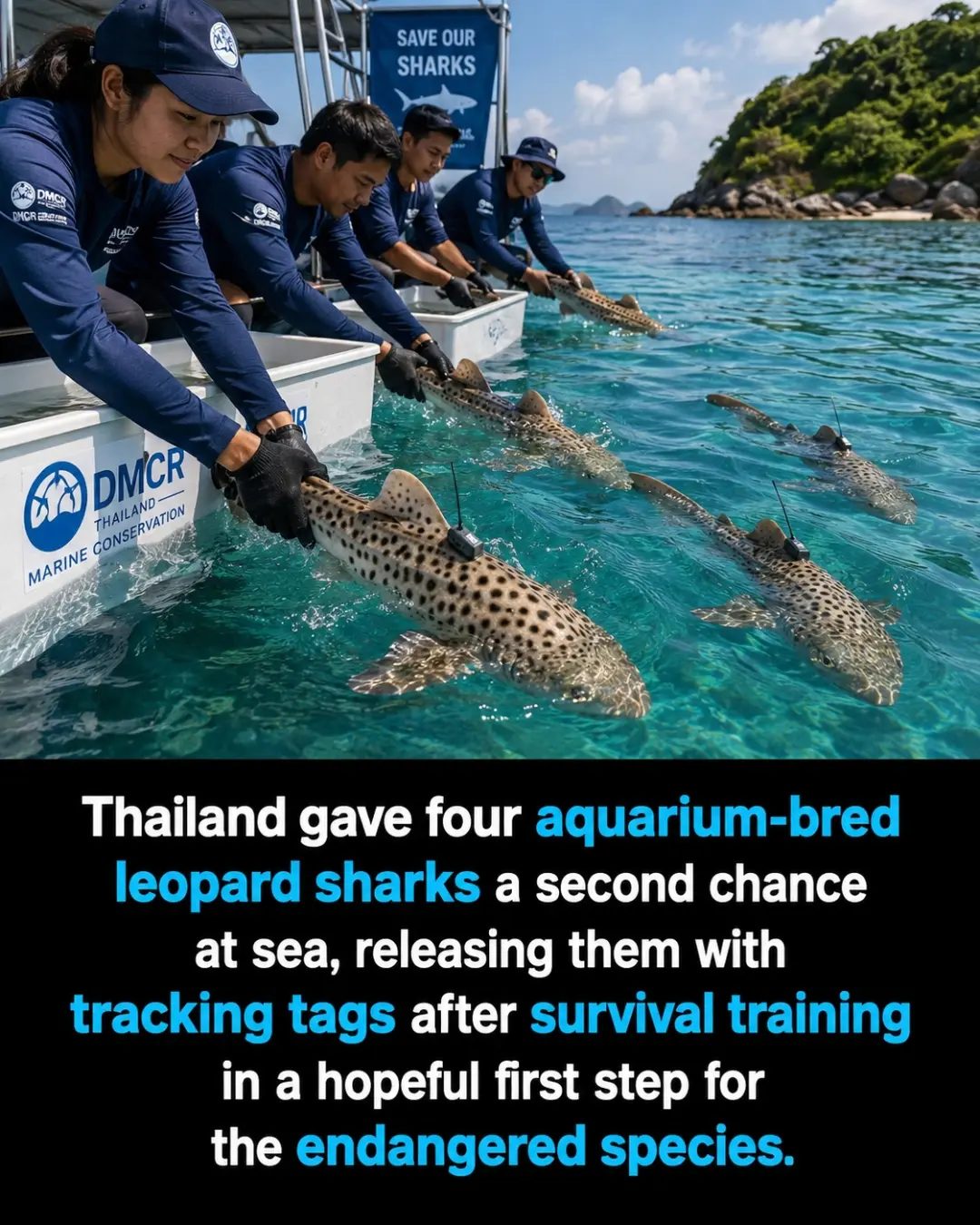
Leopard sharks are getting a new lease on life in the ocean. These four aquarium-bred leopard sharks will return to the sea.
Why This Matters
Conservationists are working hard to support endangered species. The release of four leopard sharks in Thailand highlights the DMCR conservation efforts. This act represents a collaborative effort to protect these sharks and promote marine conservation.
Main Discussion
The Release Process
Four leopard sharks were released into the ocean from a boat. The release is part of a broader conservation effort, underscoring the importance of reintroduction programs. These sharks were fitted with tracking tags. Tracking tags will help researchers monitor the sharks' movements and behaviors, providing valuable data for future conservation strategies.
Importance of Survival Training
The sharks underwent survival training before their release. Survival training is essential for ensuring that the sharks can adapt to their natural habitat. This training helps the sharks develop the necessary skills to hunt, avoid predators, and navigate their surroundings.
Conservation Efforts by DMCR
The Department of Marine and Coastal Resources (DMCR) in Thailand plays a crucial role in marine conservation. The DMCR's efforts in releasing aquarium-bred leopard sharks is an optimistic first step for the endangered species. By reintroducing these sharks, the DMCR aims to bolster the wild shark population and restore marine ecosystems.
The Role of Tracking Technology
Tracking tags attached to the sharks are vital for monitoring their progress. These tags provide real-time data on the sharks' movements, allowing researchers to track their adaptation to the ocean environment. This information is invaluable for assessing the success of reintroduction programs and identifying areas for future conservation efforts.
The Significance of Marine Conservation
Marine conservation is essential for protecting biodiversity and maintaining healthy ecosystems. The release of these leopard sharks underscores the importance of conservation efforts in preserving endangered species. By supporting such initiatives, we can help ensure the survival of these magnificent creatures and the ecosystems they inhabit.
Practical Tips
Support Marine Conservation
Here are some ways you can support marine conservation efforts:
- Volunteer: Join local conservation groups and volunteer for beach cleanups, coral restoration, or other marine conservation projects.
- Donate: Contribute to organizations dedicated to marine conservation, such as the DMCR.
- Educate: Spread awareness about the importance of marine conservation among your friends, family, and community.
Reduce Plastic Use
Reducing plastic use is crucial for protecting marine life. Plastic pollution is a significant threat to marine ecosystems, and by minimizing our plastic consumption, we can help preserve these environments for future generations.
Sustainable Fishing Practices
Practice sustainable fishing methods to protect marine populations. Opt for sustainably sourced seafood and avoid overfishing, which can deplete fish populations and disrupt marine ecosystems.
Important Takeaways
- Tracking Tags: Tracking tags provide valuable data for monitoring the sharks' adaptation and movement patterns, which is crucial for assessing the success of reintroduction programs.
- Survival Training: Survival training is essential for ensuring that the sharks can adapt to their natural habitat and thrive in the wild.
- Marine Conservation: Supporting marine conservation efforts is vital for preserving biodiversity and maintaining healthy ecosystems.
Conclusion
The release of four leopard sharks in Thailand is a significant step forward in marine conservation. This effort, led by the DMCR, highlights the importance of reintroduction programs and the role of tracking technology in monitoring these magnificent creatures. By supporting marine conservation and adopting sustainable practices, we can help protect endangered species and preserve the health of our oceans for future generations.
Watch the Reel
Questions readers ask
Why are leopard sharks being released into the ocean in Thailand?
The release is part of a conservation effort to boost the wild leopard shark population. This initiative is a collaborative project between local aquariums and Thailand's Department of Marine and Coastal Resources. This program aims to study and promote leopard shark survival in their natural habitat and to support Thailand's marine life conservation.
How are the released leopard sharks being monitored?
The leopard sharks are fitted with tracking tags before being released into the ocean. These tags allow researchers to monitor the sharks' movements and behaviors. This data will provide insights into leopard shark ocean behavior and inform future conservation strategies.
What is the significance of the DMCR shark project?
The DMCR shark project is a crucial initiative under Thailand's Department of Marine and Coastal Resources. It showcases the country's commitment to marine conservation. The project includes the release of aquarium-bred leopard sharks into the wild to bolster the wild shark population.
Who is involved in the leopard shark release program?
The leopard shark release program is a collaborative effort between local aquariums and the Department of Marine and Coastal Resources in Thailand. This partnership is essential for the success of the shark reintroduction program and the overall conservation efforts.
What can be learned from tracking leopard sharks in Thailand?
Tracking leopard sharks in Thailand provides valuable information about their behavior in the wild. This data can be used to improve future conservation strategies and promote the survival of these endangered species. Additionally, it offers insights into the effectiveness of reintroduction programs.
What technology is used in the shark release into the ocean?
The leopard sharks released into the ocean are equipped with advanced tracking technology. This technology allows researchers to monitor their movements and behaviors in real time. The data collected from these tags will enhance our understanding of leopard shark ocean behavior and inform future conservation efforts.
What happens to the leopard sharks after they are released into the ocean?
After release, the leopard sharks are closely monitored using tracking technology. This monitoring helps researchers understand how the sharks adapt to their natural habitat. The data collected will be used to assess the success of the reintroduction program and to make informed decisions about future conservation efforts.
Related deep dives
Similar reads based on topic and creator.


Recent articles
Fresh deep dives from the latest Reels we unpacked.




Comments
Be the first to comment.