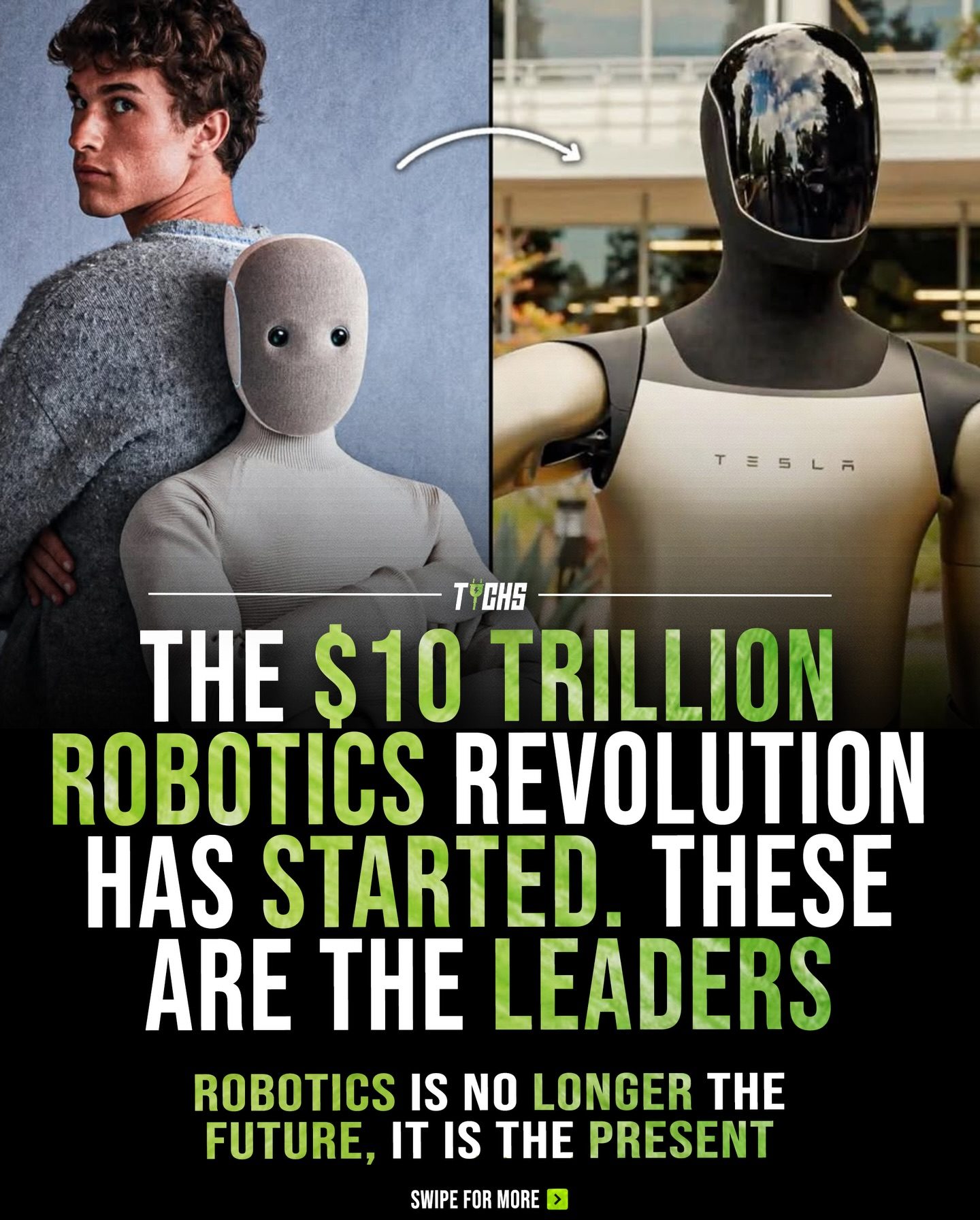
Robotics Revolution
Humanoid robots are no longer a distant vision of the future. They are here, and they are transforming industries at a rapid pace. The robotics revolution, valued at approximately $10 trillion, is already underway, with companies like Tesla, Apptronik, and Boston Dynamics leading the charge. This shift is driven by significant investments and advancements in AI, sensors, and manufacturing, enabling the development of human-like machines that can safely operate in real-world environments.
Why This Matters
The robotics revolution is reshaping various sectors, including manufacturing, logistics, and even home automation. As humanoid robots become more sophisticated, they are moving from research labs into practical, real-world applications. This transition is not only exciting but also has profound implications for productivity, safety, and efficiency across industries.
Companies Leading the Charge
Tesla's Optimus
Tesla, known for its innovative approach to technology, has made significant strides in robotics with its Optimus robot. Valued at approximately $1.56 trillion, Tesla's Optimus is designed to work in human environments, particularly in factories. The company's focus on integrating AI and advanced sensors into its robots ensures that they can perform complex tasks safely and efficiently.
Apptronik
Apptronik is another key player in the robotics industry, with a valuation of around $5 billion. The company specializes in developing humanoid robots for warehouses, industry, and logistics. Apptronik's robots are designed to handle tasks that are repetitive, hazardous, or require precision, thus increasing efficiency and reducing the risk of human injury.
Boston Dynamics
Boston Dynamics, valued at approximately $25 billion, is renowned for its agile and versatile robots. The company's robots are used in a variety of applications, from industrial settings to logistics and even military operations. Boston Dynamics' robots are known for their advanced AI capabilities, allowing them to navigate complex environments and perform intricate tasks.
Other Notable Players
Several other companies are also making significant contributions to the robotics revolution. 1X Technologies, for instance, is developing the NEO home robot, aimed at enhancing home automation and daily tasks. Unitree Robotics, on the other hand, is focused on creating agile and efficient robots for industrial and logistics applications.
Practical Applications and Benefits
The practical applications of humanoid robots are vast and varied. In factories, robots can handle repetitive and hazardous tasks, freeing human workers to focus on more complex and creative aspects of production. In warehouses, robots can streamline logistics and inventory management, ensuring faster and more accurate order fulfillment. In homes, robots can assist with daily chores, providing support for elderly or disabled individuals.
Enhanced Safety
One of the most significant benefits of humanoid robots is their ability to enhance safety in various environments. By taking over hazardous tasks, robots reduce the risk of human injury and ensure a safer working environment. This is particularly important in industries like manufacturing and logistics, where workers often face high-risk conditions.
Increased Productivity
Robots can operate continuously without the need for breaks, leading to increased productivity. They can perform tasks with high precision and consistency, reducing errors and improving overall efficiency. This is a significant advantage in industries where accuracy and speed are critical.
Cost-Effectiveness
While the initial investment in humanoid robots can be substantial, the long-term cost savings can be significant. Robots can reduce labor costs, minimize errors, and improve overall efficiency, making them a cost-effective solution for many industries.
Adaptability
Humanoid robots are designed to adapt to various environments, making them suitable for a wide range of applications. Whether in a factory, warehouse, or home, these robots can be programmed to perform a variety of tasks, making them versatile and adaptable to different needs.
Important Takeaways
The robotics revolution is not just a future concept; it is a present reality. Companies like Tesla, Apptronik, and Boston Dynamics are at the forefront of this transformation, developing robots that can safely operate in human environments. As advancements in AI, sensors, and manufacturing continue, the potential for humanoid robots to reshape various industries becomes even more apparent. The shift from research labs to real-world applications is well underway, and the implications for productivity, safety, and efficiency are vast.
Conclusion
The $10 trillion robotics revolution is here, and it is transforming industries in unprecedented ways. With companies like Tesla, Apptronik, and Boston Dynamics leading the way, humanoid robots are moving from experimental prototypes to practical, real-world applications. As investments pour into this sector, the future of robotics looks promising, with the potential to revolutionize manufacturing, logistics, and home automation. The robotics revolution is no longer a distant dream; it is a present reality, and it is here to stay.
Watch the Reel
Questions readers ask
What makes humanoid robots different from other types of robots?
Humanoid robots are designed to mimic human features and movements, enabling them to perform tasks in environments designed for humans. Unlike specialized robots, humanoids can adapt to various settings, from manufacturing plants to homes, making them versatile tools for diverse industries.
Which industries are expected to benefit most from the rise of humanoid robots?
While there are numerous potential applications, the manufacturing, logistics, and home automation industries are anticipated to see the most significant impact from humanoid robotics. Enhanced productivity, improved safety, and greater efficiency in these sectors are expected to drive substantial growth in the robotics market.
How are companies like Tesla and Boston Dynamics contributing to the robotics revolution?
These companies are at the forefront of the robotics revolution by integrating advanced AI and sensors into their robots. Tesla’s Optimus, for instance, is designed to handle complex tasks in real-world environments, while Boston Dynamics is known for its agile and versatile robots that can navigate challenging terrains and perform intricate tasks.
What role do advanced sensors and AI play in the development of humanoid robots?
Advanced sensors and AI are crucial for the development of humanoid robots. These technologies enable robots to perceive and interact with their surroundings, make real-time decisions, and perform complex tasks. The integration of AI and sensors allows for more precise control and adaptability, making robots capable of handling a wide range of real-world applications.
Why is the robotics market valued at around $10 trillion?
The $10 trillion valuation reflects the vast potential and impact of robotics across multiple industries. This includes the cost savings and productivity gains from automation, as well as the development and deployment of advanced robotics technologies. As more companies invest in and adopt robotics, this market is expected to continue growing rapidly.
What are some of the key trends in the robotics industry right now?
Current trends in the robotics industry include the increasing sophistication of humanoid robots, the integration of AI and advanced sensors, and the shift from lab settings to real-world applications. Additionally, there is a growing focus on industrial automation, with robots being designed to work alongside humans in various sectors, enhancing productivity and safety.
Which top robotics firms are leading the robotics revolution?
Several companies are leading the robotics revolution, including Tesla, Apptronik, and Boston Dynamics. Tesla's Optimus and Boston Dynamics' Spot and Atlas are among the most notable humanoid robots. These firms are investing heavily in research and development, pushing the boundaries of what robotics can achieve in various industries.
Related deep dives
Similar reads based on topic and creator.




Recent articles
Fresh deep dives from the latest Reels we unpacked.




Comments
Be the first to comment.