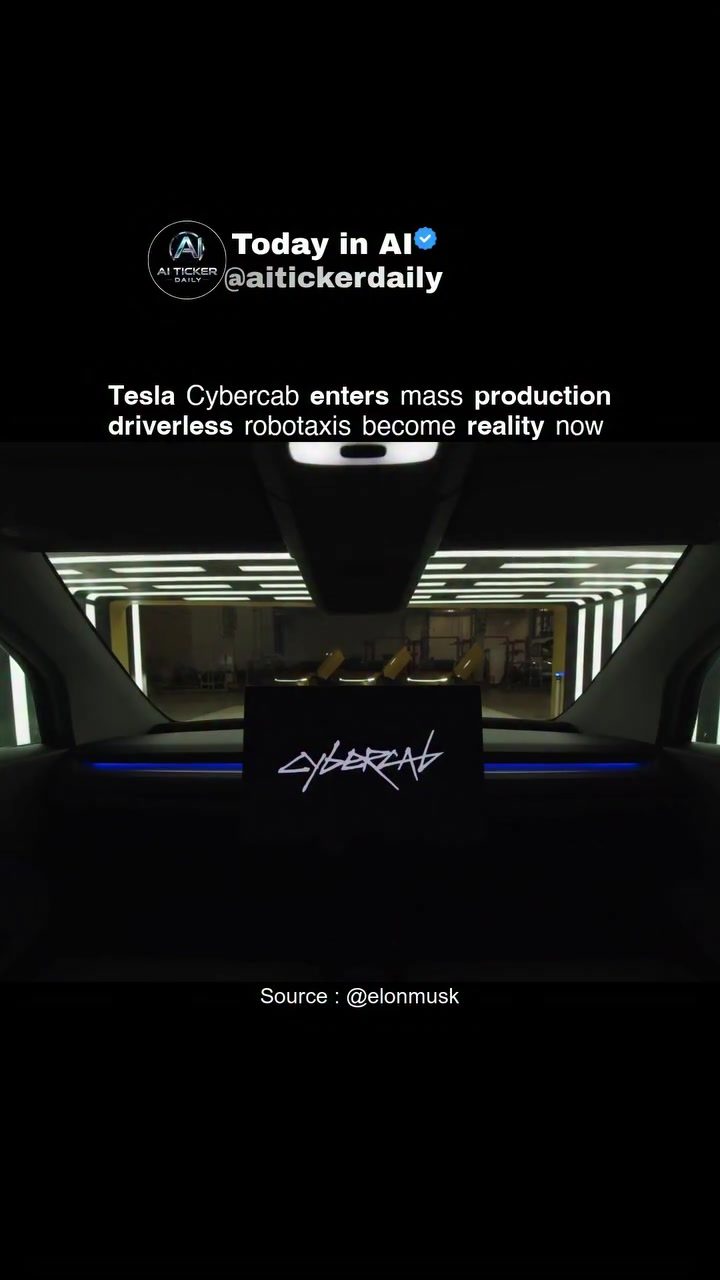
Tesla Cybercab: The Dawn of Mass-Produced Autonomous Ride-Hailing Vehicles
Autonomous ride-hailing vehicles are no longer just a futuristic concept. Tesla's Cybercab has officially entered mass production, marking a significant milestone in the transition from prototype to real-world manufacturing. This development is set to revolutionize both the automotive industry and the way we think about transportation.
Why This Matters
The shift to mass production of autonomous vehicles like the Cybercab is more than just a technological advancement; it represents a fundamental change in how we approach transportation and urban mobility. Autonomous ride-hailing vehicles promise to reduce traffic congestion, lower carbon emissions, and provide more efficient and accessible transportation options for everyone.
Diving into the Tesla Cybercab
The Transition from Prototype to Production
The journey of the Cybercab from a prototype reveal to a full-fledged manufacturing rollout is a testament to Tesla's commitment to innovation. The vehicle, which initially gained attention for its futuristic design and cutting-edge technology, is now moving from the assembly line to the streets.
The Power of Autonomous Technology
At the heart of the Cybercab is Tesla's advanced autonomous driving technology. By leveraging a combination of cameras, sensors, and artificial intelligence, the Cybercab is designed to navigate roads without human intervention. This capability makes it ideal for ride-hailing services, where reliability and safety are paramount.
Mass Production and Its Implications
Entering mass production is a critical step for any vehicle, but it holds particular significance for the Cybercab. Mass production allows for economies of scale, making the vehicle more affordable and accessible to a broader audience. It also signals that the technology has matured to the point where it can be reliably and efficiently manufactured on a large scale.
Key Features of the Tesla Cybercab
Futuristic Design
The Cybercab boasts a design that is as futuristic as it is functional. Its angular, almost angular design sets it apart from traditional vehicles, making it instantly recognizable. This design also serves a practical purpose, as it allows for more cargo space and better aerodynamics.
Technological Advancements
Inside, the Cybercab is packed with technological innovations. From its advanced driver-assistance systems to its integrated infotainment systems, the vehicle is designed to provide a seamless and intuitive driving experience. The Autonomous technology is particularly noteworthy, as it promises to make roads safer and reduce the burden on drivers.
Environmental Benefits
As an electric vehicle, the Cybercab also offers significant environmental benefits. By reducing reliance on fossil fuels, it contributes to lower carbon emissions and a cleaner environment. This aligns with Tesla's broader mission to accelerate the world's transition to sustainable energy.
Practical Tips for the Future of Autonomous Vehicles
Staying Informed
As the world of transportation evolves, staying informed about the latest developments in autonomous vehicles is crucial. This includes keeping up with regulatory changes, technological advancements, and industry trends. Subscribing to newsletters and following industry experts can help you stay ahead of the curve.
Preparing for the Transition
For consumers, the transition to autonomous vehicles may require some adjustments. It's essential to familiarize yourself with the technology, understand its capabilities and limitations, and adapt to new driving habits. This includes learning to trust the vehicle's autonomous systems and understanding how to interact with them.
Exploring New Mobility Options
The rise of autonomous ride-hailing vehicles also opens up new mobility options. Whether you're a commuter looking for more efficient ways to get to work or a business owner seeking innovative solutions for transportation, the Cybercab and similar vehicles offer a range of possibilities. Exploring these options can help you make the most of this technological shift.
Important Takeaways
The transition of the Tesla Cybercab to mass production represents a significant milestone in the evolution of autonomous vehicles. The vehicle's futuristic design, advanced technology, and environmental benefits make it a compelling option for ride-hailing services. As the automotive industry continues to evolve, staying informed and adapting to new technologies will be key to navigating this exciting future.
Conclusion
The mass production of the Tesla Cybercab is a game-changer in the world of transportation. It signals the dawn of a new era where autonomous vehicles play a central role in our daily lives. As the technology continues to advance, the Cybercab and similar vehicles will pave the way for more efficient, safer, and sustainable transportation solutions. Embracing this change and staying informed will be crucial as we move forward into this exciting future.
Watch the Reel
Questions readers ask
What is the Tesla Cybercab and why is its mass production significant?
The Tesla Cybercab is an autonomous ride-hailing vehicle designed by Tesla. Its mass production signifies a major shift from experimental prototypes to large-scale manufacturing, marking a key turning point in the adoption of self-driving technology in everyday transportation.
How will the Cybercab impact urban mobility?
The Cybercab aims to enhance urban mobility by reducing traffic congestion through optimized routing and the elimination of human error. It also promises to lower carbon emissions, as autonomous electric vehicles can be more energy-efficient than traditional cars. Finally, it can provide more accessible transportation options for people with disabilities or those in areas with limited public transit.
What are robotaxis and how does the Cybercab fit into this category?
Robotaxis are autonomous, driverless vehicles designed to operate as taxis or ride-sharing services. The Cybercab falls into this category as it is an autonomous vehicle intended for ride-hailing purposes, offering a glimpse into the future of self-driving transportation services.
How does the Cybercab's production rollout affect the automotive industry?
The Cybercab's production rollout challenges traditional automotive manufacturing by prioritizing autonomous technology and electric powertrains. It also encourages competition and innovation, pushing other companies to advance their own autonomous vehicle programs.
What can we expect from the Tesla Cybercab in terms of technology?
The Cybercab is equipped with advanced sensors, cameras, and AI software, enabling it to navigate roads, detect obstacles, and make driving decisions without human intervention. Additionally, its electric powertrain ensures zero tailpipe emissions, contributing to a more sustainable transportation ecosystem.
How might the Cybercab's availability change our daily commutes?
With the Cybercab's introduction, daily commutes could become more convenient and efficient. Riders can request a ride via an app, and the vehicle will pick them up and drop them off at their desired locations, minimizing the need for personal car ownership and reducing the time spent behind the wheel.
Related deep dives
Similar reads based on topic and creator.




Recent articles
Fresh deep dives from the latest Reels we unpacked.




Comments
Be the first to comment.