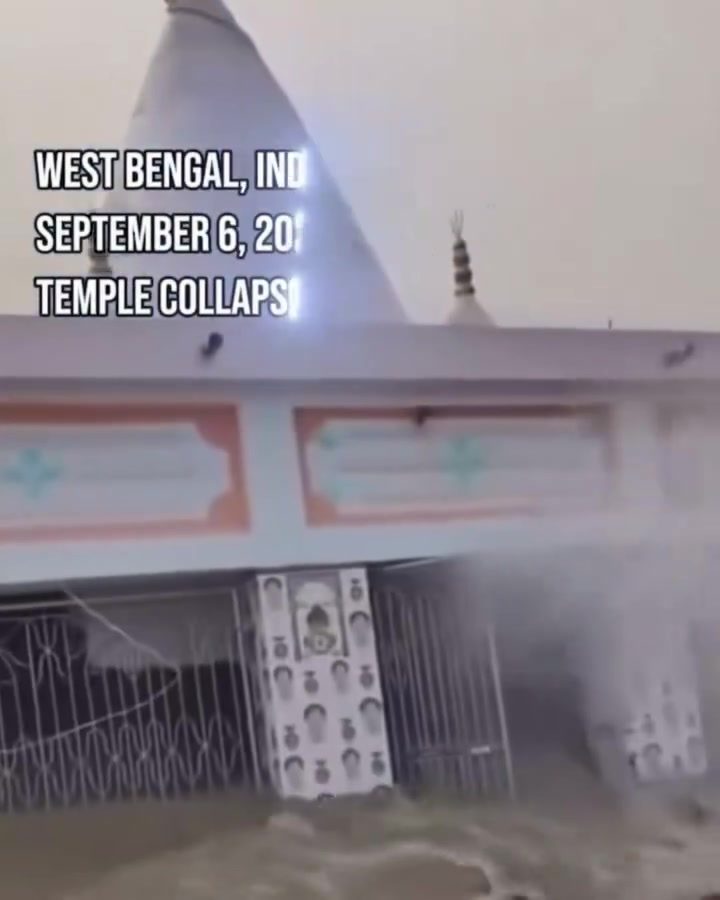
A Sudden Rupture: Temple Collapse in West Bengal
On September 6, 2026, the tranquil landscape of West Bengal, India, was jolted by a sudden and devastating event. A historic temple, a sacred site for locals and a tourist attraction, lay in ruins as the standing structure and its faithful guardians. Partially submerged in murky water, the temple now resembles an ancient ruin. The aftermath reveals a chaos playing out in the debris, as the swirling water rushes in and out of the collapsed walls, whether it was the work of the gods or natural forces is unknown. Luge holes are visible, suggesting either the temple's foundations gave way or the ongoing rains were responsible for the incredible flooding that has engulfed the temple. The reasons behind this collapse are yet to be investigated. The video does not show the immediate aftermath of the collapse, so the exact trigger remains unclear.
A Glimpse into Disaster Management: A missed opportunity?
The aftermath shows the debris and surrounding water, the aftermath of the temple collapse is a costly reminder of the danger posed by vulnerable structures. The video's focus on the water and the partial submergence suggests that flooding may have played a role. This is no small concern: in a region prone to heavy rainfall, understanding and mitigating flood risks is a matter of life and death. With the structure partially submerged, it highlights the vulnerability of both the temple and the surrounding area. The video, however, also underscores a missed opportunity. Known for their resilience and adaptability, the communities in West Bengal rely on effective disaster management protocols. But the video shows no sign of immediate relief or rescue operations. This oversight reveals a potential gap in preparedness or response efforts, raising questions about timely intervention. In the absence of immediate support, the focus shifts to the broader implications of such a collapse.
A Historic Loss
The temple's collapse represents not just a physical destruction, but a cultural and historical loss. Such temples hold religious significance and contribute to the region's heritage. Their collapse raises questions about preservation efforts. The partial submergence of the temple suggests a possible role of flooding. Temples often serve as cultural anchors, embodying the heritage and traditions of communities. Their preservation is vital for maintaining these connections. The collapse of this temple seems to be a result of a number of different factors, including heavy rainfall and poor maintenance of the temple. The aftermath of the collapse brings attention to the broader issues at play. These disasters are not isolated incidents but symptoms of wider challenges.
The Road Ahead
The roads ahead are riddled with debris and uncertain. From local authorities to international organisations, all must reflect on the tragedy that unfolded on this fateful day. Just as the debris is cleared, the waters receded, at last the cleanup efforts can commence. Yet the cultural damage will take a lot more effort to mend.
Watch the Reel
Related deep dives
Similar reads based on topic and creator.




Recent articles
Fresh deep dives from the latest Reels we unpacked.




Comments
Be the first to comment.