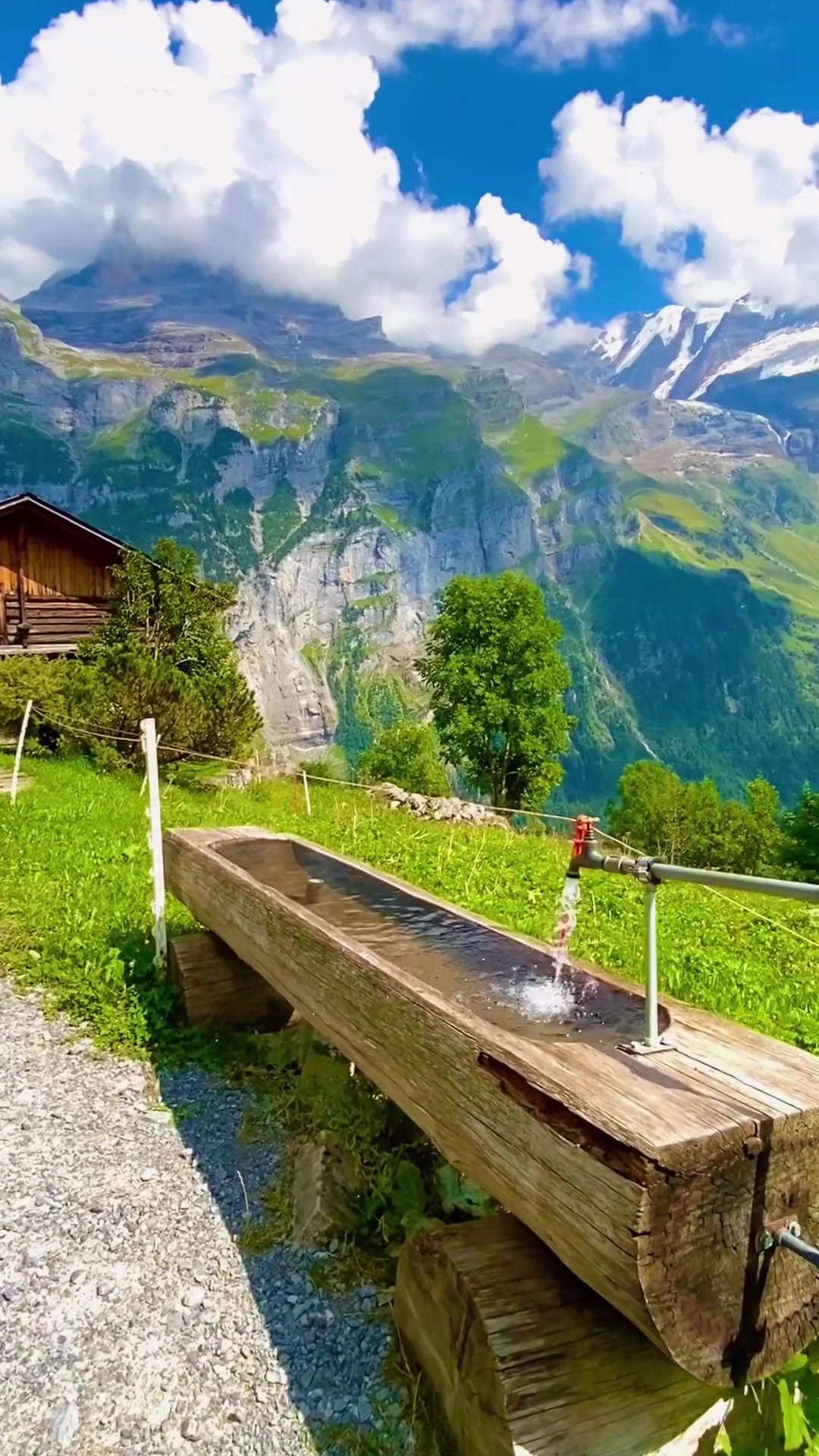
The Swiss Alps are known for their majestic peaks and lush valleys. But in this video, the spotlight lies on a simpler, more intimate scene: a traditional wooden water fountain bubbling fresh water. The wooden water fountain stands as a vivid focal point. The wound in the tree bark is a rainbow of hues, contrasting sharply in color against the surrounding mountain peaks. These Alps’ water troughs aren’t just functional—they’re lauded as beautiful, historic architectural elements, embodying a sense of tradition and craftsmanship. This particular fountain sits in a valley, nestled among soaring mountains and lush greenery, evoking a sense of tranquil idyll.
The Swiss Wooden Water Fountain
Paved and flowing with fresh mountain water, wooden water fountains are iconic fixtures in Swiss villages. This fountain, like many of its brethren, is a simple wooden structure with a spout pouring into a stone trough. The water flows continuously, reflecting the pristine alpine air and sunlight. The essence of the wooden water fountain lies in its utility and sustainability. The fountains are both water sources and community gathering spots, where residents stop to fill their bottles or simply to take a moment. The video captures the constant flow of water from the fountain’s tap into the stone trough, symbolizing both continuity and renewal. The wooden water fountain is also a deeply rooted Swiss tradition. This feature dates back to ancient Roman times, when they were crucial for supplying villages with drinking water. Today, they invoke a sense of nostalgia. The Swiss Alps create a breathtaking backdrop for the fountain’s scene. A gently cascading stream flows nearby, and in the distance, snow-capped peaks loom above the rustic wooden walls and chimneys. This blend of natural and man-made elements solidifies the sense of peace and tranquility. Beyond the functional and architectural delights, these fountains are integral to the region’s folklore, embodying Swiss heritage, and contributing to the Alpine atmosphere. Below this fountain, the mountains show a unique hue, unlike the traditional blue or white peaks. Pointy rocks, like a crown of green shiny moss-covered hair, nestle into a small lake.
The Swiss Alps’ Natural Ambiance
The Swiss Alps are known for their stunning mountain landscapes, with peaks often peaking over 4,000 meters (13,123 ft). The wooden water fountain stands apart, showing the region’s rich cultural heritage. Yet, even as the water flows, the Swiss Alps’ environmental challenges are undeniable. Climate change, over-tourism, and economic pressures threaten this idyllic terrain. The pristine Alpine atmosphere is vulnerable to change.
The Function
The wood can be sculpted in many ways, but the water fountain is the most common form. Its function is simple, but its form is special. The most distinctive features of this fountain are the chunked mountain sides that sit above the fountain and the sheer cliffs that hold it up. The wooden frame of the fountain is a striking complement to the Alpine landscapes. The structure comprises bark, water, and mountain sides. These materials are carefully layered and combined to achieve a harmonious aesthetic with the landscape.
Peace with Water Bodies
Wooden water fountains captivate with their calm demeanor. The water, a single source of life, flows into the fountain and then meanders downstream. Water is a sign of movement and life. In the Alps, these water bodies are crucial. They quench both the thirst of the indigenous Alpine goat and the lone tourist eager to visit. Not only do they provide water, but they also serve as a gathering spot for those visiting the region. The mountain air is crisp and cool and does not bring wetness to the skin.
The Wooden Water Fountain’s Inhabitants
These wooden water fountains also amalgamate into nature. The mounds of moss to the left and the green pinnacle that stands tall directly above are not of human craftsmanship. The mountain, water, and this wooden fountain create an ecology where the differences between nature and human work become blurred. The water flows slowly, and not far away, the lake is the water source. Sliding down the slopes, the water finds its way to this fountain. Here, it flows into a stone basin instead of going downwards. This basin collects water, allowing it to settle before it flows onwards, creating a serene environment for the Alpine habitat. The fountain is flanked by the green pinnacle to the left and a rock to the right. The Alpine goat is the highest inhabitant of the scene, resting on the pinnacle. This scene is teeming with life.
Plan a Visit
- Best time to visit: Alpine weather is famously unpredictable, but pack for spring or early autumn visits if you want to avoid peak tourist season. Watch the weather, as storms can change conditions quickly. But if you want to see the place when it is less crowded, winter and the water source is inactive. Go during this time, and your experience might be entirely different.*
- Pack essentials: Layered clothing, sturdy hiking shoes, a waterproof jacket, water bottle, and a camera to capture the scene. A small notebook, if you want to jot down your thoughts. You may also want to carry a first-aid kit and a map. If you’re hiking, a compass is essential, and don’t forget to bring your wooden water fountain.*
- Do not treat the wooden water fountain or any of its surroundings as a playground; don't hang from any of the branches.
- If you want to see the fountain in its entirety, the best way to do it is by hiking up to it or reaching it by vehicle. If you are a visitor with a guide, ask them to take you to these fountains.
Watch the Reel
Questions readers ask
What are Swiss Alps water fountains made of, and how do they work?
Swiss Alps water fountains are typically made of wood, with a spout pouring into a stone trough. They work by continuously flowing with fresh mountain water, serving as both a water source and a community gathering spot. The water flows from the fountain’s tap into the stone trough, symbolizing continuity and renewal.
How old is the tradition of wooden water fountains in the Swiss Alps?
The tradition of wooden water fountains in the Swiss Alps dates back to ancient Roman times. They were crucial for supplying villages with drinking water and have since become iconic fixtures in Swiss villages, embodying a sense of tradition, craftsmanship, and nostalgia.
Why are these wooden fountains considered both functional and beautiful?
These wooden fountains are considered both functional and beautiful because they serve as a vital water source and community gathering spot, while also being lauded as beautiful, historic architectural elements. Their intricate carvings and the pristine alpine air and sunlight reflecting off the flowing water add to their aesthetic appeal.
What kind of impact do these fountains have on Swiss culture and heritage?
These fountains are integral to the region’s folklore and embody Swiss heritage. They contribute to the Alpine atmosphere and evoke a sense of peace and tranquility, making them a deeply rooted part of Swiss tradition and culture.
How do the Swiss Alps’ environmental challenges affect these fountains?
Climate change, over-tourism, and economic pressures threaten the idyllic terrain of the Swiss Alps, which could potentially impact the sustainability and preservation of these traditional wooden water fountains. The pristine Alpine atmosphere, of which these fountains are a part, is vulnerable to change.
Can visitors interact with these fountains, and if so, how?
Visitors can interact with these fountains by stopping to fill their bottles with fresh mountain water or simply taking a moment to appreciate the tranquil scene. The fountains are community gathering spots, inviting both residents and visitors to engage with them in a respectful and mindful manner.
Related deep dives
Similar reads based on topic and creator.

Recent articles
Fresh deep dives from the latest Reels we unpacked.



Comments
Be the first to comment.