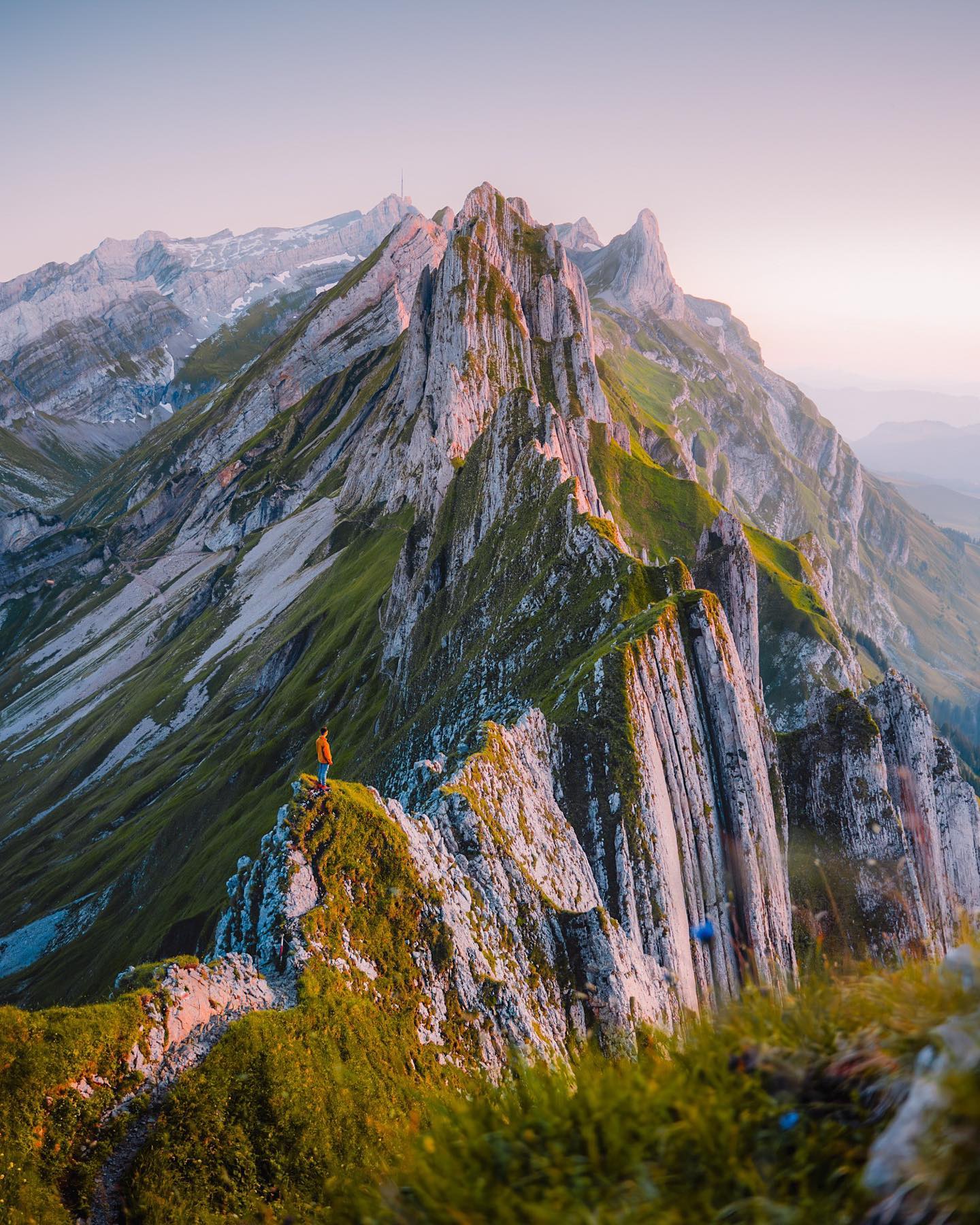
At sunrise in the Swiss Alps, a man in an orange jacket stands before an expanse of ice-capped peaks. This landscape is not just a postcard scene. It is the "colossal water reservoir" for Europe. In these mountains, glaciers funnel 50% of the continent's freshwater.
This is the Alpine plains reservoir — the mountains hold a huge amount of Europe's water. The vast glaciers lock up half of the continent’s freshwater.
The folks at beautifuldestinations explained the Swiss Alps through the eyes of their content creator @long.explorer. long.explorer shared a visual journey showcasing the Alpine vistas. The exact moment in which the vision-data showed a figure appreciating the scene signaled a bigger role.
The Glaciers of the Swiss Alps — Alpine Water Reservoirs
The Swiss Alps are massive natural reservoirs, stowing away 50% of the continent's freshwater. These mountains are home to hundreds of glaciers. But if you imagine these water reservoirs as a giant mountainside vault, think again. The peaks are rivers, misty streams, wetlands, and diverse ecosystems at their foot. Carbon dioxide traps heat in the atmosphere. This is why glaciers are melting. The flow of water in these rivers appears normal from the outside, but fluctuations due to climate change are an issue.
Alpine Snowmelt and Its Impact
The glacier retrieves water resources during the dry summer months. This is when water is needed. Alpine snowmelt fills the rivers during this time. Alpine snow melt is vital for Swiss and European farmers. The water is used for farming, hydroelectric generation, and drinking. But what happens to Switzerland if those glaciers disappear? The problem is slowly melting glaciers. The Swiss government has been forced to take notice. With more and more "heatwaves" or rising temperatures, the river flows fluctuate dramatically. Alpine Water Reserves come in three distinct seasons. 95% of glacier ice melts in transient summer months. Colder months offer the chance for glaciers to replenish themselves. Cold months during the year are where glaciers replenish with layers of snow. Also, the glaciers depend on freezing temperatures to create that colossal water reservoir. But the freezing temperatures in the Alps have been falling, year by year.
The Visual Tapestry
"The breathtaking tapestry of nature" in the Swiss Alps shows a beauty that defies words. Alpine glaciers have inspired generations — because the Swiss Alps are a treacherous journey even for professional mountaineers. It’s also a tourist haven with renowned ski resorts and hiking trails. The visual tapestry comes from the glaciers, rivers, and diverse flora. But mountains are also complex ecosystems. These ecosystems have their own biodiversity and wildlife. So the glacier isn’t just a water reserve, it’s also a habitat. This is why Switzerland is trying to preserve the glaciers.
How Glaciers Store Water
Different mechanisms work together to store Alpine Water. The Swiss Alps are a complex web of glaciers and rivers. Glaciers form from compacted snow and ice. These components flow towards the mountains as freezing temperatures create the Alpine glaciers. Water storage begins when the glacier is formed, and the water is buried and frozen. Glaciers absorb water from a source such as a snow blanket. This water stays stored in the glacier, until seasonal snow melt. Glaciers slowly release its water to replenish the ecosystem.
Alpine Water Reservoirs Under Threat
With climate change, we see glaciers receding. With the glaciers literally fading away, it’s harder to study them. It’s not just the obvious evidence of melting glaciers though, we also know the icecaps are becoming more porous. Ice porosity is a term that refers to ice structure. It means that water can escape from frozen water storage. This is surprising. The glaciers are losing their crystalline structure. The freezing temperatures need to be maintained, or the temperature will keep rising. The melting and refreezing process depends on the glaciers’ natural structure. Now, the mountains are more susceptible to melting. With snowmelt comes the risk of avalanches. Fresh snow builds on top of weaker layers. This causes the snowpack to collapse. This is one impact of climate change. This makes trekking through glaciers difficult. Ice and snow are unstable in general. But changing glaciers make them far more dangerous.
Tips for Alpine Exploration
Before you head out, these tips will help you experience the beauty of these resources safely.
- Preparation: Alpine exploration requires specialized gear. It often requires a guide. The guide will help you to the mountain passes. But more than a guide, you need the right gear — layers of clothing, waterproof outerwear, helmets, and crampons for ice-covered terrain.
- Research: Alpine exploration requires specialized gear. It often requires a guide. You need to stay a few steps ahead. It’s important to research the seasons and the changes in climate.
- Choose the Right Time: Alpine exploration is best. You can visit the Alps from February/April, or May/September. Spring and Fall tend to have lower foot traffic. This is the perfect time to enjoy the solitude of the nature, and to see the landscape unaffected by human presence. Glaciers can be large, unpredictable, and often dangerous. With the right gear and a guide, you can experience the wonder of the Swiss Alps safely. You can appreciate the beauty and realize the importance of Alpine glaciers. These Alpine water reserves are more than a phenomenon. It’s a colossal reservoir that supplies freshwater for over 300 million people in Europe. Alpine glaciers are vital for local ecosystems. They support the communities. They provide water for farms and hydroelectricity, and recreational activities. The Swiss Alps aren’t just a beautiful vacation spot. They’re a crucial source of water.
Watch the Reel
Questions readers ask
What exactly are the 'Alpine water reserves' mentioned in the article?
The Alpine water reserves refer to the vast glaciers and snow-capped peaks in the Swiss Alps that act as natural reservoirs, storing 50% of Europe's freshwater. These reserves include not just glaciers, but also rivers, streams, and wetlands that support diverse ecosystems.
How do glaciers in the Swiss Alps store water?
Glaciers in the Swiss Alps store water through a complex process where compacted snow and ice form and flow down the mountains. This happens due to freezing temperatures, creating a massive water reserve that replenishes during colder months and melts during the summer, supplying water to rivers and streams.
Why is the Swiss government concerned about the glaciers melting?
The Swiss government is concerned because the melting glaciers can lead to fluctuating river flows, which are crucial for farming, hydroelectric generation, and drinking water. With more frequent heatwaves and rising temperatures, the glaciers' ability to store and release water consistently is at risk.
What are the three distinct seasons of Alpine water reserves?
The Alpine water reserves have three distinct seasons: the summer months when 95% of the glacier ice melts, providing water during the dry period; and colder months when glaciers replenish themselves with layers of snow. The cold months are crucial for the glaciers to rebuild their water storage.
How do the glaciers in the Swiss Alps impact agriculture and energy production in Europe?
The glaciers in the Swiss Alps are vital for Alpine snowmelt, which fills rivers during the dry summer months. This water is essential for Swiss and European farmers, as well as for hydroelectric generation, which powers homes and businesses across the continent.
Related deep dives
Similar reads based on topic and creator.


Recent articles
Fresh deep dives from the latest Reels we unpacked.

Comments
Be the first to comment.