Tree Sap Spraying: An Unusual Natural Phenomenon
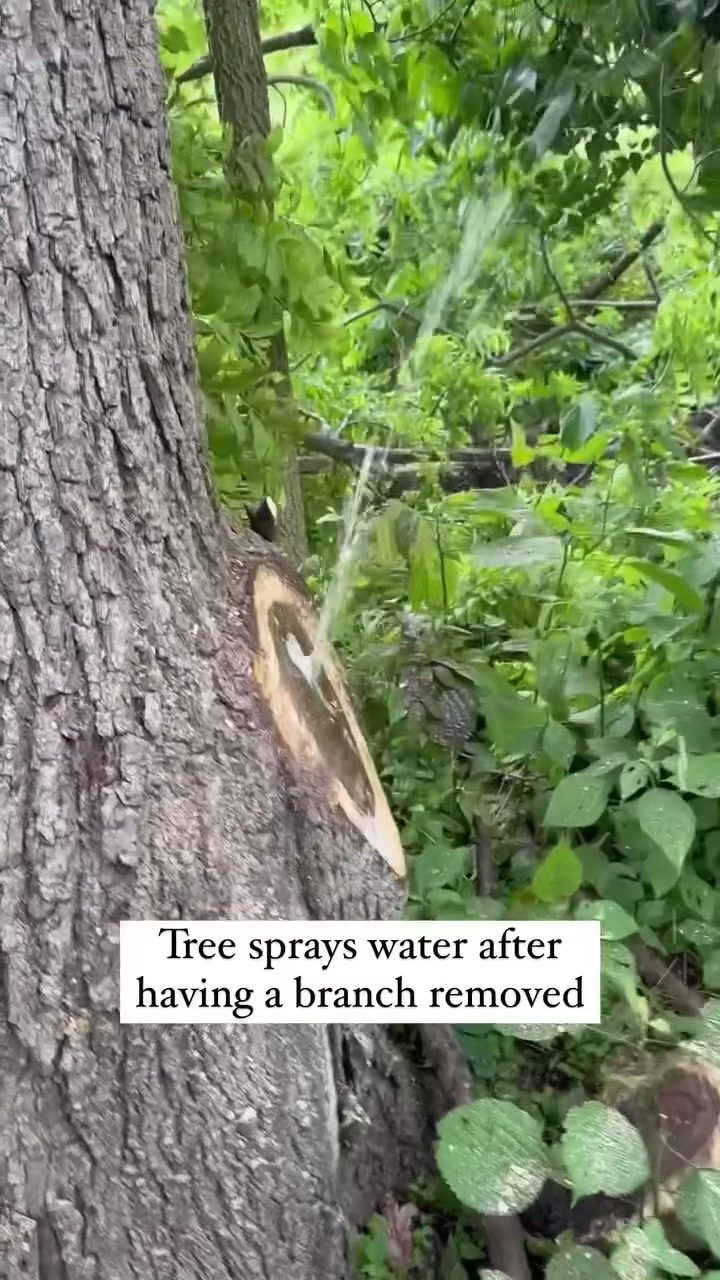
When a tree loses a branch, it can release a surprising amount of water, sometimes in a spray. While this might be an unusual sight, it's a natural process that trees employ to heal and seal the wound.
Why This Matters
Understanding this process can change the way you view trees and their resilience. It can also be useful for arborists and forestry professionals who work with trees and need to understand the natural healing process.
The Science Behind Tree Sap Spraying
The Healing Process
When a tree branch is removed, the tree doesn't simply stop at the cut. Instead, it triggers a healing process to protect itself from infection and further damage. The spraying of water, or tree sap, is a crucial part of this process. The sap serves as a natural sealant, similar to how our bodies produce scabs to cover wounds. This sealant helps to protect the exposed area from pests, pathogens, and other environmental threats while the tree works to repair the damage.
Compartmentalization
The compartmentalization process is another critical aspect of how trees heal. Trees can create barriers both above and below the wound to contain any decay or infection. This process involves the formation of new cells around the damaged area, which helps to isolate and protect the healthy parts of the tree. By compartmentalizing the wound, the tree can continue to grow and function normally while it repairs the damage.
Water Release
Water is a vital component in the healing process of trees. When a branch is removed, the tree releases water through the cut to help seal the wound. This water, often mixed with sap, creates a natural bandage that protects the tree from external threats. In some cases, the release of water can be quite dramatic, with a visible spray coming from the cut area. This phenomenon is what creates the striking visual effect that many people find surprising.
Practical Tips for Tree Care
Monitor for Signs of Stress
While the natural healing process of trees is impressive, it's essential to monitor trees for signs of stress or infection. If you notice any unusual changes in the tree's appearance or behavior after a branch has been removed, it might be a sign that the tree needs additional care. Consider consulting with an arborist if you have concerns about the health of your trees.
Avoid Over-Pruning
Over-pruning can also stress a tree and make it more susceptible to infection. When pruning, always follow best practices to minimize damage and promote healthy growth. This includes removing only dead, diseased, or broken branches, and making clean cuts at the proper angles.
Important Takeaways
Trees, like all living organisms, are equipped with their mechanisms to heal and protect themselves. The release of water or sap from a cut branch is a natural and essential part of that process. Understanding and respecting this process can help ensure the health and longevity of trees in our environment. Whether you're an arborist, a forestry professional, or simply a nature enthusiast, appreciating the natural healing abilities of trees can deepen your connection to the natural world.
Conclusion
The process of tree sap spraying is a fascinating and natural phenomenon that showcases the resilience and adaptability of trees. By understanding how trees heal and protect themselves, we can better appreciate their role in our ecosystems and take steps to ensure their health and longevity.
Watch the Reel
Questions readers ask
Why does water spray from a tree when a branch is cut off?
When a branch is removed, the tree releases water, or sap, as part of its natural healing process. This helps to seal the wound and protect the tree from infection and decay. The spraying effect is due to the release of pressure within the tree's vascular system.
What is the purpose of the water spray from a tree cut?
The primary purpose of the water spray is to initiate the healing process. The released sap helps to seal the wound, preventing the entry of pathogens and reducing the risk of decay. This process is part of the tree's compartmentalization, where the tree creates barriers to protect healthy tissue.
How does the water spray aid in tree defense mechanisms?
The water spray helps to flush out any potential contaminants from the wound, reducing the risk of infection. Additionally, the sap often contains antimicrobial compounds that further protect the tree from pathogens and aid in the sealing and healing of the wound.
Is the water spray a sign of a tree's health or distress?
The water spray is a natural response to a wound and an indication that the tree is actively trying to heal. It is not necessarily a sign of distress but rather a part of the tree's defense mechanism to protect itself and promote healing.
How long does it take for a tree to heal after a branch is removed?
The healing process can take several growing seasons, depending on the size of the wound and the tree species. Initially, the tree will release water and sap to seal the wound, followed by the formation of callus tissue and eventually bark to cover the wound completely.
Can the water spray from a tree cut be harmful to humans or pets?
The water spray itself is generally not harmful, but the sap can be sticky and may cause skin irritation in some individuals. Additionally, sap from certain tree species can be toxic if ingested, so it is advisable to avoid contact with the sap and to wash any affected skin thoroughly.
Do all trees exhibit the same water spray behavior when cut?
While many trees release water or sap when a branch is cut, the behavior can vary by species. Some trees may release more water than others, and the composition of the sap can also differ, affecting the spraying behavior and the healing process.
Related deep dives
Similar reads based on topic and creator.




Recent articles
Fresh deep dives from the latest Reels we unpacked.



Comments
Be the first to comment.