Tech Company Origins: Unveiling the Surprising Beginnings
Tech company origins offer an intriguing narrative: many of the most influential and successful technology firms started as businesses completely unrelated to tech.
From paper mills to groceries, and cosmetics to dating platforms, the diverse origins of some of the world’s biggest tech companies highlight their adaptability and evolution over time. Understanding these origins provides insights into the ability of businesses to pivot and innovate in response to new opportunities.
Why This Matters
The journeys of these tech giants from their humble beginnings to their current status as industry leaders underscore the importance of adaptability, innovation, and the willingness to explore new avenues. For aspiring entrepreneurs and business leaders, these stories offer valuable lessons about how companies can evolve and pivot to seize opportunities in a changing market.
Beginnings of Tech Titans
Nokia's Transformation from Paper to Phones
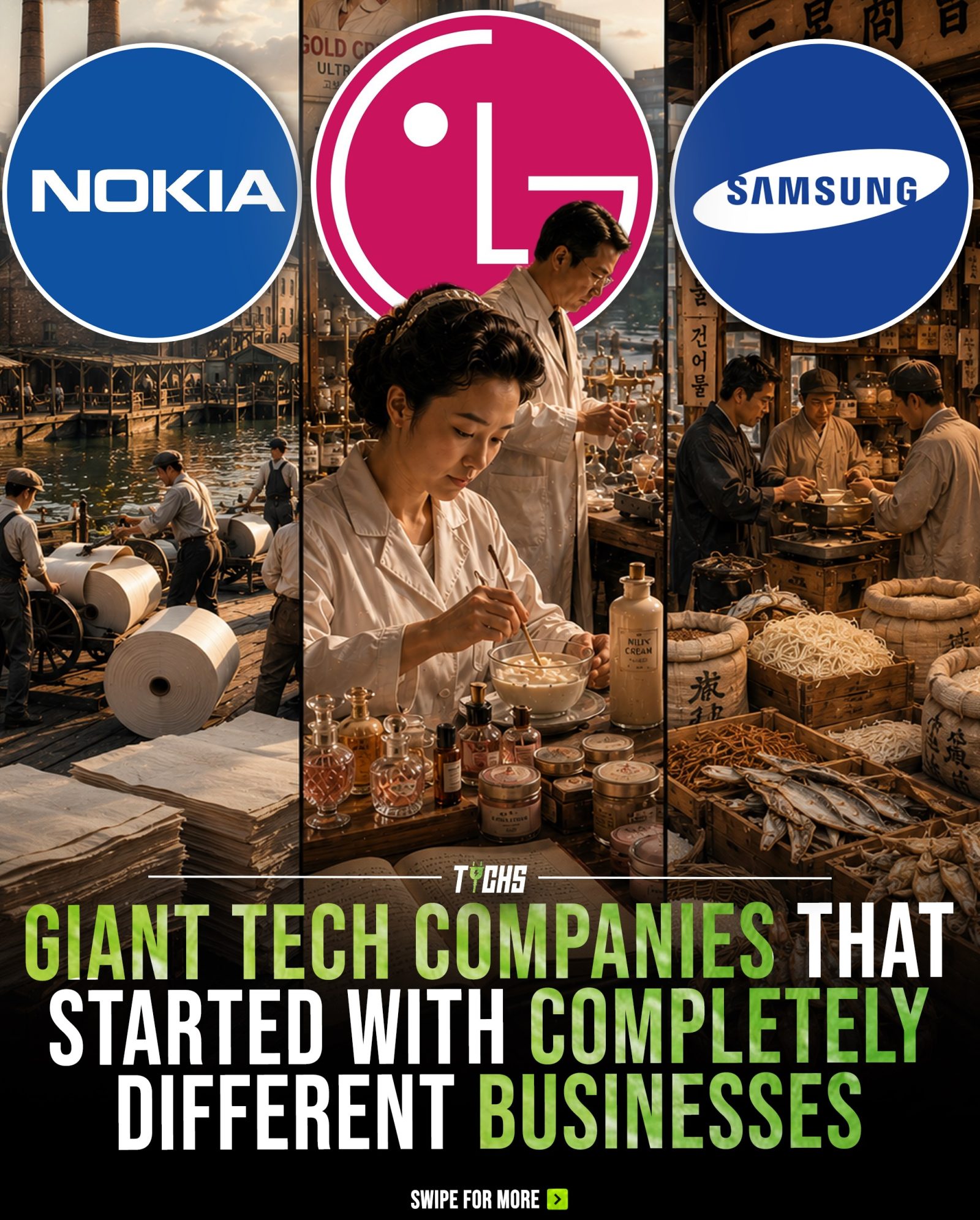
Nokia's journey began in 1865 as a paper mill in Finland. Initially focused on the production of paper, the company diversified over the years into various sectors, including rubber and cables. This diversification set the stage for Nokia's eventual foray into the telecommunications industry, ultimately leading to its prominence as a leading mobile phone manufacturer. This adaptability allowed Nokia to stay relevant and competitive in an ever-evolving technological landscape.
LG: From Cosmetics to Electronics
LG, originally known as Lak-Hui, started as a cosmetics company, primarily focusing on beauty products. Over time, the company recognized the potential in the electronics market and transitioned its focus to electronics. This pivot allowed LG to tap into a rapidly growing industry, ultimately establishing itself as a global electronics powerhouse. LG's transformation showcases how a company can shift its focus to capitalize on emerging opportunities, leveraging its core strengths to innovate and adapt.
Samsung: The Evolution of a Grocery Venture
Samsung began its journey in 1938 as a small trading company in South Korea, primarily dealing in groceries, dried fish, and noodles. Over the decades, Samsung expanded into various industries, including electronics, shipbuilding, and construction. This diversification allowed the company to diversify into a household name in the tech industry. Samsung's story of growth and innovation highlights the importance of identifying and investing in new opportunities, even if they are outside the original business model.
YouTube: From Dating to Video Sharing
YouTube's origins are particularly unique. Initially conceived as a video dating platform, the founders envisioned a site where users could upload videos of themselves to find romantic connections. This initial concept quickly evolved. The platform's pivoted towards a broader video-sharing model, which became a massive success. This transformation underscores the importance of recognizing and adapting to the evolving needs and preferences of users, ultimately leading to YouTube's position as the world’s largest video-sharing website.
Practical Tips
Embrace Adaptability
The stories of these tech giants emphasize the importance of adaptability. Businesses must be willing to pivot and explore new opportunities, even if they diverge from their original focus. This willingness to adapt can open new avenues for growth and success.
Innovate Continuously
Continuous innovation is crucial for staying competitive in a rapidly changing market. Companies that embrace innovation are better positioned to identify and capitalize on emerging trends, ensuring long-term sustainability and relevance.
Reinvent Your Business Model
Reinventing a business model can be a powerful strategy for growth. By identifying new opportunities and pivoting to focus on them, companies can achieve breakthroughs that propel them to new heights. Reinvention allows businesses to stay ahead of the competition and adapt to changing market conditions.
Important Takeaways
-
Diverse Beginnings: Many of today’s most valuable tech companies began with businesses that had nothing to do with technology. This highlights the potential for growth and diversification in any industry.
-
Adaptability and Innovation: Adaptability and a willingness to innovate are crucial for long-term success. Companies that can pivot and evolve in response to new opportunities are more likely to thrive in a competitive market.
-
Continuous Reinvention: Businesses must be prepared to reinvent themselves to stay relevant. This involves identifying new opportunities, adapting to changing market conditions, and continuously innovating.
Conclusion
The journey of tech companies from their diverse beginnings to their current positions as industry leaders offers valuable lessons for entrepreneurs and business leaders. Through adaptability, innovation, and a willingness to reinvent themselves, these companies have achieved remarkable success. The stories of Nokia, LG, Samsung, and YouTube serve as a reminder that the path to success in the tech industry is often paved with surprising and transformative beginnings.
Watch the Reel
Questions readers ask
What was Nokia's original business before it became a tech giant?
Nokia began as a paper mill in Finland in 1865. Over time, it expanded into various industries, including rubber and cables, and eventually entered the tech industry with the production of telephones and mobile devices.
How did Samsung transition from cosmetics to electronics?
Samsung was founded in 1938 as a trading company, and its first products were noodles, textiles, and cosmetics. Its transition to electronics began in the 1960s, and over the decades, it has become a global leader in consumer electronics, semiconductors, and telecommunications.
What was YouTube before it became a Google subsidiary?
YouTube was launched in 2005 as a video-sharing platform by three former PayPal employees. It quickly gained popularity and was acquired by Google in 2006 for $1.65 billion, becoming a cornerstone of Google's video strategy.
Can you provide an example of a company that pivoted from a dating site to a tech company?
Match Group, which owns popular dating sites like Match.com and Tinder, started as an online dating service. Over time, it expanded into various tech-related ventures, including social networking and mobile apps, demonstrating the company’s ability to adapt to technological changes and market needs.
How did a paper mill evolve into a top tech company?
One notable example is Nokia. The company started as a paper mill in 1865 and gradually diversified into various industries. It eventually entered the tech sector and became a major player in mobile technology, showcasing how businesses can transform and adapt to new opportunities over time.
What lessons can be learned from the origins of top tech companies?
The origins of top tech companies like Nokia, Samsung, and YouTube highlight the importance of adaptability, innovation, and the willingness to explore new opportunities. They demonstrate that successful businesses are often those that can pivot and evolve in response to changing markets and technological advancements.
Related deep dives
Similar reads based on topic and creator.




Recent articles
Fresh deep dives from the latest Reels we unpacked.




Comments
Be the first to comment.