Unglamorous Giants: Making Sense of Network Bisection & Aggregation
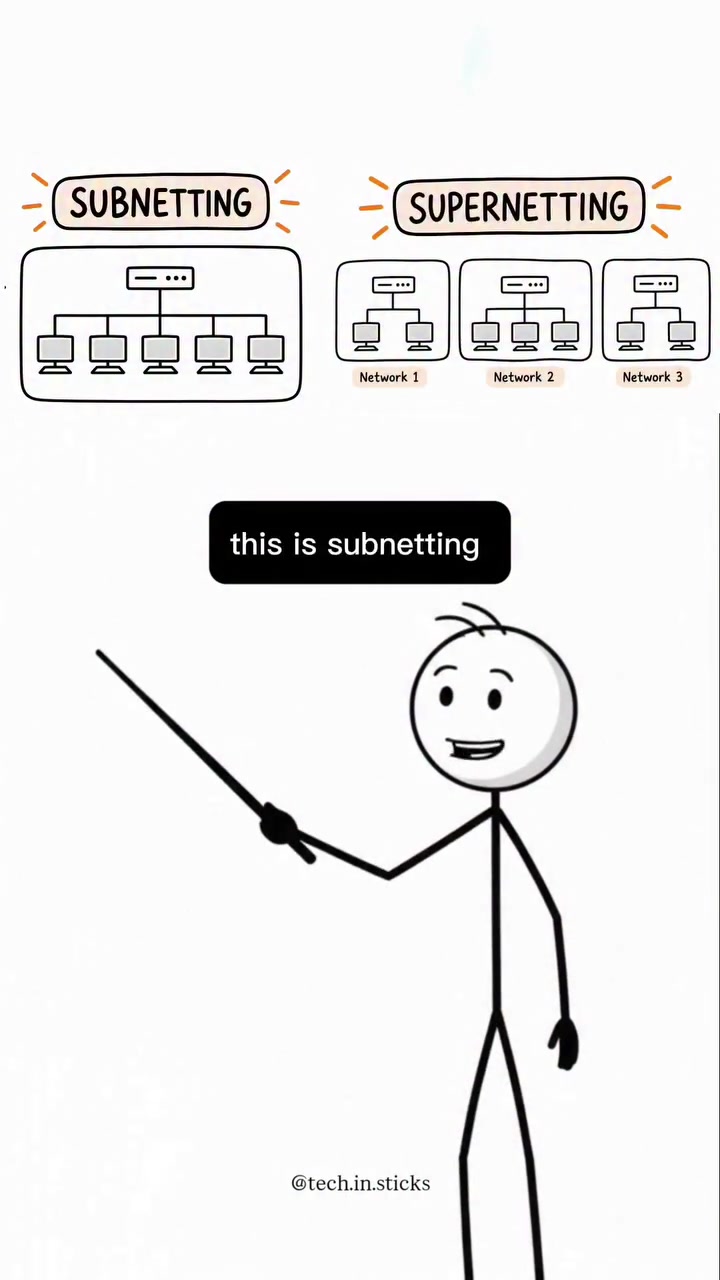
Subnetting and supernetting might not be trendy buzzwords, it's these fundamentals of network engineering that keep digital life functional. To understand the competing needs of separation and unification in network architecture, it helps to think of them as giant apartment buildings, with each tenant needing their own plumbing. They sound similar, and while both are network segmentation processes, they are practically opposites. As visualized online, subnetting happens when a single, large network is divided into smaller, more manageable segments. With the support of a network administrator, each segment can serve a specific function, such as HR, finance, or IT. It improves efficiency and security to have distinct components. Supernetting, on the other hand, is like merging several small buildings into a single complex. Instead of splitting, this process combines multiple, smaller networks into a single, larger network. It simplifies the network structure for streamlined management.
How Routing Choices Reflect Modern Networking Needs
In today's connected world where every device wants to be online, the ability to manage those connections effectively is more crucial than ever. Subnetting and supernetting are two key techniques used by network engineers to manage large networks efficiently. Why it matters? As data usage surges and new devices constantly come onto the network, both public and private sectors need these techniques to manage increasingly complex web of connections. Without subnetting, managing a network would be like herding cats; without supernetting, every small device would need its own, isolated network.
Comparing Subnetting and Supernetting
The key difference is that subnetting breaks apart, while supernetting consolidates. Let's break out the nuance:
### Subnet Creation: Breaking Down Networks
Subnetting involves taking one large network and splitting it into smaller networks. This is particularly useful in large organizations or data centers where different departments or services need to be isolated. For instance, a corporate network might have separate subnets for HR, finance, and IT. For those smaller subnets, a new set of IP address ranges, subnet masks, and default gateways are configured. Supernetting, on the other hand, does the opposite. Instead of dividing a large network into smaller parts, supernetting combines multiple smaller networks into a single, larger network. This can be useful when merging networks from different departments or branches of an organization.
### The Role of IP Addresses
As mentioned, subnetting involves dividing a single IP address range into smaller subnets, each with its own range of IP addresses. For example, a network with the IP address range 192.168.1.0/24 might be subdivided into four subnets, each with a range of 192.168.1.0/26. Each subnet needs a different portion of the full address range. Supernetting, however, allows for combining multiple smaller IP address ranges into a single, larger range.
### Truncation Versus Expansion
Subnetting usually requires assigning smaller sections of the available IP addresses to various network segments. This is a process that needs careful calculation to ensure that each subnet has a unique set of IP addresses. If subnets are not configured properly, it can lead to IP address conflicts or network congestion. Supernetting, on the other hand, increases the overall range of IP addresses available for use. This can make it easier to manage larger networks, as it reduces the need for multiple smaller subnets and simplifies the overall network architecture.
### Firewall Isolation
Supernetting and subnetting both have distinct benefits in terms of network security. Subnetting enables the creation of isolated subnets, which can enhance security by limiting the spread of potential threats. If one subnet is compromised, the impact can be contained within that specific subnet, reducing the risk to the overall network. For example, HR data can be separated from IT data, and if one department's network gets hacked, the other remains untouched.
### Network Complexity
Supernetting, however, can simplify network management by reducing the number of subnets and consolidating network resources. This can streamline administration tasks and reduce the complexity of network configurations. However, supernetting might require a more robust and scalable infrastructure to handle the increased traffic and data flow.
What Networking Reality Can Teach Us
A few decades ago, a network with subnetting was a novelty. But in today's environment, every organization needs to make strategic decisions about how to implement subnetting or supernetting. For a small business with a few computers, subnetting might not be necessary. But for a large enterprise with thousands of devices, subnetting can be crucial for maintaining network efficiency and security. One misconception is that supernetting is always the best approach for larger networks. While it can simplify management, it might not be suitable for all scenarios. In some cases, the benefits of subnetting—such as improved security and resource allocation—outweigh the advantages of supernetting.
Getting Started With Slices and Stitches
If you are a technology enthusiast or a student, understanding subnetting and supernetting is crucial. The best way to dive into it:
- Label: Study the Basics — Begin by understanding the fundamental concepts of IP addressing, subnet masks, and default gateways.
- Label: Practice Subnetting — Use online tools and simulators to practice creating subnets and assigning IP addresses. This will help you get hands-on experience. Always remember that subnets are smaller, more manageable sections within a larger network.
- Label: Explore Supernetting — Learn how to combine multiple smaller IP address ranges into a single, larger range. Tools and simulators can help you practice configuring supernets and understand their impact on network management.
- Label: Real-World Examples — Look at real-world examples of subnetting and supernetting in action. Understanding how these concepts are applied in actual networks can provide valuable insights. With subnetting and supernetting, the process is simple — but not always easy. Start with a manageable network, and as you grow, you'll naturally need to divide or combine your IP addresses. When any troubles crop up, you will see if subnetting or supernetting is the best solution. Both techniques are essential for effective network management, and understanding the different use cases can help you make informed decisions.
Watch the Reel
Questions readers ask
What exactly is subnetting and why would a network administrator use it?
Subnetting is the process of dividing a large network into smaller, more manageable segments. Network administrators use subnetting to improve efficiency and security by isolating different parts of the network, such as different departments or services, each with its own IP address range, subnet mask, and default gateway.
How does supernetting differ from subnetting in terms of network management?
Supernetting is the opposite of subnetting. Instead of dividing a large network into smaller parts, supernetting combines multiple smaller networks into a single, larger network. This simplifies the network structure, making it easier to manage, especially when merging networks from different departments or branches.
Can you give an example of when subnetting would be particularly useful?
Subnetting is particularly useful in large organizations or data centers where different departments or services need to be isolated. For example, a corporate network might have separate subnets for HR, finance, and IT, each with its own range of IP addresses.
What are some practical concerns when implementing subnetting or supernetting?
When implementing subnetting or supernetting, network administrators need to carefully plan the IP address ranges, subnet masks, and default gateways. They also need to consider the impact on network performance and security, as well as the potential for network congestion or isolation. It's crucial to have a clear understanding of the network's requirements and the tools available for management.
Is there a scenario where both subnetting and supernetting might be used together?
Yes, in complex network environments, both subnetting and supernetting might be used together. For example, a large organization might use supernetting to combine networks from different branches, and then use subnetting within those combined networks to isolate different departments or services.
Related deep dives
Similar reads based on topic and creator.


Recent articles
Fresh deep dives from the latest Reels we unpacked.




Comments
Be the first to comment.