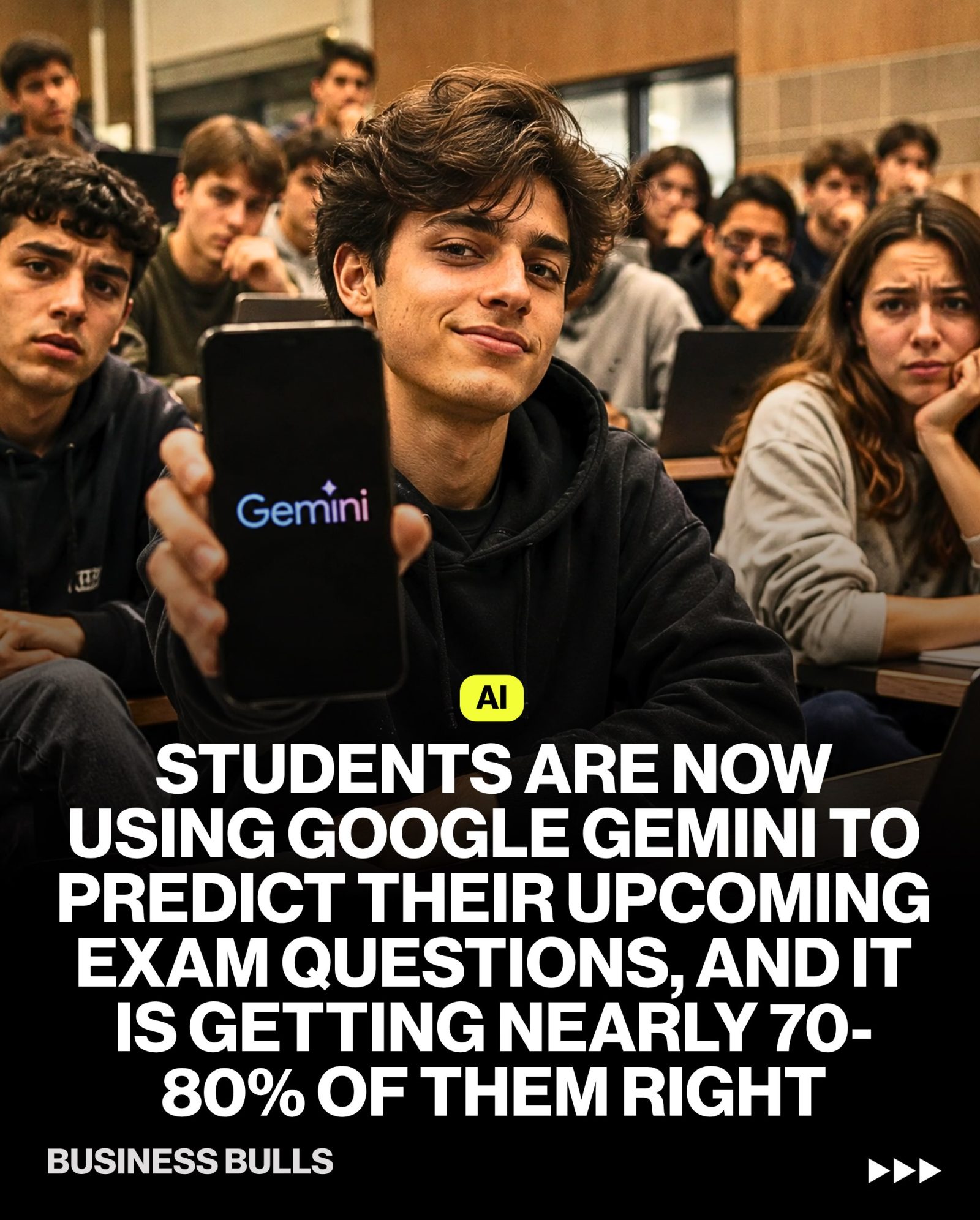
Exam Question Prediction with Google Gemini
Google Gemini, an advanced AI language model, is revolutionizing how students prepare for exams. By analyzing lecture materials and past exam papers, students can identify recurring patterns and predict likely topics. While some users report accuracy rates as high as 70-80%, it's important to remember that AI predictions are not foolproof. However, when used effectively, Gemini can enhance exam preparation by making it more targeted and efficient.
Context / Why This Matters
In today's competitive academic landscape, efficient study strategies can make a significant difference. Traditional methods of summarizing notes and reviewing lecture materials are being augmented by AI-driven tools. Students are increasingly relying on AI to analyze vast amounts of data, identify key patterns, and predict potential exam questions. This shift not only saves time but also ensures that students focus on the most relevant topics, making their study sessions more productive.
Main Discussion
Understanding the Process
Utilizing Google Gemini to predict exam questions involves a systematic approach. The process can be broken down into two main parts: data preparation and prompt engineering.
Data Preparation
Data preparation is crucial for accurate predictions. Here’s a step-by-step guide to get you started:
- Collect: Gather exam question papers from the past five years. These can be in PDF or scanned formats.
- Organize: Name each file systematically, including the year and the paper identifier (e.g., 2021_PaperA.pdf).
- OCR: Convert the PDFs or scanned documents into clean text using Optical Character Recognition (OCR) tools. This step ensures that the AI can analyze the text accurately.
- Clean: Remove any headers, footers, and other irrelevant information. Correct any OCR errors and split the text into individual questions.
- Tag (optional): If possible, label each question with its corresponding topic or chapter. This can help in more precise analysis.
Prompt Engineering
Once the data is prepared, the next step is prompt engineering. This involves crafting a clear and effective query for the AI to analyze the data.
- Prompt: Use a predefined prompt that instructs the AI to analyze the data. A sample prompt might look like this:
Analyze these 5 years of [EXAM NAME] question papers (clean text). Return: • Top 10 recurring topics with counts. • Top 5 topics most likely for the next exam with confidence % each. • For each top topic, list 1 common question type. - Run: Upload the cleaned text and the prompt to Gemini (or another language model). The AI will then process the data and generate predictions.
- Request Short Output: Ask the AI to return a concise summary, ideally 6-8 bullet points, each with 6-10 words. This format is easy to digest and share on social media or study groups.
- Verify and Post: Manually verify the top 3 topics against the latest exam papers. Once confirmed, publish the results.
Practical Tips
Maximizing the Use of Google Gemini
To make the most of Google Gemini for exam preparation, consider the following tips:
- Regular Updates: Keep your dataset updated with the latest exam papers to improve the accuracy of predictions.
- Combine Methods: Use Gemini predictions as a supplement to traditional study methods. Don't rely solely on AI for your preparation.
- Cross-Verify: Always cross-verify the AI's predictions with your own understanding and other reliable sources.
- Community Sharing: Share your findings with study groups or on social media to benefit from collective knowledge and feedback.
Enhancing Prompt Effectiveness
The quality of your prompt significantly affects the output of the AI. Here are some tips to enhance your prompts:
- Be Specific: Clearly state what you need from the AI. Vague prompts can lead to irrelevant or incomplete results.
- Format Instructions: Break down your instructions into bullet points or a structured format. This makes it easier for the AI to understand and execute.
- Test and Iterate: Don’t hesitate to tweak your prompts based on the initial results. Experiment with different phrasing and formats to get the best output.
Leveraging Additional Tools
While Google Gemini is a powerful tool, combining it with other resources can enhance your study experience:
- Note-Taking Apps: Use apps like Evernote or Notion to organize your notes and past exam papers. This makes it easier to gather and process data for the AI.
- Study Groups: Collaborate with peers to share insights and predictions. Group discussions can provide a broader perspective and validate AI predictions.
- Online Forums: Participate in online forums and communities related to your subject. These platforms can offer additional insights and study tips.
Important Takeaways
- Efficiency: Using AI to predict exam questions can make your study sessions more efficient by focusing on high-probability topics.
- Supplement, Don’t Replace: AI predictions should complement, not replace, your own study efforts. Always cross-verify and supplement with traditional study methods.
- Data Quality: The accuracy of predictions depends heavily on the quality and relevance of the data you feed into the AI. Keep your dataset updated and clean.
- Prompt Engineering: Crafting effective prompts is crucial. Be clear, specific, and structured in your instructions to the AI.
Conclusion
Google Gemini offers students a powerful tool for predicting exam questions and making their study sessions more focused and effective. By following a methodical approach to data preparation and prompt engineering, students can harness the capabilities of AI to enhance their preparation. However, it's essential to use these predictions as a supplement to traditional study methods and to regularly update and verify the data. With the right strategies, Google Gemini can be a valuable asset in achieving academic success.
Watch the Reel
Questions readers ask
How does Google Gemini AI assist in predicting exam questions?
Google Gemini AI analyzes lecture materials and past exam papers to identify recurring patterns and topics, helping students predict likely exam questions. By focusing on these pertinent topics, students can tailor their study efforts more effectively.
What kind of accuracy can students expect from Google Gemini's predictions?
While the accuracy can vary, some users report that Google Gemini AI's predictions are accurate 70-80% of the time. However, it’s important to remember that these are predictions and not guarantees, so students should use them as a guide rather than a definitive list.
How can Google Gemini AI help students focus on relevant topics?
By analyzing lecture materials and past exam papers, Google Gemini AI helps students pinpoint the most relevant topics. This allows students to allocate their study time more efficiently, focusing on areas that are likely to be covered in their exams.
How does using Google Gemini AI for exam prep compare to traditional study methods?
Traditional methods like note-taking and reviewing lecture materials are still crucial, but using Google Gemini AI can enhance these strategies. The AI tool helps students identify key areas to focus on, thereby making their study sessions more targeted and efficient.
Can Google Gemini AI be used for all types of exams?
Google Gemini AI can be a valuable tool for a wide range of exams, particularly those that have a structured format and rely on recurring topics. However, its effectiveness may vary depending on the specific nature of the exam and the quality of the data it's analyzing.
What are the top strategies for using Google Gemini AI to improve exam performance?
Top strategies include regularly updating the AI with the latest lecture materials and past exam papers, cross-referencing AI predictions with your own study notes, and using the predictions to guide focused study sessions. Additionally, reviewing and reinforcing the predicted topics can boost your confidence and readiness for the exam.
How can students make the most out of Google Gemini AI for exam preparation?
To maximize the benefits, students should use Google Gemini AI as a supplementary tool alongside their traditional study methods. Regularly inputting new data and cross-verifying the AI's predictions with other study materials can enhance the overall effectiveness of the AI's insights and improve exam performance.
Related deep dives
Similar reads based on topic and creator.


Recent articles
Fresh deep dives from the latest Reels we unpacked.




Comments
Be the first to comment.