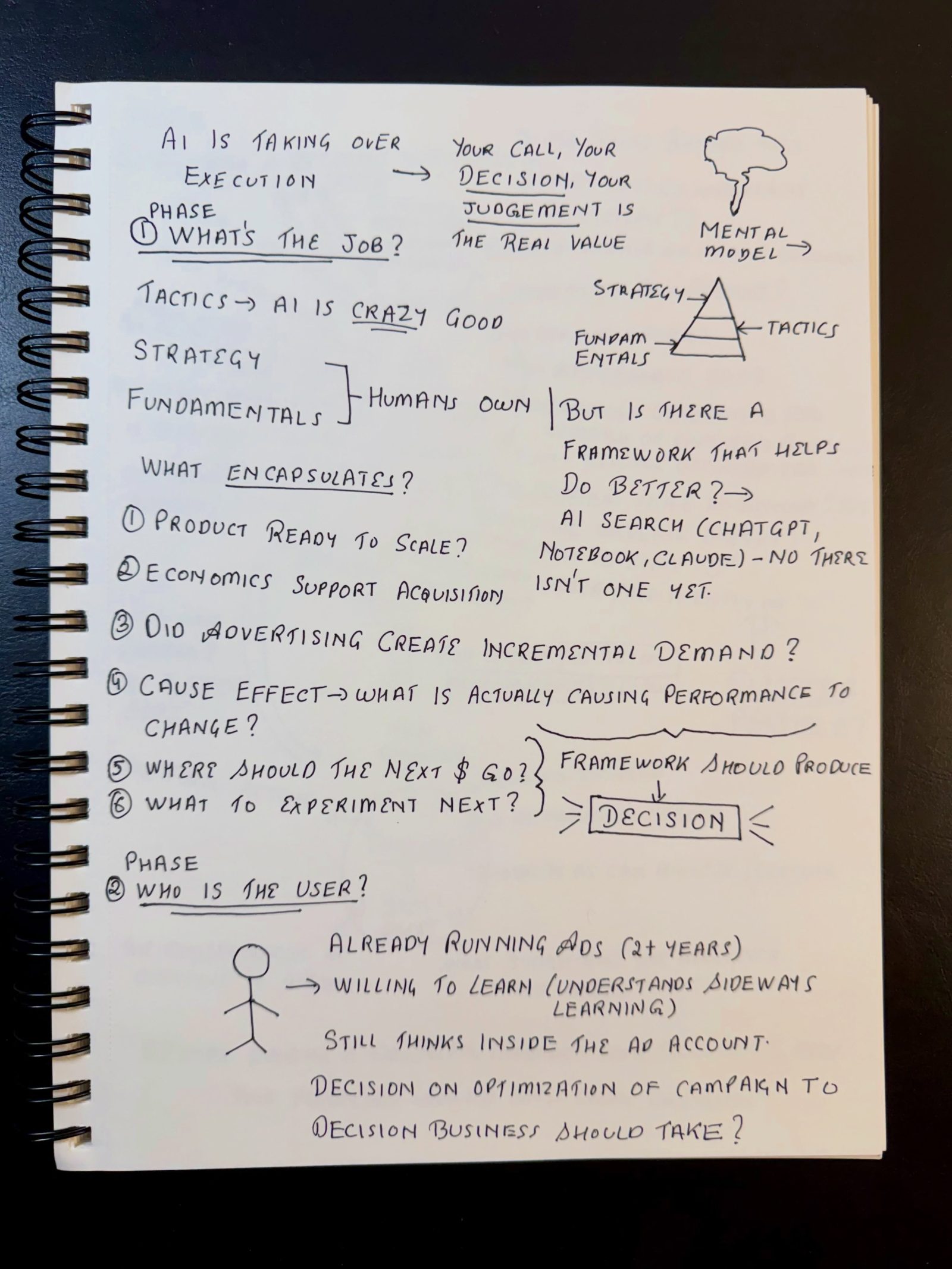
Framework for Decision Making in Marketing and Advertising
In the ever-evolving realm of performance marketing, a robust framework for decision-making is essential. As AI takes over more of the execution in performance marketing, it becomes crucial for marketers to focus on strategic decision-making rather than tactical execution. This article delves into a structured approach to optimizing campaigns, understanding user behavior, and making informed business decisions.
Why This Matters
With AI handling more of the tactical work, performance marketers need to shift their focus towards strategic decision-making. This shift requires a clear understanding of the fundamentals of marketing and advertising, as well as a structured approach to problem-solving. By focusing on the right questions and making informed decisions, marketers can drive better business outcomes and optimize their campaigns effectively.
Understanding the Framework
The Role of AI in Decision Making
AI is increasingly taking over the execution of marketing tasks, making it necessary for marketers to become exceptional at strategic decision-making. This shift means that marketers need to understand the fundamentals of their business and make decisions that drive growth and profitability.
The 6M Framework
The 6M framework is designed to help performance marketers make better business decisions. It consists of six key components: Market, Margin, Measurement, Mechanism, Money, and Move. Each component focuses on different aspects of decision-making, from understanding the market to allocating resources effectively.
Market
The Market component focuses on identifying whether a product or service is worth growing. This involves understanding the market dynamics, identifying potential opportunities, and determining whether the product can scale effectively.
Margin
The Margin component is concerned with whether a product can grow profitably. This involves analyzing the cost structure, pricing strategy, and revenue streams to ensure that the business can maintain profitability while scaling.
Measurement
Measurement involves understanding the true impact of marketing efforts. This means going beyond surface-level metrics to identify the causal relationships between marketing activities and business outcomes. By understanding what marketing actually causes, marketers can make more informed decisions about resource allocation and strategy.
Mechanism
This component focuses on understanding the underlying mechanisms that drive performance. This involves identifying the root causes of performance changes and making data-driven decisions to optimize campaigns.
Money
Resource allocation is a critical aspect of decision-making. The Money component involves deciding where to invest the next dollar to maximize returns. This requires a deep understanding of the business and the ability to allocate resources effectively.
Move
The Move component involves deciding what should happen next. This involves understanding the next steps in the decision-making process and making informed decisions about the future direction of the business.
Practical Tips for Implementing the Framework
Defining the Job
Before implementing the framework, it's essential to define the job it needs to do. This involves understanding the specific problems that the framework needs to solve and the goals it needs to achieve. By clearly defining the job, you can tailor the framework to meet your specific needs.
Identifying the User
Understanding the user is crucial for effective decision-making. This involves identifying who the framework is for and how it will be used. By understanding the user, you can ensure that the framework is relevant and valuable to them.
Listing Key Decisions
Identifying the key decisions that need to be made is an essential part of the process. This involves listing the specific decisions that the framework will help with, such as whether to advertise a product, how to allocate resources, and what to experiment with next.
Clustering Decisions
Grouping decisions into natural clusters can help simplify the decision-making process. This involves identifying related decisions and grouping them together to make the framework more manageable.
Documenting Processes
Documenting the decision-making process is essential for continuity and improvement. This involves recording the steps taken, the decisions made, and the outcomes achieved. By documenting the process, you can ensure that the framework is consistent and effective.
Continuously Evaluating Results
Continuous evaluation is crucial for improving the framework. This involves regularly reviewing the results of the decisions made and making adjustments as needed. By continuously evaluating the results, you can ensure that the framework remains relevant and effective.
Important Takeaways
Focus on the Fundamentals
Understanding the fundamentals of marketing and advertising is crucial for effective decision-making. This involves focusing on the basics, such as identifying the target audience, understanding the market, and making data-driven decisions.
Document and Evaluate
Documenting the decision-making process and continuously evaluating the results is essential for improving the framework. This involves recording the steps taken, the decisions made, and the outcomes achieved, and making adjustments as needed.
Use AI to Your Advantage
AI can be a powerful tool for decision-making, but it's essential to use it effectively. This involves understanding the strengths and limitations of AI and using it to complement human decision-making.
Conclusion
As AI takes over more of the execution in performance marketing, it's essential for marketers to become exceptional at strategic decision-making. The 6M framework provides a structured approach to decision-making, helping marketers make informed decisions about resource allocation, user analysis, and campaign optimization. By focusing on the fundamentals, documenting the process, and continuously evaluating the results, marketers can drive better business outcomes and optimize their campaigns effectively.
Watch the Reel
Questions readers ask
What is the 6M framework and how does it apply to performance marketing?
The 6M framework is a structured approach designed to help performance marketers optimize their campaigns and drive business growth. It focuses on six key components: mission, market, metrics, model, methods, and money. By considering these aspects, marketers can make informed decisions that enhance campaign effectiveness and user understanding.
How does AI impact the role of performance marketers in decision-making?
AI is increasingly handling tactical tasks in performance marketing, which allows marketers to shift their focus towards strategic decision-making. This means marketers can concentrate on understanding market dynamics, optimizing resource allocation, and driving profitability, rather than getting bogged down in day-to-day execution.
What are the next steps for a performance marketer looking to implement the 6M framework?
Performance marketers should start by assessing their current strategies and identifying areas where the 6M framework can be applied. This might involve defining clear objectives, analyzing market data, setting key performance indicators, and evaluating the profitability of different marketing channels.
Why is understanding user behavior crucial in performance marketing?
Understanding user behavior is vital because it helps marketers tailor their campaigns to meet the needs and preferences of their audience. By analyzing user behavior, marketers can optimize their strategies to enhance engagement, drive conversions, and ultimately achieve better business growth.
How can the 6M framework help in optimizing marketing campaigns?
The 6M framework provides a comprehensive approach to optimize marketing campaigns by ensuring that all key components are aligned. For instance, aligning market insights with your mission, setting clear metrics to track performance, and refining methods based on data-driven models will lead to more effective campaign strategies.
What steps can be taken to improve profitability in performance marketing through strategic decision-making?
To enhance profitability, marketers should focus on understanding their market dynamics and user behavior, allocating resources effectively, and continuously evaluating the performance of their campaigns. By leveraging the 6M framework, marketers can identify high-return opportunities and make data-driven decisions that drive profitability.
What are the benefits of using a structured approach to decision-making in performance marketing?
A structured approach ensures consistency and alignment in marketing strategies. It helps in making informed decisions, optimizing campaigns, and understanding user behavior. By following a structured framework, marketers can enhance their strategies, allocate resources effectively, and achieve better business outcomes.
Related deep dives
Similar reads based on topic and creator.




Recent articles
Fresh deep dives from the latest Reels we unpacked.




Comments
Be the first to comment.