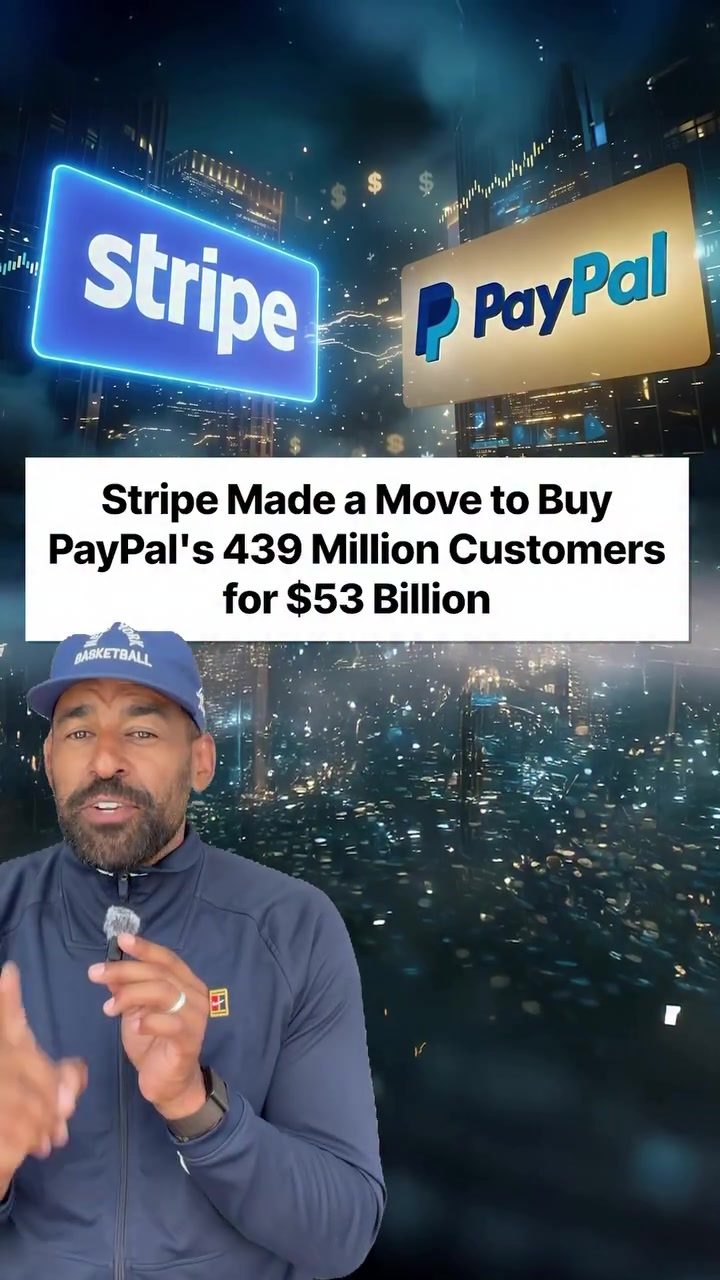
Stripe's Potential Acquisition of PayPal
Stripe, a leading fintech company, has announced a groundbreaking offer to acquire PayPal for $53 billion. This move, while surprising to many, holds significant implications for the financial technology landscape. Here's what you need to know.
Why This Matters
The potential acquisition of PayPal by Stripe is unprecedented for several reasons. Firstly, Stripe is a private company valued at approximately $150 billion that has never gone public. Its offer to acquire a publicly traded S&P 500 company signifies a monumental shift in the fintech industry.
The deal involves a $60.50 per share offer, representing a 28% premium. This ambitious move is backed by $50 billion in committed bank financing and supported by the private equity firm Advent International.
The Strategic Acquisition
While the deal is pending PayPal's board meeting on July 20th, the strategic motives behind Stripe's offer are clear. Both companies have historically targeted different segments of the market. Stripe has established itself as the go-to infrastructure for developers and businesses, especially startups. Conversely, PayPal has built a vast consumer base, boasting 439 million active accounts and a reputation for seamless, one-click checkout experiences.
PayPal's consumer trust, built over decades, is a significant asset. Additionally, PayPal owns Venmo, a culturally embedded peer-to-peer payment app that has transformed how people manage and share expenses. This merger would provide Stripe with an instant consumer product, dramatically altering the fintech landscape.
The Impact of AI on Commerce
The acquisition of PayPal by Stripe comes at a pivotal moment as AI is revolutionizing commerce. AI agents are poised to increasingly make purchases on behalf of users. The company that owns identity, trust, wallets, and payment credentials will have a competitive edge. PayPal already holds these assets on the consumer side, while Stripe dominates the business infrastructure. Together, they would control both ends of every online transaction.
Data as the Moat
Every payment transaction yields valuable data—what people buy, when, how often, and which subscriptions they maintain. This data forms the foundation for lending, underwriting, fraud detection, and AI-driven commerce. By combining forces, Stripe and PayPal would create a formidable data moat, reinforcing their market dominance.
Regulatory and Analytical Challenges
Despite the potential benefits, the acquisition faces significant hurdles. PayPal has not yet accepted the offer, and many analysts believe the $60.50 per share valuation is too low. Regulatory scrutiny of a combined entity processing $3.7 trillion annually will be extensive and complex. However, whether the deal closes or not, the signal is clear: Stripe believes it is cheaper to buy consumer relationships than to build them from scratch.
Practical Tips
For those in the fintech industry or interested in investment opportunities, this potential acquisition highlights several key points:
- Data is King: The value of consumer data and trust cannot be overstated. Companies that can leverage this data effectively will thrive.
- AI Integration: Preparing for an AI-driven future in commerce is crucial. Business models that integrate AI for transactions and data analysis will have a competitive edge.
- Consumer Trust: Building and maintaining consumer trust is essential. PayPal's long-standing trust and consumer base are valuable assets in any merger or acquisition.
Important Takeaways
- Pivotal Acquisition: Stripe's potential acquisition of PayPal marks a significant shift in the fintech landscape, highlighting the value of consumer data and trust.
- Strategic Synergy: The combination of Stripe's business infrastructure and PayPal's consumer base could create an unparalleled fintech powerhouse.
- AI and Commerce: The role of AI in commerce is growing, and companies that can leverage AI for transactions and data analysis will lead the market.
- Regulatory Hurdles: While the deal faces significant challenges, its implications for the fintech industry are far-reaching.
Conclusion
Stripe's offer to acquire PayPal for $53 billion represents a transformative move in the fintech world. Whether the deal succeeds or not, it underscores the strategic importance of consumer data, AI integration, and market synergy. For investors, entrepreneurs, and industry watchers, this potential acquisition signals a new era in financial technology, driven by data, trust, and innovation.
Watch the Reel
Questions readers ask
Why is Stripe interested in acquiring PayPal?
Stripe is interested in acquiring PayPal to leverage its vast consumer base and trusted brand. By merging with PayPal, Stripe aims to expand its reach and integrate PayPal's extensive user network with its own developer-focused infrastructure, potentially creating a more comprehensive payment processing platform.
What does this acquisition mean for the fintech industry?
This acquisition could signal a significant shift in the fintech industry, with major players like Stripe and PayPal consolidating their positions. It may lead to increased competition and innovation, as well as changes in how payment processing and digital transactions are handled. The deal could set a new trend for other private fintech companies looking to acquire publicly traded firms.
How will this acquisition impact consumers?
For consumers, this acquisition could mean more integrated and seamless payment experiences. Stripe's developer-focused tools combined with PayPal's extensive user network may lead to improved payment processing, enhanced security features, and more convenient digital transaction services. However, it may also raise concerns about market concentration and potential changes in service fees.
What are the potential challenges for Stripe in this acquisition?
Stripe may face several challenges in this acquisition, including regulatory hurdles, integration complexities, and potential pushback from PayPal's existing stakeholders. Stripe will need to navigate these issues carefully to ensure a smooth transition and maintain the trust of both PayPal's users and the broader fintech community.
What is the significance of the $53 billion offer?
The $53 billion offer represents a 28% premium over PayPal's market price at the time of the announcement, indicating Stripe's strong commitment to the acquisition. This substantial investment underscores Stripe's ambition to become a dominant player in the fintech industry and highlights the potential competitive advantages it sees in merging with PayPal.
How does Stripe plan to finance this acquisition?
Stripe has secured $50 billion in committed bank financing to support its acquisition of PayPal. This financial backing, along with support from private equity firms, demonstrates Stripe's capability to execute a large-scale buyout and underscores the strategic importance of this deal in expanding its position in the fintech industry.
What are the potential benefits for PayPal's shareholders?
PayPal shareholders could benefit significantly from this acquisition, as they would receive a substantial premium on their shares. The deal, if completed, could result in a payout of $60.50 per share, offering shareholders a lucrative exit opportunity. However, the long-term benefits for shareholders will depend on how Stripe integrates and manages PayPal's operations post-acquisition.
Related deep dives
Similar reads based on topic and creator.




Recent articles
Fresh deep dives from the latest Reels we unpacked.




Comments
Be the first to comment.