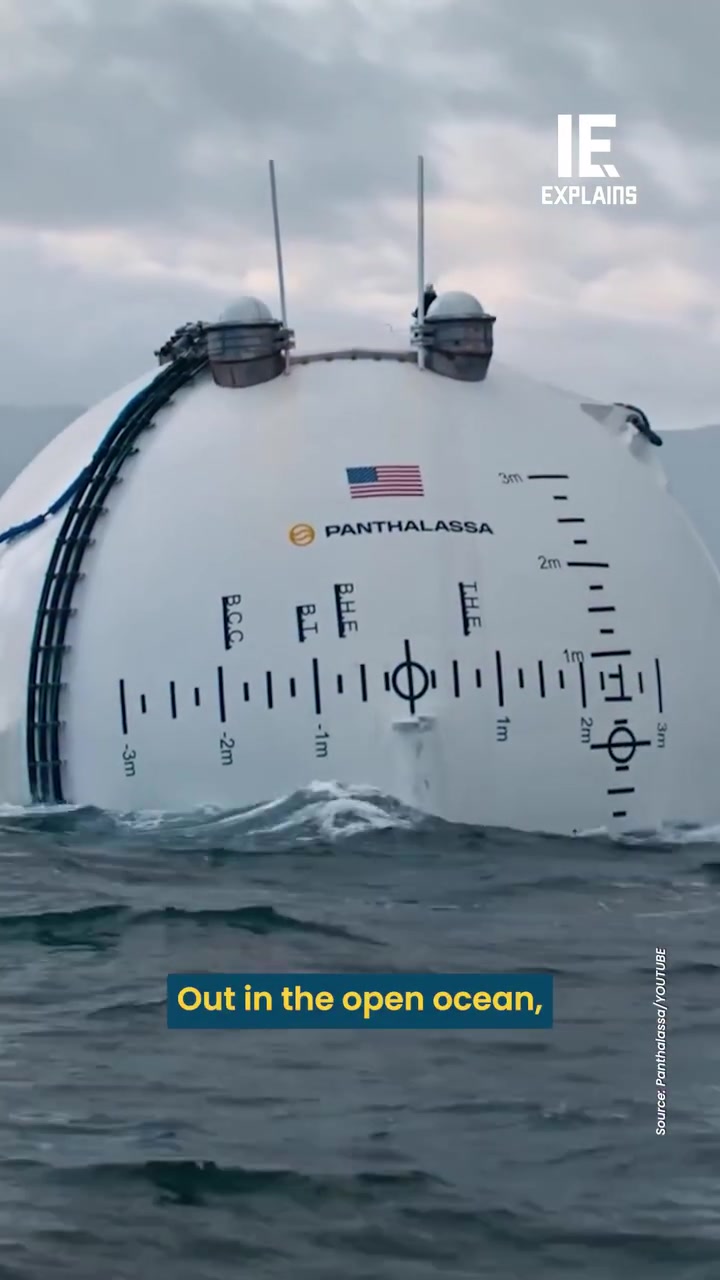
The steel device floating in the open ocean might be something out of a science fiction film, but it is an endeavor of Panther Lassa, a company based in Portland, Oregon. The Panthalassa Wave Energy Converter is an innovation that has just raised $140 million in a round led by Peter Thiel. It is designed to convert the kinetic energy of waves into electricity and utilize it to power onboard artificial intelligence, and it's set to revolutionize the face of renewable energy.
The Panther: Turning Ocean Waves into Electricity
The wave energy industry is teeming with devices, and the Panthalassa is a cylindrical device that stands out for its innovative approach to energy conversion. Like many other wave energy converters, it relies on the constant movement of the ocean. It has mechanical systems that convert the kinetic movement of waves into a steady supply of electricity. It has no moving parts that are submerged, unlike some other models, such as the Pelamis Wave Energy Converter which relies on buoyancy and flexibility to convert wave energy. But beyond this, the Panther's true innovation is in using the power it produces. It does not transfer energy back to shore via undersea cables. Instead, it is designed to run AI on the water's surface. While the world more generally moves towards renewable power like solar or wind, the ocean remains an untapped energy source. The device, powered and cooled by the surrounding ocean, is the result of creating sustainable power generation. It's a concept not to enjoy the energy itself, but rather to run complex machinery and transmit results back to land through low Earth orbit satellites. This way, it maximises its energy consumption, using every bit of electricity. No power is sent back to shore and no fresh water is needed, ensuring a decrease in pressure on power grids. The process also involves no moving parts that are submerged, thus avoiding the potential problems they could face from the corrosive properties of saltwater. Panther Lassa has successfully tested prototypes Ocean 1 and Ocean 2, as well as the Wave Hopper at sea in 2021 and 2024. The Ocean 3 pilot is going to the Northern Pacific this year, with commercial deployments planned for 2027.
Wave Energy: The New Frontier of Renewable Power
Panther Lassa's innovation is a potential game-changer in the renewable energy landscape, offering a sustainable solution in an industry that is heavily reliant on a variety of power sources. The world is increasingly shifting towards renewable energy sources, investing in wind and solar power, but wave energy has remained largely untapped, despite having significant potential. According to the National Renewable Energy Laboratory, wave energy could provide enough clean electricity to power millions of homes. However, the upfront costs of developing wave energy converters can be high and many of the devices struggle to compete with the efficiency of other renewable energy sources. Despite this, wave energy technology is evolving rapidly, and the Panthalassa has the potential to revolutionize the industry. One of the most significant advantages of wave energy is its predictability. Waves are a constant source of energy, unlike solar or wind, which can be intermittent. This makes wave energy a reliable source of power, which can be harnessed to generate a steady supply of electricity. Additionally, wave energy has a low environmental impact, as it does not produce greenhouse gases or other pollutants.
Why the Ocean Floor Matters - Natural Cooling to Save Costs
The Panthalassa's ability to run AI hardware without relying on onshore power or freshwater cooling systems is a significant advantage. Conventional computer hardware requires extensive cooling systems for effective operation at peak temperatures. The surrounding ocean operates as a thermal sink providing natural cooling that maintains optimal chip temperatures and slows degradation. That is, it's a cost-saving feature. It does not have a conventional cooling system. Instead, it relies on the natural cooling properties of the ocean to maintain optimal chip temperatures. This not only reduces the need for expensive cooling systems, but also slows down hardware degradation, extending the lifespan of the device. This means that the device can operate more efficiently and cost-effectively, without the need for additional resources or infrastructure.
The Role of Earth Orbit Satellites
Instead of spending a large amount of energy underwater cables, the generated energy is stored and used on board the device and feeds information to satellites. The energy produced is used to run onboard AI hardware, while the surrounding ocean provides natural cooling to maintain optimal chip temperatures. The finished "answers" travels back to land through low Earth orbit satellites. The device has a depth gauge that is used to control the power and energy generated, creating a unique approach to energy generation and utilization.
The On-Board Power Efficiency
The Panthalassa is also designed to maximize power efficiency, which reduces the amount of energy wasted during transmission. The device is designed to run AI hardware, which requires a constant supply of electricity. The use of low Earth orbit satellites helps to minimize energy loss during transmission. The surrounding ocean also provides natural cooling to maintain optimal chip temperatures, which reduces the need for additional resources or infrastructure. The device is designed to minimize its power footprint in order to generate a greater amount of electricity. This increases the device's overall efficiency, reducing the need for additional resources. On the surface, it looks like a giant steel-cylindrical canister which is 100m long and 100m wide. This allows the device to remain stable in the water and avoid corrosive properties and avoid any potential problems. The device is designed to weather the elements as well as to protect against rust.
The Practical Investments in The World of Wave Energy
Wave energy converters have been subject to many challenges, such as robustness and efficiency, which pose significant barriers to the widespread use of wave energy. The Panthalassa is a promising step forward in the world of wave energy. It is currently looking at raising investment for further developments, testing, and deployment. It is now possible for investors and businesses to get involved in this exciting and rapidly evolving industry. If you're looking to invest in wave energy, consider the following options:
- Contribute to Research and Development: By investing in research and development, you can help to advance the technology behind wave energy converters. This will make them more efficient, robust, and cost-effective, paving the way for their widespread use. Panther Lassa's raise of $140 million in a round, led by Peter Thiel, is a testament to the potential of this industry.
- Support Pilot Projects and Demonstrations: Investing in pilot projects and demonstrations can help to validate the technology behind wave energy converters and pave the way for their commercialization. The Ocean 3 pilot is set to go into the Northern Pacific this year, with commercial deployments planned for 2027. Panther have successfully tested prototypes Ocean 1 and Ocean 2, as well as the Wave Hopper at sea in 2021 and 2024.
- Partner with Established Companies: Partnering with companies that have established expertise in wave energy is another way to invest in this industry. Panther Lassa, for example, is a company that has developed a unique wave energy converter that is designed to maximize power efficiency and reduce the need for additional resources or infrastructure. Wave energy is a rapidly evolving industry with significant potential, especially when it comes to finding sustainable solutions for generating power. However, it is also facing many challenges, such as robustness and efficiency, which pose significant barriers to its widespread use. Investing in this industry can help to address these challenges and pave the way for a more sustainable future.
Watch the Reel
Questions readers ask
What makes the Panthalassa Wave Energy Converter unique compared to other wave energy devices?
The Panthalassa Wave Energy Converter stands out because it doesn't rely on underwater moving parts, which can be damaged by saltwater. Instead, it uses the kinetic energy of waves to power onboard AI systems, transmitting results via satellites. This approach maximizes energy efficiency and reduces the strain on power grids by not sending power back to shore.
How does the Panthalassa Wave Energy Converter generate electricity?
The Panthalassa Wave Energy Converter generates electricity by converting the kinetic energy of ocean waves into a steady electrical supply. It uses mechanical systems to harness the movement of the waves, which are then used to power onboard artificial intelligence systems.
What are the environmental benefits of using the Panthalassa Wave Energy Converter?
The Panthalassa Wave Energy Converter is designed to be environmentally friendly. It doesn't require fresh water, and it doesn't send power back to shore, which reduces the pressure on power grids. Additionally, it avoids the potential problems that underwater moving parts can face from saltwater corrosion.
Why does the Panthalassa Wave Energy Converter not send power back to shore?
The Panthalassa Wave Energy Converter is designed to run AI on the water's surface and transmit results back to land through low Earth orbit satellites. This approach maximizes energy consumption and avoids the need for undersea cables, which can be costly and environmentally disruptive.
What are the next steps for the Panthalassa Wave Energy Converter after successful prototype testing?
Panther Lassa, the company behind the Panthalassa Wave Energy Converter, has successfully tested prototypes Ocean 1 and Ocean 2, as well as the Wave Hopper at sea in 2021 and 2024. The company is planning to deploy the Ocean 3 pilot in the Northern Pacific this year, with commercial deployments slated for 2027.
Related deep dives
Similar reads based on topic and creator.


Recent articles
Fresh deep dives from the latest Reels we unpacked.

Comments
Be the first to comment.