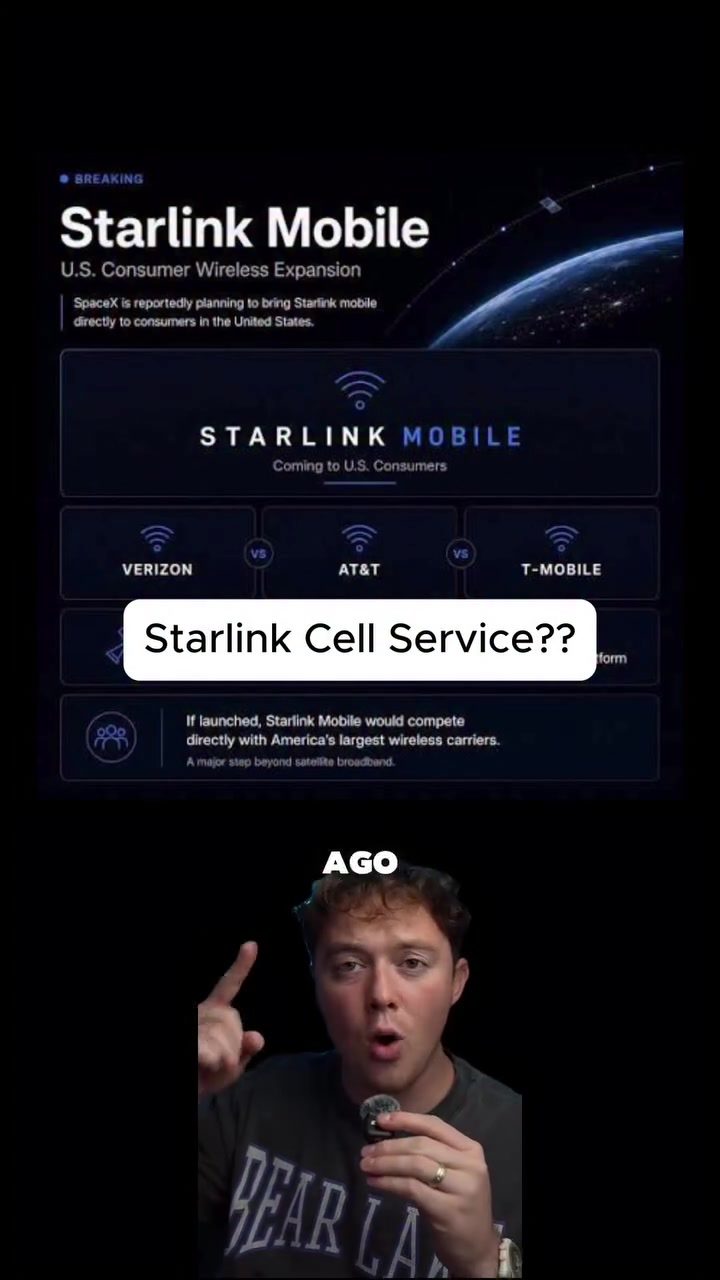
Starlink Expands Mobile Service
Starlink, the satellite internet service, is making waves by announcing its plans to compete with major wireless carriers, including Verizon, AT&T, and T-Mobile. This bold move is part of a broader strategy to expand mobile service and potentially capture customers from the biggest carriers in the United States.
Why This Matters
The expansion of Starlink's mobile service is significant for several reasons. First, it represents a major shift in the telecommunications industry, where traditional cellular networks have long dominated. Additionally, Starlink's hybrid network, which combines traditional cell service with satellite connectivity, promises to offer seamless coverage even in remote areas. For consumers, this means the possibility of consistent connectivity, regardless of location.
Main Discussion
The Hybrid Network
Starlink's strategy involves building a hybrid network that combines traditional cellular infrastructure with satellite connectivity. This setup aims to provide seamless coverage, especially in areas where traditional cell towers are sparse or nonexistent. For example, if you are in a city, the network will use normal cell service from nearby towers. However, when you venture into the mountains, deserts, or other dead zones, the service would automatically switch to Starlink's satellite network. This hybrid approach ensures that you have service almost anywhere in the world.
Spectrum Acquisition and Network Expansion
SpaceX, the company behind Starlink, has been actively acquiring wireless spectrum, which is a critical component for building and operating a mobile network. The spectrum allows Starlink to facilitate both voice and data services, making it a comprehensive mobile solution. The acquisition of this spectrum is a key step in transforming Starlink from a satellite internet provider into a full-fledged mobile carrier.
Challenges and Solutions
While the vision is ambitious, Starlink faces significant technical challenges. One of the primary issues is the current capacity of their satellites to handle the increased traffic. Ensuring that the satellite network can support a large number of users simultaneously is crucial for the success of this venture. However, SpaceX has made it clear that they are committed to overcoming these hurdles and are actively working on improving the satellite infrastructure.
Practical Tips
As Starlink prepares to launch its mobile service, there are a few practical considerations for consumers:
Understanding Coverage Areas
While Starlink aims to provide global coverage, it's important to understand that the initial rollout may have limitations. Users should check the coverage maps provided by Starlink to see if their areas are included in the initial launch. The reliability and speed of the service may vary based on location and network load.
Equipment and Setup
Starlink's mobile service will likely require specific equipment to function optimally. Users may need to purchase or rent devices that are compatible with the Starlink network. Additionally, understanding the setup process and ensuring that all components are correctly configured will be essential for a smooth experience.
Checking Availability
Stay updated with the latest news and announcements from SpaceX and Starlink. Follow their official channels and sign up for any available waitlists or beta programs. This will give you early access to the service and ensure that you are among the first to experience the benefits of Starlink's mobile network.
Important Takeaways
Seamless Connectivity
Starlink's hybrid network promises seamless connectivity, making it an attractive option for travelers, adventurers, and anyone who spends time in remote areas. The ability to switch between traditional cell service and satellite connectivity ensures that users stay connected, regardless of their location.
Competition and Innovation
The entry of Starlink into the mobile service market is expected to drive innovation and competition. Traditional carriers like Verizon, AT&T, and T-Mobile will need to adapt to the new challenges posed by Starlink, potentially leading to better services and lower prices for consumers.
Potential for Global Impact
Starlink's global ambitions could revolutionize the way people communicate, especially in underserved regions. By providing reliable internet and mobile services to remote areas, Starlink has the potential to bridge the digital divide and connect communities that have long been isolated.
Conclusion
The expansion of Starlink's mobile service is a significant development in the telecommunications industry. By leveraging a hybrid network of satellites and traditional cell towers, Starlink aims to provide seamless connectivity, even in the most remote areas. While there are technical challenges to overcome, the potential benefits for consumers and the broader impact on the industry make this a major development to watch.
Watch the Reel
Questions readers ask
How does Starlink's hybrid network differ from traditional cellular networks?
Starlink's hybrid network combines traditional cellular infrastructure with satellite connectivity. This means that even in remote or rural areas where traditional cell towers may not be available, users can still maintain a connection via satellite, providing a more consistent service than traditional cellular networks.
Which major mobile carriers is Starlink aiming to challenge?
Starlink is aiming to compete with major wireless carriers, including Verizon, AT&T, and T-Mobile. These carriers currently dominate the U.S. mobile service market, and Starlink's expansion into mobile service represents a significant challenge to their market share.
How will Starlink's mobile service benefit users in remote areas?
Starlink's mobile service is designed to provide uninterrupted connectivity, even in remote areas. By leveraging satellite connectivity, Starlink can ensure that users in rural or underserved locations have access to reliable mobile service, a benefit not always available with traditional cellular networks.
Is Starlink's mobile service a separate entity from SpaceX?
No, Starlink is a division of SpaceX. The expansion of Starlink's mobile service is part of SpaceX's broader strategy to innovate in the telecommunications industry, leveraging SpaceX's satellite technology to provide mobile service.
What makes Starlink's approach to mobile service unique?
Starlink's unique approach involves using a combination of traditional cellular infrastructure and satellite technology, creating a hybrid network. This hybrid model allows for more extensive coverage and reliable connectivity in a wider range of locations, a key differentiator from traditional mobile service providers.
How might Starlink's entry into the mobile service market impact current carriers like Verizon, AT&T, and T-Mobile?
Starlink's entry into the mobile service market introduces new competition, potentially leading to improved services and lower prices from existing carriers. With Starlink's promise of seamless coverage in remote areas, traditional carriers may need to adapt their strategies to maintain market share and meet consumer demands.
What is the significance of Starlink's expansion into the mobile market?
Starlink's expansion into the mobile market signifies a major shift in the telecommunications industry. It challenges the dominance of traditional cellular networks and offers consumers an alternative that promises more consistent and widespread coverage, which can be particularly beneficial for users in rural or underserved areas.
Related deep dives
Similar reads based on topic and creator.




Recent articles
Fresh deep dives from the latest Reels we unpacked.




Comments
Be the first to comment.