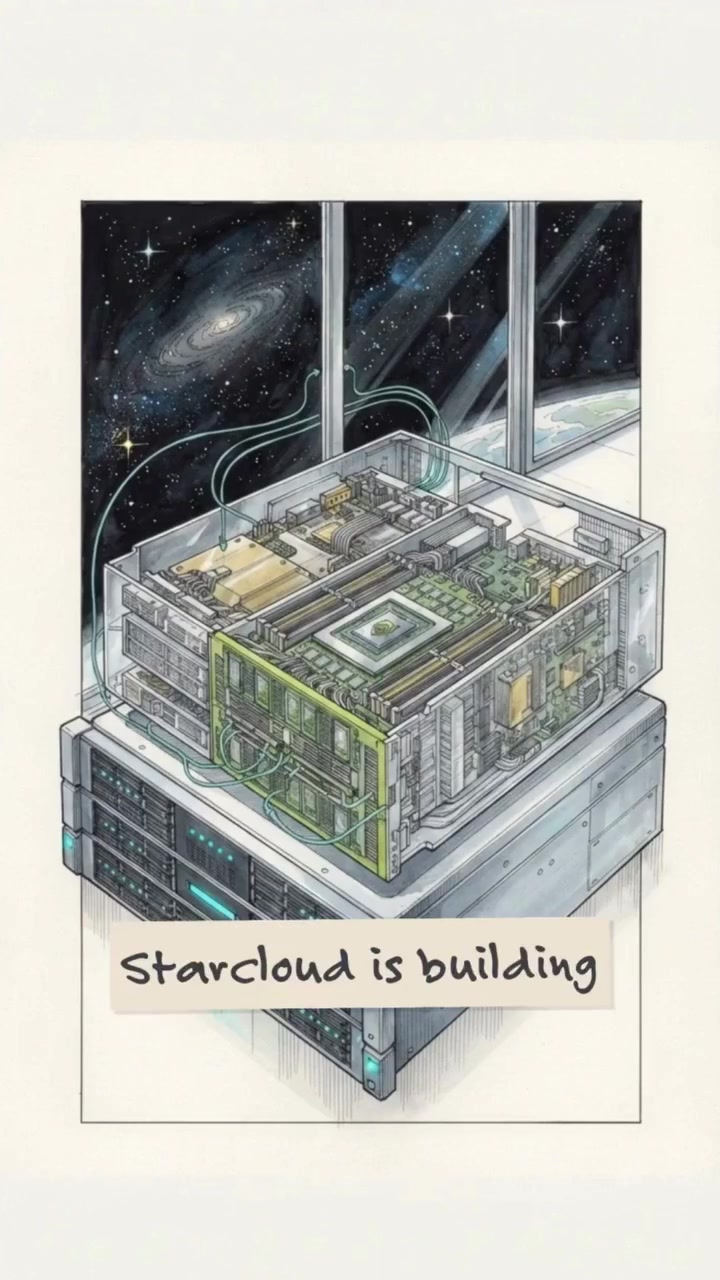
Elevating AI with Space-Based Data Centers
StarCloud is launching AI data centers into low Earth orbit with a first-of-its-kind satellite designed to bypass Earth's grid limitations in "a massive paradigm shift." The startup's pioneering approach addresses a growing and very real issue — Earth-based AI facilities are running short on electricity, land, and cooling water. With an already impressive $2.3 billion valuation, the company's founders are confident enough to launch 88, 000 more satellites.
Rethinking AI's Physical Footprint
The satellite AI data centers StarCloud is building in space aim to fundamentally redefine how AI infrastructure works on the planet. Instead of battling Earth's limited resources, these satellites are designed to use near-continuous solar energy, avoiding the finite constraints of Earth's power grid. Using external radiators, they also manage the critical challenge of intense heat in the absence of air. The technology behind it is clear. StarCloud launched a commercial NVIDIA H100 GPU into space, which serves as the brain of these satellites and showcases the company's ability to leverage existing and proven tech in a new environment. The satellites employ a two-pronged approach to cool these GPUs. The first aspect is simply the absence of air which the void of space provides. The second is the use of massive external radiators which dump all the thermal energy directly into the vacuum of space. This method actively removes all excess heat that would otherwise melt the GPU and effectively prevents any heat buildup. Additionally, back on Earth, Philip Johnston, Ezra Fieldin, and Adi Altian, the company’s trio of founders, are actively designing custom shields to protect the commercial chips from cosmic radiation — a significant challenge in space. This approach not only shields the GPUs from radiation but also effectively replaces traditional space processors, which are typically weaker.
Why StarCloud's Satellites are a Game-Changer
What's next for StarCloud? The company has an extensive plan to deploy a network of 88, 000 satellites orbiting the earth. This satellite network would not only address the current limitations of Earth-based AI but also accelerate the growth of AI as a whole. With this massive satellite network, AI data centers and processors will have the power to work at an unprecedented scale — energy that would be impossible on Earth. The company’s decision to build and launch a mass scale satellite network showcases their vision of AI. With this initiative, StarCloud is answering a question that many have raised, “Where will AI go next?” The company is answering this question directly and boldly. Building in Space Leveraging satellites to perform AI workflows has numerous advantages. Power is the most obvious. Solar energy is practically unlimited in space, and with no weather, no clouds, and no atmosphere, StarCloud’s materials are ideal for harnessing its energy. Satellite GPUs receive near-constant sunlight, which is why StarCloud’s satellites provide near-continuous power. With the company's plans, power won't be the only thing that benefits from moving AI data centers into space. Traditional data centers have to deal with cooling water and electricity distribution. These challenges are effectively removed by moving operations to space. Neither cooling water nor electricity distribution are concerns in orbit. The singular point of friction is the traditional means of dissipating heat — which is resolved by massive radiators.
The Thermal Challenge
What’s the challenge? The most significant challenge when dealing with data centers in space is the absence of air. Air is required for traditional cooling methods, and since space doesn't have air, traditional methods are completely ineffective. The solution is to use external radiators to manage the thermal energy created by the GPUs—to put it in layman's terms, the radiators are a way to dump all the heat directly into space. How do they solve it? StarCloud’s satellites use radiators that are capable of passively transferring energy by dissipating thermal energy into the vacuum of space. This process doesn't use air or any other medium to direct the heat. Instead, the radiator allows the heat to spread outward and into the vacuum of space. These radiators are incredibly effective and also completely passive in nature.
Hidden Costs of Moving AI into Space
Space exploration has always been labeled as expensive. This is only further exasperated by the satellite technology that StarCloud is using. Satellites have always been costly to build, deploy, and manage, so there are certainly going to be concerns about the financial viability of this venture. However, the cost of the satellite and its fuel pale in comparison to the amount of energy that the satellites provide. Rather than invest in land, resources, and energy on Earth, it may be in the interest of AI companies to invest in space technology. There are significant financial benefits to using space as the infrastructure for AI. The costs of building and deploying the satellites are higher, but the satellites require no maintenance or upkeep. They aren't affected by weather or any other variable, and the primary cost is launching the satellite. From the perspective of AI work, the satellites cost effectively nothing. They're also using a commercial GPU rather than a specialized space processor. Given the cost of building and maintaining data centers on Earth, it could be cheaper to build data centers in space. The satellites also deliver significant benefits over traditional data centers. Traditional data centers tie themselves to a single location and are limited in power and capacity by what they can store and the grid they tap into. AI data centers in orbit can operate independently and are free from physical restraints. These satellites can even circumvent the physical limitations of Earth.
Could the Future of AI Be in Space?
The outlook for Earth’s AI data centers isn't grim, but satellite-powered AI data centers could start looking more common. Companies are investing significant funds into space exploration, so it wouldn't be a surprise to see more companies consider making the shift. The tech is constantly evolving, so we should prepare ourselves to start thinking about the challenges surrounding space exploration and space tech. These could very well become primary areas of interest for AI growth, and StarCloud could be the one spearheading this movement. AI isn’t going anywhere, and with satellites from StarCloud, neither will AI data centers.
Watch the Reel
Questions readers ask
What exactly is a satellite AI data center, and how does it differ from traditional data centers on Earth?
A satellite AI data center is a facility in space designed to handle AI workloads. Unlike traditional Earth-based data centers, which face limitations in electricity, land, and cooling water, satellite AI data centers use near-continuous solar energy and external radiators to manage heat, making them more sustainable and powerful.
How do StarCloud's satellites manage the intense heat generated by AI processing in space?
StarCloud's satellites use a two-pronged approach to cool their AI processors. First, the lack of air in space helps dissipate heat. Secondly, massive external radiators actively remove excess heat by dumping it into the vacuum of space, preventing any buildup that could damage the GPUs.
What kind of technology is used in these space-based data centers, and how does it compare to traditional AI hardware?
StarCloud uses commercial NVIDIA H100 GPUs, which are proven technologies on Earth, as the brains of their satellites. Additionally, they are developing custom shields to protect these GPUs from cosmic radiation, effectively replacing traditional, often weaker, space processors. This approach leverages existing tech in a new environment, showcasing the potential of commercial hardware in space.
How does StarCloud plan to deploy and scale their satellite AI data centers?
StarCloud has ambitious plans to launch a network of 88,000 satellites orbiting Earth. This extensive network aims to provide unprecedented power and scale for AI processing, addressing current limitations of Earth-based AI facilities and accelerating the growth of AI as a whole.
What are the advantages of using satellites for AI workflows, and how does this approach benefit from space?
Satellites in space offer several advantages for AI workflows, the most significant being the practically unlimited solar energy. With no weather, clouds, or atmosphere, satellites receive near-constant sunlight, ensuring near-continuous power. This makes them ideal for high-performance AI processing that requires vast amounts of energy.
How does StarCloud's approach to AI in space address the challenges posed by cosmic radiation?
StarCloud is designing custom shields to protect their commercial AI processors from cosmic radiation. This not only safeguards the hardware but also allows them to use more powerful, commercial-grade chips instead of traditional, often weaker, space processors. This innovative approach enhances the capabilities of AI processing in space.
What are the long-term implications of StarCloud’s initiative for the future of AI and technology?
StarCloud’s initiative to launch a massive network of satellite AI data centers could revolutionize the way AI is powered and processed. By addressing Earth's resource limitations and providing unprecedented power and scale, this approach could accelerate AI growth and pave the way for future technological advancements in space.
Related deep dives
Similar reads based on topic and creator.


Recent articles
Fresh deep dives from the latest Reels we unpacked.




Comments
Be the first to comment.