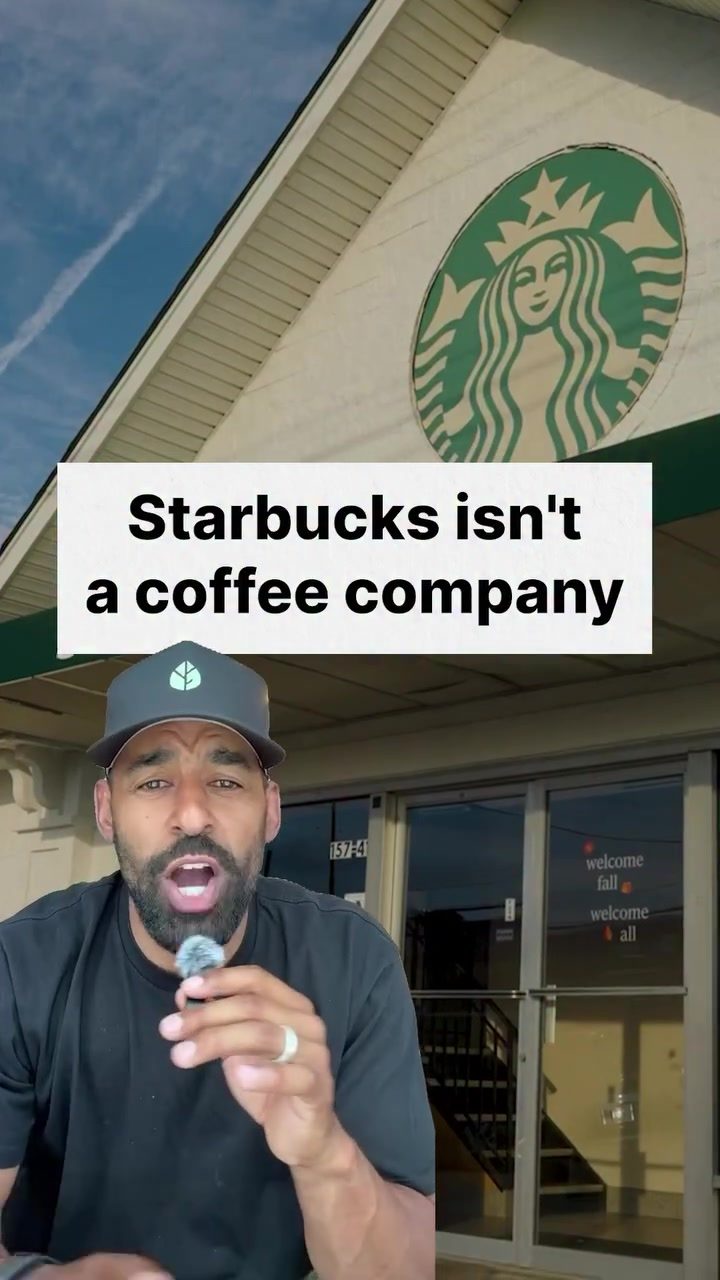
Starbucks: The Unseen Financial Powerhouse
Starbucks, a name synonymous with coffee, has long been perceived as a coffee company. However, the reality is far more complex. Behind the aromas and the cozy ambiance lies a sophisticated financial strategy that turns the humble latte into a powerful tool for generating revenue. Let's delve into how Starbucks operates as a financial institution, leveraging customer balances and loyalty programs to drive significant earnings.
Why This Matters
Understanding Starbucks' business model sheds light on the broader strategies many companies use to maximize profits beyond their core products. By examining Starbucks' approach, we can gain insights into how businesses across various sectors operate and where their true revenue streams lie.
The Role of Unspent Balances
Starbucks is currently sitting on $1.75 billion in unspent customer balances. This money, loaded onto Starbucks cards or kept in the app, earns interest for the company before customers ever spend a dollar. This practice is not unique to Starbucks; it mirrors the model used by payment apps like Venmo. Every dollar left unspent in Venmo earns "float" for PayPal, not for the users.
The Gift Card Phenomenon
Starbucks is the second-largest gift card brand in America, with customers pre-loading billions onto gift cards every quarter. This practice, known as "breakage," refers to the dollars that sit on cards and are never redeemed. It's pure profit for Starbucks, earned without the need to serve a single cup of coffee.
The Layers of Starbucks' Financial Strategy
Loyalty Programs as Financial Tools
Starbucks' rewards program is more than just a way to incentivize purchases. It functions as a financial system, encouraging customers to manage their Starbucks balance, reload their cards, and earn on their accounts. The behavior is identical to banking, with three tiers—Green, Gold, and Reserve—offering stars for every purchase and free drinks as rewards.
The App as a Financial Hub
Starbucks has built one of the most downloadable financial apps in America. While many customers think they downloaded the app to order coffee, the app serves a much larger purpose. It creates the habit of managing finances through Starbucks, with the coffee serving as the acquisition tool and the app generating the money.
Comparing to Other Industries
This model is not unique to Starbucks. Delta makes a significant portion of its revenue from the American Express card, Best Buy from warranties, and 7-Eleven has built a fully licensed bank inside a convenience store. The product that gets customers in the door is almost never the product that makes the most money.
Practical Tips for Understanding Customer Financial Behavior
Recognize the Hidden Revenue Streams
When evaluating a company, look beyond the core product. Starbucks' coffee is the acquisition tool, but the real money comes from the financial ecosystem they've built around it. Understanding these hidden revenue streams can provide a clearer picture of a company's true value.
Monitor Customer Balances
Customers' unspent balances and gift cards are significant sources of revenue. Companies like Starbucks and Venmo earn interest on these balances, turning them into valuable financial assets. Pay attention to how companies manage and benefit from these balances.
Examine Loyalty Programs
Loyalty programs are not just about rewarding customers; they are financial tools designed to keep customers engaged and spending. Analyze how these programs encourage customers to manage their balances and earn on their accounts.
Important Takeaways
Starbucks' business model reveals a financial strategy that goes beyond the coffee it serves. By leveraging unspent customer balances, gift cards, and a robust loyalty program, Starbucks has built a financial ecosystem that generates significant revenue. Understanding these strategies can provide valuable insights into how companies operate and where their true revenue streams lie.
Conclusion
Starbucks is more than just a coffee company; it is a financial powerhouse. By examining its business model, we gain a deeper understanding of how companies can diversify their revenue streams and maximize profits. Whether through unspent balances, gift cards, or loyalty programs, Starbucks has proven that the product that gets customers in the door is not always the product that makes the most money. This insight can be applied to various industries, highlighting the importance of looking beyond the surface to understand a company's true financial strategy.
Watch the Reel
Questions readers ask
How does Starbucks generate revenue from unspent customer balances?
Starbucks earns revenue from unspent customer balances by investing the funds. These unspent amounts, often found in gift cards or mobile app balances, accumulate over time, allowing Starbucks to generate interest earnings from these reserves.
What role do Starbucks loyalty programs play in their financial strategy?
Starbucks loyalty programs, such as the Starbucks Rewards program, encourage customers to add funds to their accounts and make recurring purchases. This not only drives sales but also increases the amount of unspent balances, which Starbucks can then use to generate additional earnings through interest and investments.
How does the Starbucks app contribute to their financial success?
The Starbucks app is a key component in their financial strategy by enabling easy management of balances and purchases. Customers can preload funds, which are then used to make payments, and these balances often remain unspent for periods, generating interest and investment earnings for Starbucks.
What are the main revenue streams beyond coffee sales for Starbucks?
Besides coffee sales, Starbucks generates revenue through unspent customer balances, interest from these balances, and their loyalty programs. Additionally, the company earns from the sale of gift cards, which are often used for future purchases but also contribute to unspent balances.
How does Starbucks manage customer card usage to boost revenue?
Starbucks manages customer card usage by encouraging prepaid purchases through their app and gift cards. This strategy ensures that customers have funds on their cards that can be used for future purchases, and any unspent balances contribute to the company's earnings through interest and investments.
What is the significance of gift card revenue for Starbucks?
Gift card sales are a significant revenue stream for Starbucks. Not only do they provide immediate cash flow, but they also contribute to unspent balances. Many gift cards are not fully redeemed, allowing Starbucks to invest the remaining balances and earn interest over time.
How does Starbucks' business model differ from a typical coffee company?
Unlike typical coffee companies, Starbucks leverages unspent customer balances and gift cards as financial instruments. By encouraging customers to preload funds and use their loyalty programs, Starbucks turns these balances into a source of revenue through interest earnings and investments, making their business model multifaceted and financially robust.
Recent articles
Fresh deep dives from the latest Reels we unpacked.




Comments
Be the first to comment.