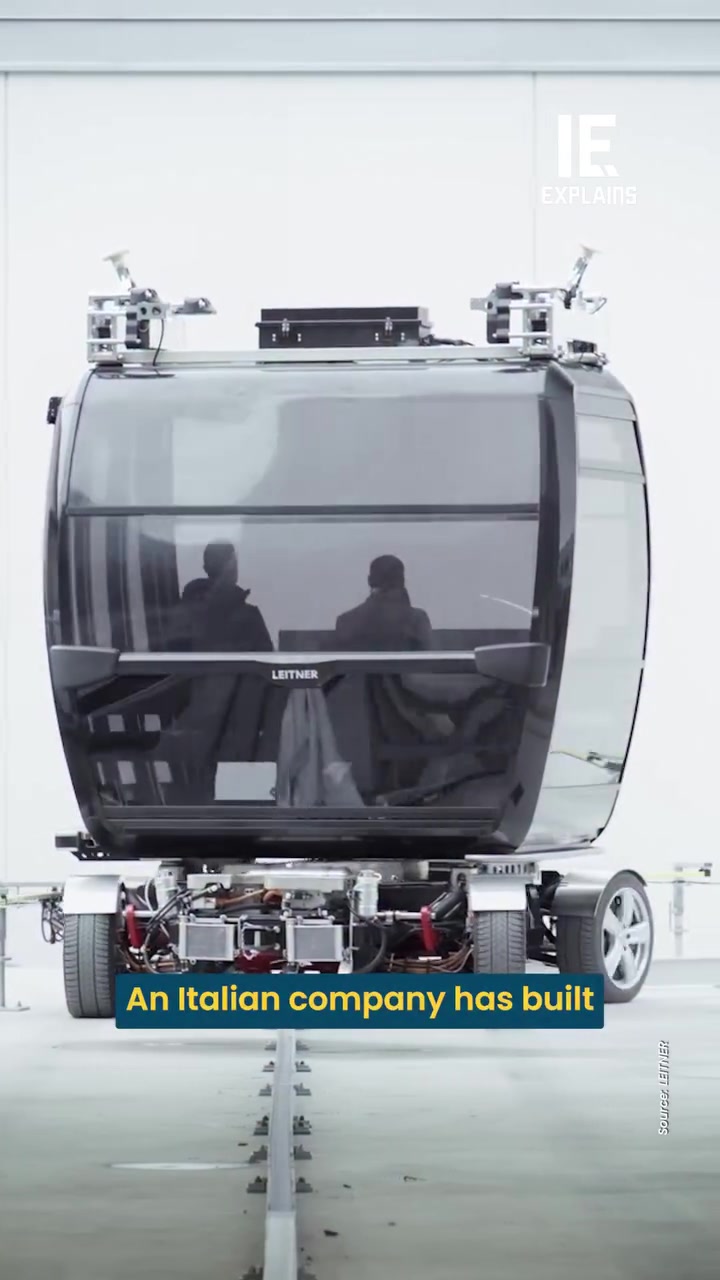
With its urban-ready gondola, the Leitner Connex prototype takes public transit off the rails and onto the road. After all, not all city destinations have a direct cable car route, but plumbing a vehicle of this type into city streets is a cutting edge solution. But how do streets and cable cars meet?
Waiting for Its Turn
The Connex debuted in 2021, but regulators recently have not yet given the prototype their approval. Forgive the awkward phrasing — but it is awkward when the dirvets of transportation and urban planning must decide when and how modern tech can join their busy streets. The Leitner Connex borders on futuristic: an electric, autonomous vehicle that stemmed from traditional cable cars. Leitner is a ropeway maker based in South Tyrol, Italy. Yet part of the innovation is this: the cabin that usually runs on a cable runs on the road instead. Leitner took urban cable cars to the next step. The gondola unfastens from the cable at a station, and a self-driving vehicle takes over. Connex keeps you seated while you switch modes. The firm Elafa designed the wheels, motivated by the power of integrating urban transit and infrastructure. The prototype passes the regulatory tests when crossing over bridges, squeezing through tight alleys, and moving around heritage buildings. It is designed well for any urban environment where you find cable cars; this is a new way to bring people to hard-to-reach places. It was first tested at Hungary's Zala Zone. The Connex not only solves the challenges of infrastructure management, but also offers an eco-friendly, autonomous solution to urban transportation. The Connex steers into new territory, but it is not the only ambition to make transportation more efficient. City planners and engineers are eager to explore these types of solutions. If the dream is impossible travel, the Leitner Connex is a good first step.
Connecting the Disconnected
This will not be the last innovative solution to transforming cable car infrastructure. The Connex shows how urban developers are exploring better ways to connect urban and suburban areas. “It covers a lot of the parts of a city where a cable line simply cannot go, around a heritage building, over a river, into a narrow street.” The prototype covers areas where cable cars cannot. Urban cable cars are a flexible, adaptable option for cities, and Leitner’s prototype takes them to the next level. The Connex avoids the challenges of integrating infrastructure when it makes the best use of existing structures.
Exploring the Technical Details
Energy and Wheels
The prototype has two parts: the gondola and the self-driving vehicle. The motors come from a Slovenian firm, Elafa, which designs the motor inside the wheel itself. This innovation benefits the vehicle because it does not need to store energy elsewhere. The motor inside the wheel reduces the space and fuel requirements.
Urban Compatibility
The Connex carries passengers through a dedicated lane up to 43 km/h and can climb slopes up to 10%, moving efficiently on city streets. The Connex has a wider reach than standard cable cars, serving new areas. The dedicated lane means cars can travel with minimal disruption to other traffic. Many cities need more routes for public transit. The Connex enables cities to extend their cable car service to new roads.
Reaching Remote Areas
Due to the limits of cable infrastructure, there are many areas where a cable line simply cannot go. The Leitner Connex can navigate around heritage buildings, over rivers, and through narrow streets. The prototype fits into the old constraints of cable cars by making better use of them. Leitner’s prototype can help these cities better integrate their transit systems, meeting the needs of a growing urban population. The prototype shows how innovation can maximize efficiency when connecting urban and rural areas.
Self-Driving Performance
Regulators will need to watch how well the prototype handles the urban environment. The key test will be whether the Connex integrates into the existing infrastructure, keeping people both safe and comfortable. The Connex’s design allows it to transition smoothly between the ropeways and the roadway, as well as navigate urban areas.
Copping to the Competition
The Leitner Connex has some competition in the market. The Swiss startup Urban Cable Transport is developing similar technology. It boasts improved passenger efficiency and reduced emissions. While both projects are promising, they must still overcome regulatory hurdles. In particular, regulators must be convinced of the designs' safety features.
Putting It to the Test
If you want to test Connex, the time will come. Regent Publication Wait for city regulators to approve it. For engineers, urban planners, or enthusiasts of new tech, it’s a key moment. The prototype is ready; it needs the chance to try it in the real world of urban streets. Watching the Connex transition from the cable car to the road is an exciting experience. As cities continue to grow, so will the need for efficient transit systems, perhaps prompted by the Connex model.
Obstacles on the Road Ahead
The Connex's route to full approval is not without challenges. Leitner’s prototype needs to navigate regulatory red tape, proving its safety and reliability to city planners. While the prototype has already passed initial tests in Hungary, city regulations will decide its real-world viability. Cities must balance the benefits of new technology with the potential risks to existing infrastructure.
Getting Started with Leitner Connex
- Prepare for the Future: With its groundbreaking technology, Leitner Connex has the potential to revolutionize urban transit. Stay tuned for updates on its regulatory approval and deployment.
- Engage with Local Governments: If you want to see Leitner Connex in your city, get in touch with local authorities. Show your support for innovative urban transit solutions.
- Innovate on Your Own: Think about the challenges in your own neighborhood and see if you can engineer an idea that precisely addresses it. The Connex just proved that even a well-known tech solution can face the limitations at its core. And then transcend them.
Watch the Reel
Questions readers ask
What exactly is the Leitner Connex and how does it work?
The Leitner Connex is an autonomous vehicle prototype that combines the features of a traditional cable car and a self-driving car. It operates by detaching from the cable at a station and then using a self-driving mechanism to navigate city streets, allowing passengers to remain seated throughout the transition. This design aims to bridge the gap between cable car routes and urban road networks.
Why is the Leitner Connex significant for urban transportation?
The Leitner Connex is significant because it addresses the limitations of traditional cable cars by extending their reach into areas that are difficult for cable cars to access, such as narrow streets, around heritage buildings, and over rivers. This makes it a versatile and eco-friendly solution for urban transportation, particularly in cities with complex infrastructure.
How does the Leitner Connex handle regulatory approval and testing?
The Leitner Connex has undergone testing in urban areas, including crossing bridges, navigating tight alleys, and moving around heritage buildings. Regulators have not yet given the prototype their approval, indicating that there are still hurdles to overcome.
What makes the Leitner Connex different from other autonomous vehicle prototypes?
The Leitner Connex stands out because it is derived from traditional cable car technology, specifically designed to integrate with urban infrastructure. This unique origin allows it to address specific urban transportation challenges that other autonomous vehicles might not be equipped to handle.
What are the technical details of the Leitner Connex's design?
The Leitner Connex consists of two main parts: the gondola and the self-driving vehicle. The motors, designed by a Slovenian firm called Elafa, are integrated into the wheels, eliminating the need for separate energy storage. This design makes the vehicle more compact and efficient.
Can the Leitner Connex operate in all urban environments?
The Leitner Connex is designed to operate in urban environments where cable cars are typically found. Its ability to navigate dedicated lanes, climb slopes up to 10%, and reach speeds up to 43 km/h makes it suitable for a variety of urban settings, though specific regulatory approvals are still pending.
What are the environmental benefits of the Leitner Connex?
The Leitner Connex is an eco-friendly solution because it is electrically powered and autonomous, reducing the need for fossil fuels and minimizing emissions. By integrating with existing infrastructure, it also helps in optimizing urban space and reducing the environmental impact of traditional transportation methods.
Related deep dives
Similar reads based on topic and creator.
Recent articles
Fresh deep dives from the latest Reels we unpacked.


Comments
Be the first to comment.