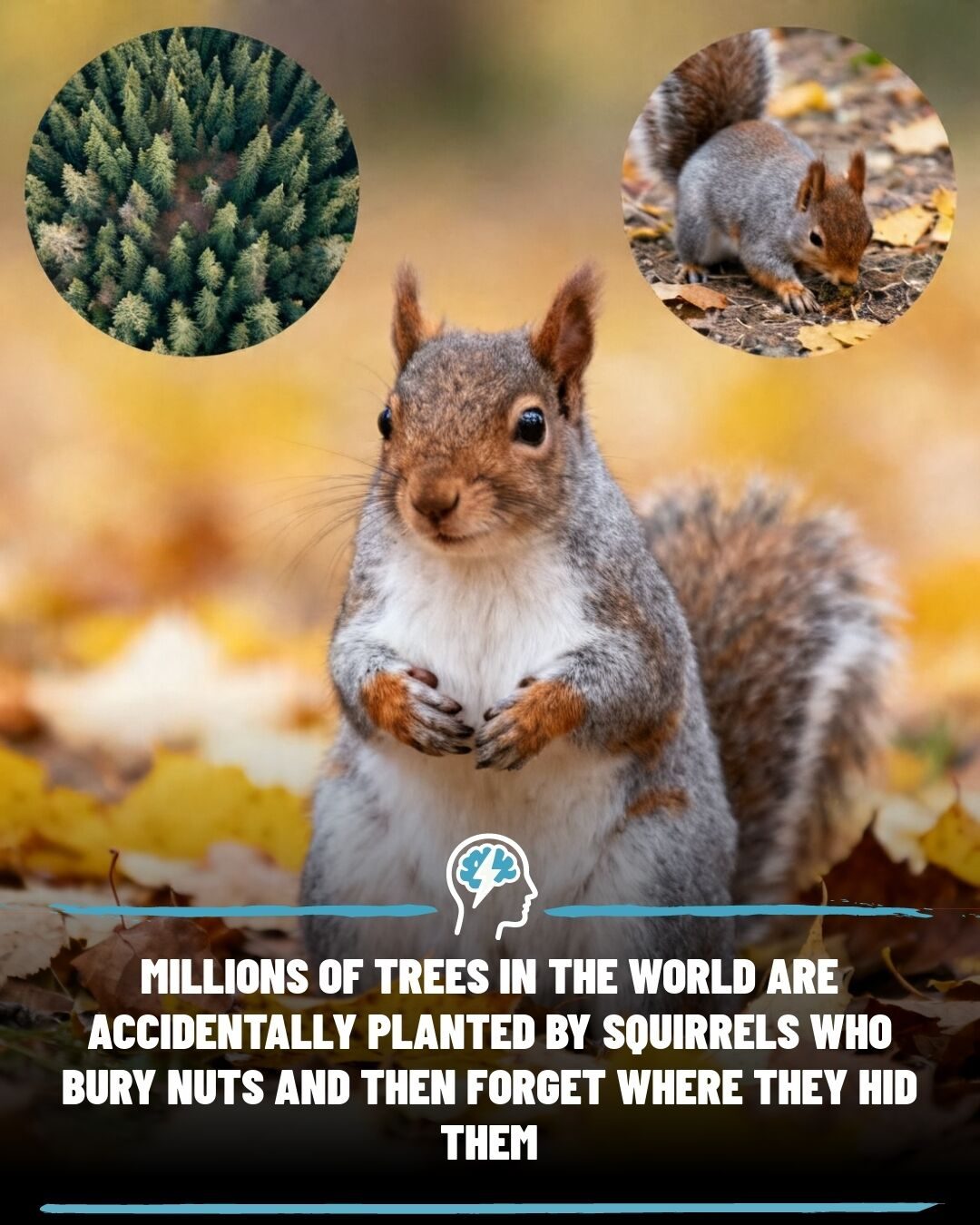
Squirrels and Trees: The Unintended Foresters
Every autumn, squirrels embark on a relentless mission to bury thousands of nuts to prepare for the winter. This behavior, known as scatter hoarding, involves burying individual nuts across wide areas. While squirrels rely on their memory and sense of smell to relocate these food caches, a significant portion goes unrecovered. Research indicates that squirrels fail to recover between 50% and 74% of their cached nuts. Those forgotten acorns, walnuts, and hickory nuts often sprout into the next generation of trees, making squirrels accidental foresters.
Why This Matters
The impact of squirrels on forest regeneration is profound. Each forgotten nut has the potential to grow into a tree that produces thousands more nuts over its lifetime. This behavior helps forests spread far beyond where parent trees originally stood, contributing to the genetic diversity of woodlands. Scientists sometimes call squirrels "accidental gardeners" or unintentional ecosystem engineers, highlighting their role in forest recovery after storms or fires, and in contributing to biodiversity and carbon storage.
The Role of Squirrels in Forest Regeneration
Scatter Hoarding: A Key Behavioral Mechanism
Squirrels practice scatter hoarding, burying individual nuts across wide areas. This behavior is crucial for forest regeneration. By burying nuts in various locations, squirrels increase the chances of some nuts being forgotten and eventually germinating into new trees. This process is particularly effective in oak forest regeneration across North America, as indicated by a University of Richmond study.
Memory and Smell: Reliability in Relocating Food
Squirrels rely on their memory and sense of smell to relocate their buried nuts. However, not every cache gets found. This "misplacing" behavior is what allows forgotten nuts to germinate and grow into new trees. The wide distribution of buried nuts also means that trees can grow in areas far from their parent trees, enhancing genetic diversity.
The Scale of Impact
What makes this remarkable is the scale. Each forgotten nut has the potential to grow into a tree that produces thousands more nuts over its lifetime. Research shows this behavior helps forests spread far beyond where parent trees originally stood. The genetic diversity of woodlands may actually depend on squirrels moving seeds across landscapes in ways wind and gravity simply cannot.
The Complexity of Forest Growth
Factors Affecting Seed Survival
Not every buried nut becomes a mighty oak. Soil conditions, competition, predation, and countless other factors determine which seeds survive. This is one piece of a complex ecological puzzle, not a single explanation for how forests grow. For instance, while squirrels play a significant role in reforestation, other factors like soil health, climate, and the presence of other animals also influence forest growth.
Contribution to Biodiversity and Carbon Storage
Squirrels' caching behavior supports forest recovery after storms or fires, contributes to biodiversity, and may even play a role in carbon storage over decades. By planting millions of trees, squirrels help maintain and restore ecosystems, playing a crucial role in maintaining the health of our forests.
Practical tips
Understanding the role of squirrels in forest regeneration can inspire conservation efforts. For example, maintaining habitats that support squirrels can indirectly support forest regeneration. Similarly, understanding the factors that affect seed survival can inform reforestation strategies.
Important Takeaways
Squirrels play a significant role in reforestation through their scatter hoarding behavior. This behavior helps forests spread, contributes to genetic diversity, and supports forest recovery. However, it's important to recognize that reforestation is a complex process influenced by numerous factors.
Conclusion
Squirrels' role in reforestation is a fascinating example of how small, repeated actions can have a significant impact on the environment. By burying and forgetting nuts, squirrels contribute to forest regeneration, biodiversity, and carbon storage. The next time you see a squirrel frantically burying acorns, you might be witnessing natural reforestation in action.
Watch the Reel
Questions readers ask
How do squirrels contribute to reforestation?
Squirrels contribute to reforestation through their nut-burying behavior, known as scatter hoarding. They bury thousands of nuts across wide areas, and a significant portion of these nuts are forgotten and sprout into new trees, aiding in forest regeneration.
What is scatter hoarding and how does it help forests?
Scatter hoarding is the behavior of burying individual nuts across wide areas. This helps forests because squirrels often forget where they've buried nuts, leading to the growth of new trees, which can boost biodiversity and carbon storage.
What percentage of nuts do squirrels typically forget?
Research shows that squirrels fail to recover between 50% and 74% of their cached nuts. This high rate of forgotten nuts contributes to the growth of new trees and the spread of forests.
How do squirrels decide where to bury their nuts?
Squirrels rely primarily on their memory and sense of smell to choose locations for their nut caches. They tend to bury nuts in a variety of locations that they have reason to believe will be easy to find later, but many of them are still forgotten.
What types of nuts do squirrels bury that can grow into trees?
Squirrels commonly bury acorns, walnuts, and hickory nuts. These nuts, if forgotten, can sprout into new trees, contributing to the expansion and health of forests.
Why is the impact of squirrels on forests significant?
Squirrels' contribution to forests is significant because each forgotten nut has the potential to grow into a mature tree, which in turn can produce thousands of nuts and aid in recovery after natural disasters. This process helps in spreading and maintaining forests.
How does the nut-burying behavior of squirrels benefit the environment?
The nut-burying behavior of squirrels, while intended for food storage, benefits the environment by planting new trees, which contribute to the reforestation, boost biodiversity, and enhance carbon storage. This process helps in the recovery of forests after natural disasters.
Related deep dives
Similar reads based on topic and creator.




Recent articles
Fresh deep dives from the latest Reels we unpacked.




Comments
Be the first to comment.