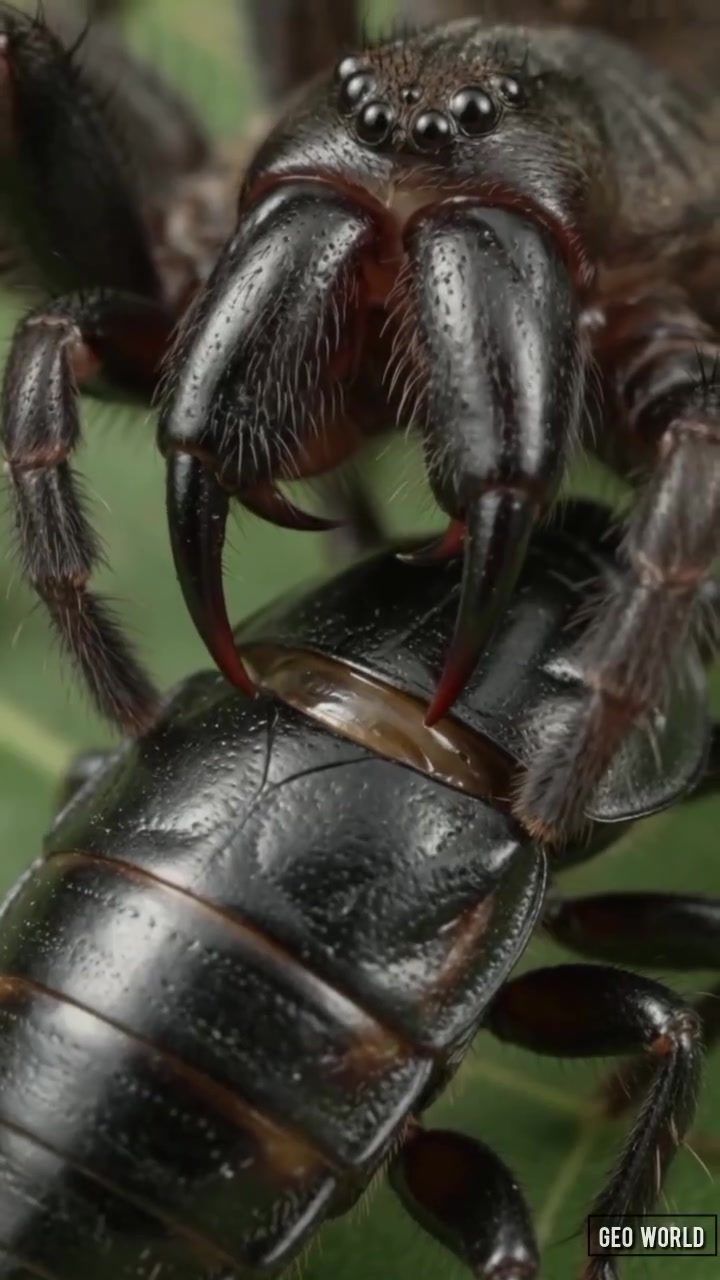
Spider Digestion: How Spiders Feed Without Teeth
Spiders are fascinating creatures, known for their intricate webs and predatory behavior. Unlike many other animals, spiders do not have teeth. Instead, they rely on a sophisticated and efficient feeding system. This involves a combination of venom and digestive enzymes, making their method of consuming prey unique and highly effective.
Why This Matters
Understanding how spiders feed provides insight into the remarkable adaptations found in the animal kingdom. This knowledge is not only intriguing but also highlights the intricacies of nature's designs. For those interested in entomology, biology, or simply the wonders of the natural world, delving into the feeding habits of spiders offers a fascinating glimpse into the diversity of life on Earth.
The Spider's Feeding Process
Venom and Enzymes
The process begins with the spider injecting a mixture of venom and digestive enzymes directly into its prey. This mixture is carefully calibrated to dissolve the prey's internal tissues. The venom paralyzes the victim, while the enzymes break down the muscles and organs. This dual action ensures that the prey is quickly incapacitated and its internal structures are liquefied, making it easier for the spider to consume.
Internal Digestion
Many species of spiders take this a step further by pumping the fluid mixture in and out of the prey repeatedly. This action accelerates the breakdown of the prey's tissues, turning them into a nutrient-rich liquid. This liquid is then drawn up through the spider's narrow throat and into its digestive system by a powerful sucking stomach located in the cephalothorax. This unique mechanism allows the spider to efficiently extract all the nutrients from its meal without the need for chewing.
The Spider's Anatomical Adaptations
The spider's body is perfectly adapted for this feeding method. Its venom glands and digestive glands work in harmony, ensuring that the prey is quickly and effectively digested. The powerful sucking stomach acts like a natural pump, drawing the liquified meal through the spider's throat and into its digestive system. This internal digestion process is one of the most extraordinary feeding systems found in the animal kingdom.
The Evolutionary Advantages
Efficient Nutrient Extraction
Spiders' feeding method ensures that they get the maximum amount of nutrients from their prey. By liquefying the prey's tissues, they can extract every last bit of sustenance, which is crucial for their survival and growth. This method is particularly useful in environments where food may be scarce, as it allows spiders to make the most of every meal.
Energy Conservation
The lack of teeth and the subsequent need to chew means spiders can conserve energy. Chewing requires a significant amount of energy, and by avoiding this process, spiders can allocate their resources more efficiently. This energy conservation is vital for their survival, especially for species that may need to hunt and digest prey quickly to avoid predators or competitors.
Adaptability
The ability to feed on a wide range of prey, from insects to other spiders, makes spiders highly adaptable. Their venom and digestive enzymes can dissolve the tissues of various animals, making them versatile predators. This adaptability allows spiders to thrive in different environments and ecosystems, from forests to deserts and even urban areas.
Practical Tips for Observing Spiders
Safety First
When observing spiders, it is essential to prioritize safety. Many spiders are harmless, but some, like the black widow and brown recluse, can deliver painful or even dangerous bites. Always approach spiders with caution and avoid handling them unless you are experienced and equipped with the right tools.
Proper Equipment
To get a close-up view of spiders and their feeding habits, consider investing in a good pair of binoculars or a macro lens for your camera. These tools will allow you to observe spiders from a safe distance without disturbing their natural behavior. A magnifying glass can also be helpful for examining the details of a spider's anatomy.
Documentation
Keep a journal or take notes of your observations. Documenting the spiders you encounter, their behavior, and the types of prey they catch can provide valuable insights. Over time, you may notice patterns in their feeding habits and adaptations, enhancing your understanding of these remarkable creatures.
Important Takeaways
Spiders' unique feeding system is a testament to nature's ingenuity. By combining venom and digestive enzymes, spiders can efficiently consume their prey without the need for teeth. This method allows them to extract maximum nutrients, conserve energy, and adapt to various environments. Observing spiders and their feeding habits can be a rewarding experience, offering a deeper appreciation for the natural world and the intricate designs found in the animal kingdom.
Conclusion
The way spiders feed is a marvel of nature's design. From the injection of venom and enzymes to the internal digestion process, every aspect of a spider's feeding system is finely tuned for efficiency and survival. Whether you are a biologist, an entomologist, or simply a curious observer, exploring the feeding habits of spiders provides a fascinating glimpse into the wonders of the natural world.
Watch the Reel
Questions readers ask
How do spiders consume their prey without teeth?
Spiders use a combination of venom and digestive enzymes to break down their prey. They inject venom to immobilize and begin to liquefy the prey, and then release digestive enzymes to further break down the tissue. This process allows spiders to consume the liquid prey through their mouths.
What role does venom play in a spider's feeding process?
Venom is crucial for spiders as it serves two primary functions: it immobilizes the prey, making it easier to handle, and it initiates the digestion process by breaking down the prey's tissue. This allows the spider to efficiently consume its meal.
How do the digestive enzymes work in spider digestion?
After injecting venom, spiders release digestive enzymes from their digestive glands. These enzymes break down the prey's tissue into a liquid form, which the spider can then ingest through its mouth. This enzymatic process is essential for the spider to extract nutrients.
Why is the spider's method of feeding so efficient?
The spider's feeding method is efficient because it combines the immobilizing and initial digestive effects of venom with the tissue-breaking down power of digestive enzymes. This allows spiders to quickly and effectively convert solid prey into a form that is easy to consume and digest.
What happens to the prey after a spider injects its venom?
After a spider injects venom, the prey's tissue begins to liquefy. This liquefaction process is further enhanced by the digestive enzymes the spider releases, turning the prey's body into a liquid that the spider can ingest, ensuring that the spider can absorb all the necessary nutrients from its meal.
How do spiders manage to consume prey much larger than themselves?
Spiders can consume prey much larger than themselves by using their powerful venom and digestive enzymes. These tools allow them to break down the prey's tissue, liquefying it and making it manageable to ingest, regardless of the prey's original size.
What are the spider digestive glands and what do they do?
Spider digestive glands are specialized organs that produce and store digestive enzymes. These enzymes are crucial for breaking down the prey's tissue into a liquid form, enabling the spider to consume and digest the prey effectively.
Related deep dives
Similar reads based on topic and creator.




Recent articles
Fresh deep dives from the latest Reels we unpacked.




Comments
Be the first to comment.