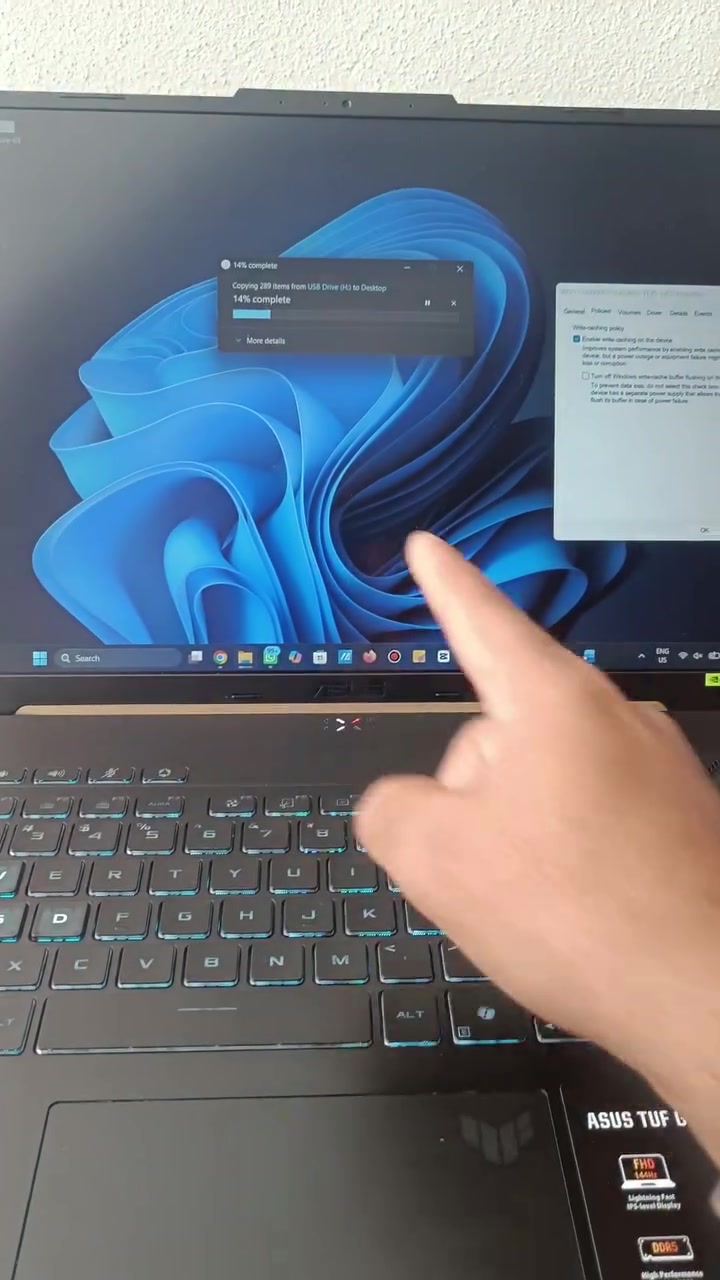
A USB 3.0 port launches the SanDisk USB drive into a USB 3.2Gen1 high-speed transfer mode. This speed boost means transferring files moves swiftly and smoothly. Yet our attempts to transfer files using Windows's built-in tool can be frustratingly slow. There are fixes, points out a popular online tip video, but identifying where Device Manager exists, knowing what it does, and how to handle potential issues might feel confusing. Let's dive into the power and problems of USB drive transfers.
How USB drives use Device Manager to optimize transfer speeds
Windows treats USB drives like any other piece of hardware, listing them in Device Manager. This tool recognizes, installs and manages drivers, and can be used to troubleshoot hardware issues. If the Device Manager view is cluttered with unneeded devices, it can make finding, let alone recognizing, the desired device challenging. USB drives, particularly those plugged into a slower speed port, can lead to sluggish data transfers. To fix this, use the USB 3.2Gen1 Device Properties. Navigating the device details can be troublesome. But what happens when you dive into Policies?
When you want to optimize your USB drive transfer, the key is to check the "Policies" tab within the properties window. Only then would you see the Policies tab, showing you how the Windows operating system handles the Enable Write Caching. If paused on the device’s performance, placing a tick on the write cache box can result in increased speed, as it attempts to fill up the buffer and reduces the number of pauses to wait for computer responses. But there are still times when optimizing speed feels like it never worked.
Why optimizations are necessary to ensure data transfers are fast and trouble-free
Transferring files through a USB drive can be a headache. Users must consider the USB ports on their computers. USB ports come in several standards, from slow 2.0 to faster 3.0, each generation improving upon the last. When the data transfer is slow, one of the first things to check is the USB port. The color or card slot (USB 3.0 ports often have a blue interior) can indicate the drive’s data transfer rate, although not always. If your USB drive is plugged into a slower port, your transfer speed will be limited. This can be frustrating, especially when dealing with large files. If Windows File Transfer is too slow, here are some quick fixes to highlight the performance: changing the port and Device Manager.
Addressing why USB drives do not transfer files as quickly as they should
Why ports matter
Bumping up the efficiency of a USB drive isn’t about rethinking the capacity of the drive. It’s about the efficiency of the USB port. Plugging into a USB 3.0 port enables the data transfer to progress at a higher speed than a 2.0 port. Ports with different transfer speeds are color-coded to help users pick the right one. USB 3.0 ports are often marked in blue. However, speed isn’t the only factor affecting data transfer speeds.
Fine-tuning the USB drive through Device Manager
Once the USB drive is connected to the computer, the next step is to modify USB settings. Fine-tuning the USB drive can help. Open Device Manager, then expand the Disk Drives section. Right-click on the USB drive and select Properties. Within the settings, enabling Write Caching can improve the speed. These options can help, but how can the device be managed if there’s no speed adjustment?
Optimizing USB drive actions with Device Manager
How to find and open Device Manager
Finding the Device Manager might seem daunting the first time. On the left side of the Windows taskbar is a search function. Enter the words Device Manager and press the enter key. Windows will now show an overview of all hardware connected to the computer, and the blue USB 3.2Gen1 device will be listed.
Enable Write Caching for faster file transfers
If the Device Manager is open, the next thing to check is Write Caching. This is a clever feature. Users can either enable or disable it. Enabling it means Windows will attempt to transfer multiple files at once to save time. But what happens if the USB drive is slower?
Potential issues with USB drive transfers
When caching impedes files
When transfers are slow, it is tempting to enable Write Caching. Yet this action can sometimes impede file transfers, leading to corruption. The issue arises when the computer crashes while buffering data. If there is no backup for the file, it can mean permanent data loss. These consequences, though rare, should be considered.
Fixing sluggish USB transfers can be challenging, particularly when Device Manager is not willingly identified and device optimizations are not practiced. The issue could be a bad device or something wrong with the port, but there’s more to it. Ensuring USB drives are optimally connected and fine-tuned for speed.
‘Policies’ tab can improve speed but is not the only answer
If using the USB transfer is a consistent problem, updating to a USB 3.0 will be a better purchase instead. The first USB 3.0 port launch is efficient and lasting. Though the video only shared a few solutions, there is more to fix a slow system. If all options fail, you might want to have a look at the USB drive alone. While specific brands like SanDisk have customer support, considerations like waterproofing can also play a crucial role in ensuring the longevity of your high-value USB drive.
Watch the Reel
Questions readers ask
What is `Device Manager` and how does it help optimize USB drive transfer speeds on Windows?
`Device Manager` is a tool in Windows that manages all hardware connected to your computer, including USB drives. It installs and updates drivers, and can help troubleshoot hardware issues. By accessing `Device Manager`, you can view the properties of your USB drive, including its transfer mode and policies. For example, enabling write caching can optimize the speed of data transfers.
How do I access the `Policies` tab for my USB drive in `Device Manager`?
To access the `Policies` tab for your USB drive, first open `Device Manager` and find your USB drive under `Universal Serial Bus controllers`. Right-click on it, select `Properties`, and then navigate to the `Policies` tab. This is where you can see and adjust the `Enable Write Caching` option.
What is the difference between USB 2.0 and USB 3.0 ports, and why does it matter for file transfers?
USB 2.0 and USB 3.0 ports support different data transfer speeds. USB 3.0 ports are much faster, supporting high-speed transfer modes like USB 3.2Gen1. This means transferring files will be significantly quicker if your USB drive is plugged into a USB 3.0 port. USB 3.0 ports are often marked with a blue interior to help you identify them. If your USB drive is plugged into a slower USB 2.0 port, your transfer speeds will be limited.
How can I tell if my USB drive is using the fastest transfer mode available?
To check if your USB drive is using the fastest transfer mode, you can go to `Device Manager`, find your USB drive under `Universal Serial Bus controllers`, right-click on it, and select `Properties`. In the `General` tab, you can see the device status and transfer mode. If it’s not using the fastest mode, you may need to troubleshoot or update your drivers.
What should I do if enabling write caching doesn't improve my USB drive transfer speeds?
If enabling write caching doesn’t improve your USB drive transfer speeds, there are a few other steps you can take. First, ensure your USB drive is plugged into a USB 3.0 port. You can also try updating your USB drivers or changing the power settings for the USB root hub. If the problem persists, it might be worth checking for any hardware issues with your USB drive itself.
Related deep dives
Similar reads based on topic and creator.



Recent articles
Fresh deep dives from the latest Reels we unpacked.




Comments
Be the first to comment.