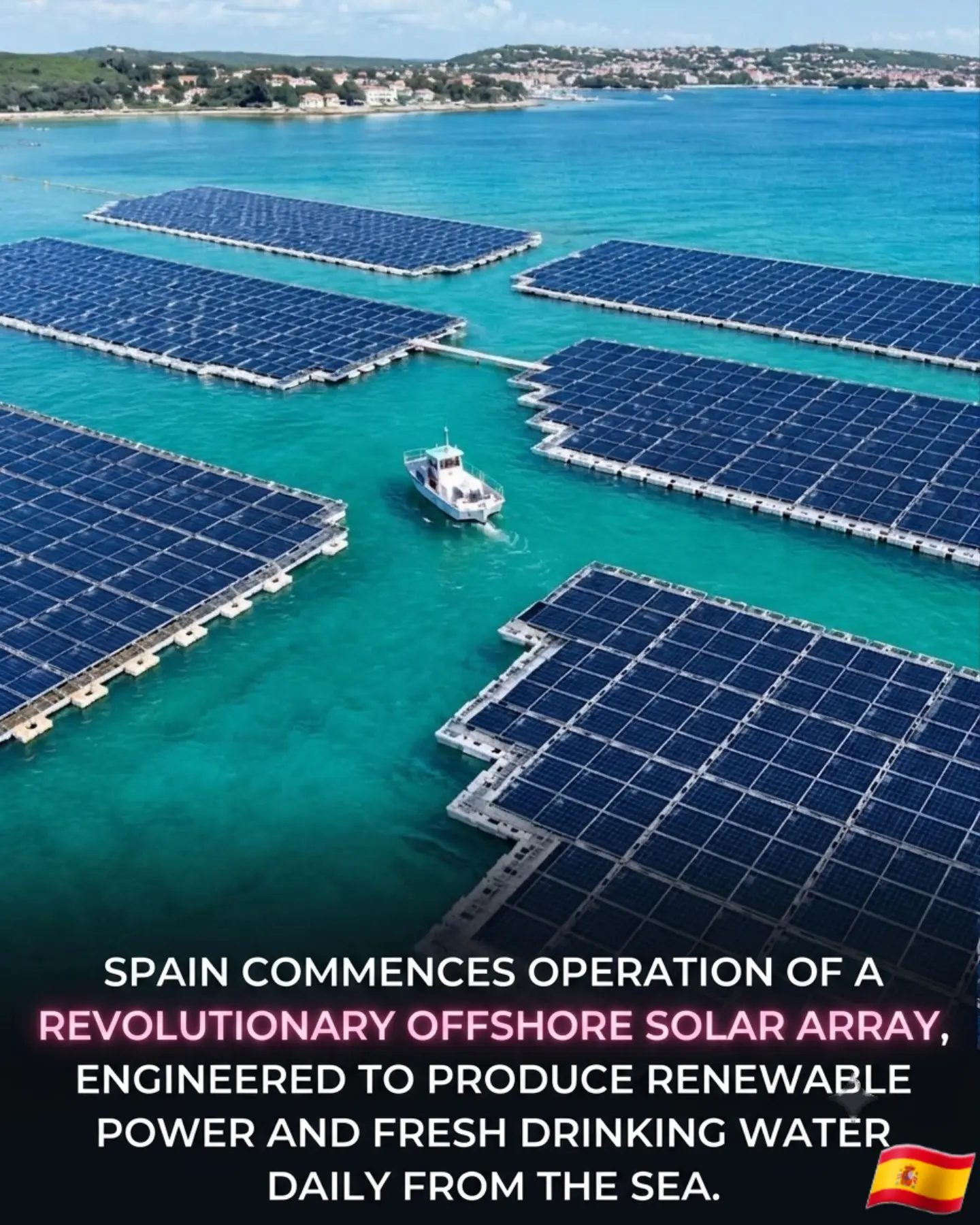
Offshore Solar Arrays and Desalination: A Promising Solution for Water-Scarce Coastal Regions
Floating solar arrays paired with desalination plants offer a innovative solution for coastal regions facing water scarcity. Spain is at the forefront of this technology, actively testing and demonstrating its potential, particularly in the Canary Islands. This approach not only generates renewable energy but also produces fresh drinking water, addressing two critical needs simultaneously.
Why This Matters
Coastal regions around the world are increasingly challenged by water scarcity and the need for sustainable energy sources. Traditional desalination methods, while effective, are highly energy-intensive and often rely on fossil fuels, exacerbating environmental issues. Floating solar arrays offer a cleaner, more sustainable alternative by directly powering desalination processes with renewable energy. This dual benefit makes the technology particularly attractive for regions with abundant sunlight and limited freshwater resources.
The Concept and Its Advantages
Land Preservation
One of the most significant advantages of floating solar arrays is their use of water surfaces instead of precious coastal land. Coastal areas are often densely populated and face intense pressure for land use. By deploying solar arrays on water, this technology helps preserve valuable land for other essential uses, such as housing, agriculture, and conservation.
Increased Efficiency
Floating solar panels benefit from the natural cooling effect of water, which improves their energy output. Traditional solar panels can overheat, leading to reduced efficiency. The cool water environment helps maintain optimal operating temperatures, ensuring that the solar panels generate more electricity throughout the day.
Resource Optimization
By directly powering desalination plants, floating solar arrays offset the carbon footprint associated with freshwater production. This integration not only reduces the reliance on fossil fuels but also optimizes resource use. The clean energy generated by the solar arrays is directly used to convert seawater into freshwater, creating a more sustainable water cycle.
Spain's Pioneering Efforts
Spain is uniquely positioned to scale this technology due to its extensive Mediterranean desalination infrastructure and supportive regulatory frameworks. The country's experience in desalination and recent regulations for floating solar installations provide a strong foundation for advancing this innovative approach.
Pilot Projects
In the Canary Islands, a pilot project on La Palma led by Ocean Sun is successfully demonstrating the feasibility of co-locating floating solar arrays with desalination plants. This project highlights the potential for producing freshwater using clean energy, paving the way for similar initiatives in other water-scarce regions.
Operational Challenges
Despite its promise, the technology is not without challenges. Key hurdles include:
- Marine Equipment Degradation: The harsh marine environment, with saltwater and waves, can degrade equipment more quickly than on land.
- Solar Intermittency and Grid Integration: The variability of solar energy production requires robust grid integration solutions to ensure a stable power supply.
- High Initial Capital Costs: The upfront costs of installing floating solar arrays and desalination plants can be substantial, although long-term savings and environmental benefits may offset these initial investments.
- Environmental Management of Byproduct Brine: Desalination produces brine, a concentrated salt solution that must be managed carefully to avoid environmental impacts. Effective brine management strategies are essential for the long-term sustainability of these projects.
Practical Tips for Implementing Offshore Solar Arrays
Site Selection
Choosing the right location is crucial for the success of offshore solar arrays. Factors to consider include water depth, wave conditions, and proximity to existing desalination infrastructure.
Equipment Selection
Selecting durable, marine-grade equipment is essential to withstand the harsh marine environment. This includes solar panels, mounting systems, and desalination machinery.
Regulatory Compliance
Ensure compliance with local and national regulations regarding floating solar installations and desalination. This may involve obtaining permits, conducting environmental impact assessments, and adhering to safety standards.
Monitoring and Maintenance
Regular monitoring and maintenance are vital for the long-term performance of offshore solar arrays. This includes cleaning the solar panels, inspecting equipment, and addressing any issues promptly.
Community Engagement
Engaging with local communities is important for gaining support and addressing any concerns. This can involve public consultations, educational outreach, and community involvement in the project.
Financial Planning
Develop a comprehensive financial plan that includes initial capital costs, long-term operational expenses, and potential funding sources. This may involve government grants, private investments, or public-private partnerships.
Important Takeaways
- Floating solar arrays combined with desalination offer a sustainable solution for water-scarce coastal regions.
- Spain's pilot projects in the Canary Islands demonstrate the feasibility and benefits of this technology.
- Key advantages include land preservation, increased efficiency, and resource optimization.
- Operational challenges, such as marine equipment degradation and high initial costs, must be addressed for widespread adoption.
- Effective implementation requires careful site selection, regulatory compliance, and community engagement.
Conclusion
The combination of floating solar arrays and desalination represents a promising path forward for coastal regions struggling with water scarcity and the need for renewable energy. Spain's pioneering efforts in this area provide valuable lessons and a blueprint for other regions looking to implement similar solutions. As climate pressures intensify, this technology offers a viable approach to building more resilient, low-carbon water systems.
Watch the Reel
Questions readers ask
What are offshore solar arrays and how do they work with desalination?
Offshore solar arrays are solar panel installations situated on water surfaces. In Spain's innovative approach, these arrays are paired with desalination plants, allowing them to harness solar energy to power the desalination process. This symbiotic relationship generates renewable energy while producing freshwater from seawater.
What benefits do floating solar panels offer over traditional land-based solar installations?
Floating solar panels, or offshore solar arrays, provide several benefits. They preserve valuable land for other purposes by utilizing water surfaces. Additionally, the natural cooling effect of water enhances the efficiency of the solar panels, leading to improved energy generation.
Why is Spain a leader in offshore solar array technology?
Spain, particularly the Canary Islands, is at the forefront of testing and demonstrating offshore solar array technology. The country's commitment to renewable energy and its experience in desalination make it an ideal location for developing and implementing these innovative solutions for coastal regions.
How does the use of offshore solar arrays contribute to carbon reduction?
By generating renewable energy, offshore solar arrays significantly reduce the reliance on fossil fuels. This reduction in fossil fuel use translates directly into lower carbon emissions, contributing to Spain's and the global effort to mitigate climate change.
What is the significance of pairing solar energy with water desalination?
Pairing solar energy with water desalination addresses two critical needs in coastal regions: renewable energy and freshwater production. This approach not only provides a sustainable solution for water scarcity but also reduces the high energy consumption typically associated with desalination processes.
How does the natural cooling effect of water enhance solar panel efficiency?
The natural cooling effect of water helps to maintain the optimal operating temperature of solar panels. By keeping the panels cooler, their efficiency in converting sunlight into electricity is improved, leading to better overall energy generation.
Can this technology be applied to other coastal regions besides Spain?
Yes, the technology can be applied to other coastal regions facing similar challenges of water scarcity and the need for sustainable energy. Spain's success with offshore solar arrays and desalination serves as a model for other countries looking to implement similar solutions.
Related deep dives
Similar reads based on topic and creator.




Recent articles
Fresh deep dives from the latest Reels we unpacked.




Comments
Be the first to comment.