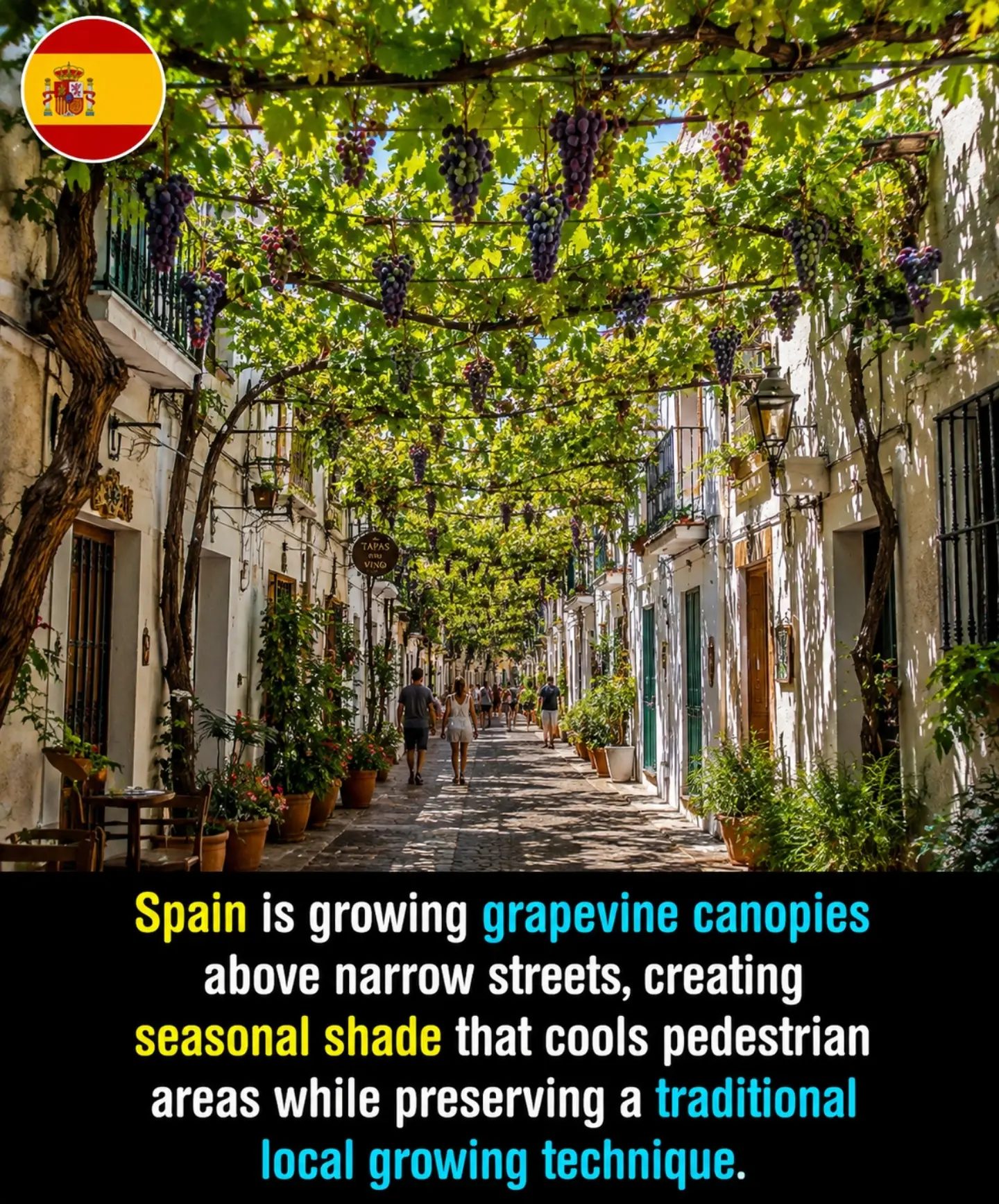
Spanish Vine Canopy Streets
Spain's narrow streets are transformed into cool, shaded walkways through an ingenious use of grapevine canopies. This traditional growing technique not only provides seasonal shade for pedestrians but also preserves a local agricultural heritage.
Context / Why This Matters
In many parts of Spain, particularly in rural and medieval towns, narrow streets can become uncomfortably hot during the summer months. The grapevine canopy technique addresses this issue by creating natural shade that helps regulate the temperature, making these streets more pleasant for residents and visitors alike. Beyond the practical benefits, this practice also sustains a traditional method of grapevine cultivation, fostering a sense of cultural continuity and environmental stewardship.
Main Discussion
The Technique
Growing grapevines above streets is an ancient practice that has evolved over centuries. It involves training grapevines to grow along wires or trellises stretched across the street, forming a dense canopy that provides shade. The vines are carefully pruned and managed to ensure they produce sufficient foliage without obstructing pedestrian movement or blocking sunlight entirely.
Historical Significance
This technique has deep roots in Spain's agricultural history. It was a practical solution developed by local communities to address the challenges of growing grapes in limited space while also providing shade for public areas. Over time, it has become a cultural practice that reflects the region's adaptability and resourcefulness.
Environmental Benefits
The grapevine canopies offer more than just shade; they also have environmental benefits. The vines help cool the streets by providing a natural barrier against sunlight, reducing the urban heat island effect. This can lead to lower energy consumption for cooling buildings and a more comfortable microclimate for residents. Additionally, the vines contribute to air purification by absorbing carbon dioxide and releasing oxygen.
Seasonal Shade
The grapevine canopy is particularly effective during the summer when the vines are at their peak growth. The lush foliage provides a dense shade, making the streets much cooler. In the winter, when the vines shed their leaves, the streets receive more sunlight, allowing for natural heating. This seasonal adaptation makes the technique highly efficient and sustainable.
Urban Greening
The grapevine canopies contribute to urban greening, enhancing the aesthetic appeal of the streets. The lush green canopy adds a natural beauty to the urban landscape, making it more inviting and enjoyable for pedestrians. This urban greening also supports biodiversity by providing habitats for various species of birds, insects, and other wildlife.
Cultural and Economic Impact
The grapevine canopy technique also has cultural and economic significance. It preserves traditional agricultural practices and local knowledge. Moreover, the technique can attract tourists, contributing to the local economy. Visitors are often drawn to the charming streets lined with grapevines, adding to the allure of the region.
Practical Tips
If you plan to visit Spain or any region where this technique is used, here are a few tips to enhance your experience:
-
Timing Your Visit: The best time to enjoy the full benefit of the grapevine canopy is during the summer when the vines are in full leaf. This is when the streets are coolest and the foliage is most lush.
-
Exploring the Streets: Take your time to walk along the streets and appreciate the design and craftsmanship of the grapevine canopies. Notice how the vines are trained and how they integrate with the surrounding architecture.
Important Takeaways
- The grapevine canopy technique is a sustainable and traditional method of providing shade to narrow streets in Spain.
- This practice offers environmental benefits, including cooling the streets and contributing to urban greening.
- It has significant cultural and economic value, preserving local traditions and attracting tourists.
- Visiting during the summer months and exploring the streets carefully can enhance your appreciation of this unique technique.
Conclusion
The practice of growing grapevine canopies above narrow streets in Spain is a testament to human ingenuity and the harmonious relationship between nature and human habitation. It provides a practical solution to the challenges of urban heat while preserving a rich cultural heritage. Whether you're a local resident or a curious traveler, the grapevine canopy streets offer a unique and memorable experience that connects you with the region's history and natural beauty.
Watch the Reel
Questions readers ask
What are the benefits of using grapevines to cool narrow streets in Spain?
Grapevines create natural shade over narrow streets, reducing summer heat and making outdoor spaces more comfortable. This technique also preserves Spain's agricultural heritage and promotes environmental sustainability.
How do grapevines help regulate the temperature in Spanish streets?
By providing an overhead canopy, grapevines block direct sunlight, reducing the amount of heat absorbed by the street surface. This creates a cooler microclimate, making the streets more pleasant for pedestrians during hot summer days.
What traditional growing technique is used to create vine canopies in Spain?
In Spain, grapevines are trained to grow horizontally along trellises or wires suspended above the streets, forming a lush canopy. This traditional method not only produces grapes but also serves as an effective means of shading pedestrian pathways.
Which regions in Spain commonly use grapevines to shade their streets?
This practice is most common in rural and medieval towns across Spain, where narrow streets can become particularly hot during summer. Regions renowned for their wine production, such as La Rioja and Andalusia, often employ these vine-covered walkways.
What are the environmental benefits of using grapevines for street shading?
Using grapevines for natural shading helps reduce the urban heat island effect by lowering surface temperatures. This technique also fosters biodiversity, as grapevines support local ecosystems by providing habitat and food for various species.
Related deep dives
Similar reads based on topic and creator.



Recent articles
Fresh deep dives from the latest Reels we unpacked.




Comments
Be the first to comment.