Spain's Historic UEFA European Championship Wins
Spain has made history by securing the UEFA European Championship title in 2024, surpassing Germany (including West Germany) with an unprecedented fourth win. This victory marks a significant milestone in the tournament's history, which has been marked by intense rivalries and memorable matches.
Context / Why This Matters
The UEFA European Championship, also known as the Euros, is one of the most prestigious football tournaments in the world. Since its inception in 1960, it has showcased the best of European football, featuring legendary players and unforgettable moments. Spain's latest triumph highlights the country's enduring football prowess and adds a new chapter to the rich history of the tournament.
The Euros have evolved significantly over the decades, from the early days of a modest eight-team tournament to the expanded format that now includes 24 teams. Each edition has brought its unique set of surprises, thrilling matches, and standout performances. Spain's 2024 win underscores the competitive nature of the tournament and the high level of play that fans have come to expect.
The Evolution of the UEFA European Championship
The Early Years
The first UEFA European Championship was held in 1960, with the Soviet Union emerging victorious. The early tournaments were characterized by a smaller pool of participating nations and a more structured format. The finals between 1960 and 1980 featured some of the most memorable matches in the tournament's history.
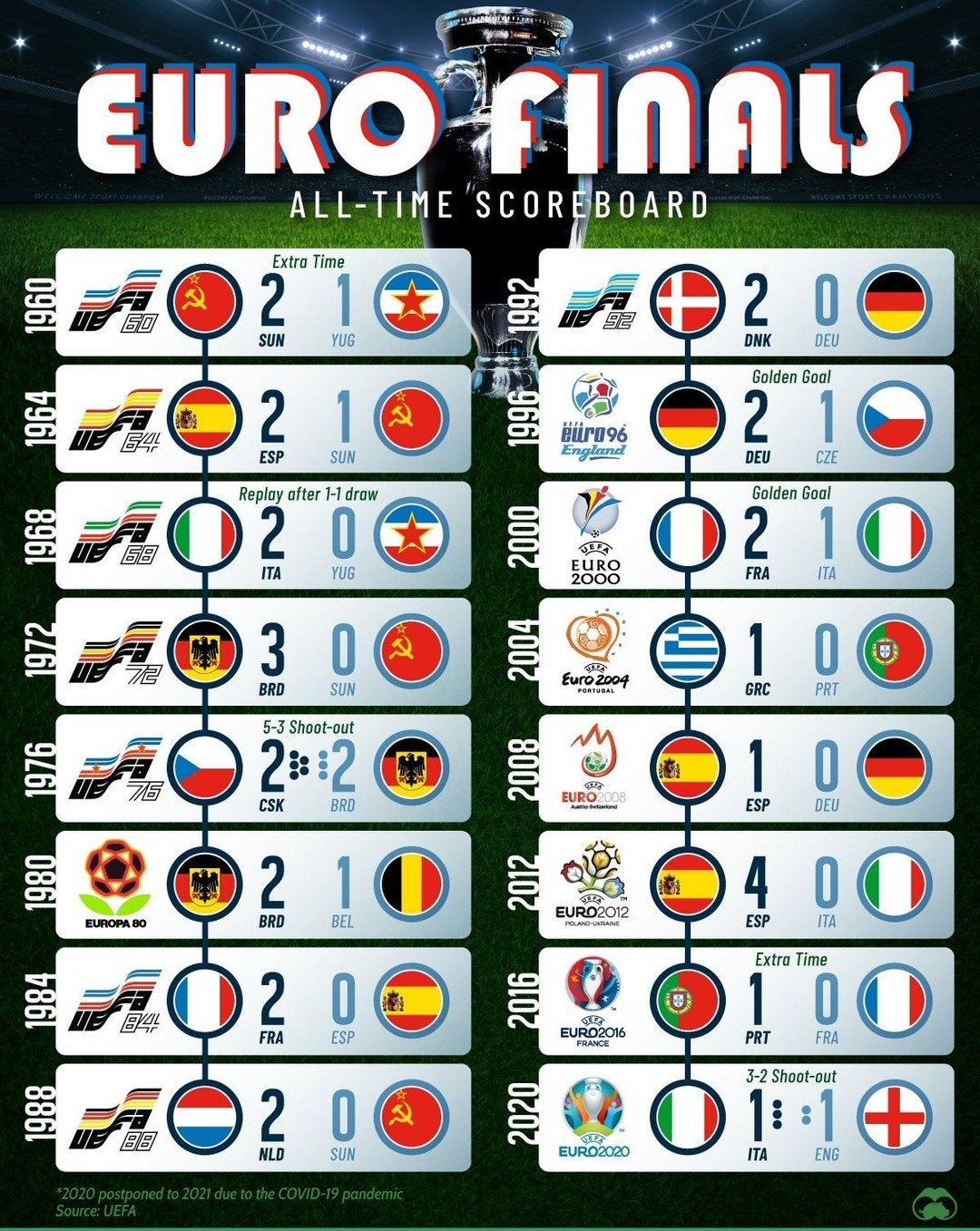
The 1960 final saw the Soviet Union face Yugoslavia, with extra time needed to decide the winner. The Soviet Union triumphed 2-1, setting the stage for future dramas. The 1964 final in Madrid was another classic, with Spain clinching the title in a thrilling 2-1 victory over the Soviet Union. This match showcased Spain's growing football strength and set the tone for future successes.
The Dominance of West Germany
The 1970s and 1980s were marked by the dominance of West Germany, which went on to win the tournament in 1972 and 1980. These victories cemented West Germany's status as a powerhouse in European football. The 1988 tournament saw the Netherlands emerge as champions, adding another layer to the tournament's rich tapestry.
Spain's Rise to Prominence
Spain's rise to prominence began in the 2000s, with the team winning the tournament in 2008 and 2012. These victories showcased Spain's tactical brilliance and technical skill, setting new standards for European football. The 2008 final against Germany was a closely contested match, with Spain eventually triumphing 1-0 in extra time. This victory marked a turning point for Spain, establishing them as a dominant force in European football.
Key Moments and Standout Performances
Throughout the years, the UEFA European Championship has been defined by numerous key moments and standout performances. From the Soviet Union's inaugural win to Spain's historic victories, each final has contributed to the tournament's legendary status.
The Golden Goal Era
The 1990s and early 2000s were marked by the "golden goal" rule, which added an element of excitement to the finals. This rule allowed a match to be decided by a single goal during extra time, leading to some dramatic finishes. The 1996 final between Germany and the Czech Republic was one such example, with Germany emerging victorious 2-1 in extra time.
The Shoot-Out Drama
The penalty shoot-out has also played a crucial role in deciding the outcome of several finals. The 2000 final between France and Italy was a classic example, with France clinching the title in a nail-biting shoot-out. Similarly, the 2004 final between Portugal and Greece saw Greece emerge victorious in a dramatic shoot-out, adding to the tournament's rich history of unforgettable moments.
The Visual Scoreboard
From 1960 to 2020, the UEFA European Championship finals have featured a diverse array of teams and outcomes. The scoreboard provides a visual representation of the historical progression of the tournament, highlighting key moments and outcomes of each final.
Key Matchups
- 1960: Soviet Union vs. Yugoslavia (2-1 extra time)
- 1964: Spain vs. Soviet Union (2-1)
- 1968: Italy vs. Yugoslavia (2-0)
- 1972: West Germany vs. Soviet Union (3-0)
- 1976: West Germany vs. Czechoslovakia (2-2, 5-3 penalties)
- 1980: West Germany vs. Belgium (2-1)
- 1984: France vs. Spain (2-0)
- 1988: Netherlands vs. Soviet Union (2-0)
- 1992: Denmark vs. Germany (2-0)
- 1996: Germany vs. Czech Republic (2-1 extra time)
- 2000: France vs. Italy (2-1)
- 2004: Greece vs. Portugal (2-0)
- 2008: Spain vs. Germany (1-0 extra time)
- 2012: Spain vs. Italy (4-0)
- 2016: Portugal vs. France (1-0 extra time, shoot-out)
- 2020: Italy vs. England (3-2 penalties)
Practical Tips for Following the UEFA European Championship
For those who want to stay updated on the UEFA European Championship, here are some practical tips:
Stay Informed
Follow official UEFA channels and reliable sports news outlets for the latest updates and in-depth analysis. This will help you stay informed about team lineups, key players, and match predictions.
Engage with the Community
Join online forums and social media groups dedicated to football and the UEFA European Championship. Engaging with fellow fans can provide valuable insights and enhance your viewing experience.
Watch Live Matches
Experience the excitement of the tournament by watching live matches. Whether you're at the stadium or following along from home, live broadcasts offer an immersive way to enjoy the action.
Important Takeaways
Spain's 2024 win marks a significant milestone in the history of the UEFA European Championship. The tournament has evolved over the decades, featuring memorable matches and standout performances. From the early days of the golden goal to the drama of penalty shoot-outs, each final has contributed to the tournament's rich legacy. As we look forward to future editions, the UEFA European Championship continues to be a showcase of the best in European football, offering fans thrilling matches and unforgettable moments.
Conclusion
The UEFA European Championship is more than just a football tournament; it is a celebration of the sport's rich history and the passion of its fans. Spain's 2024 win adds another chapter to this storied competition, highlighting the enduring appeal of European football. As the tournament continues to evolve, it remains a must-watch event for football enthusiasts worldwide.
Watch the Reel
Questions readers ask
How many times has Spain won the UEFA European Championship?
Spain has won the UEFA European Championship four times, with their most recent victory occurring in 2024. This feat surpasses Germany's tally, making Spain the most successful team in the tournament's history.
What was significant about the UEFA Euro 2024 final?
The UEFA Euro 2024 final was significant because it marked the first time Spain surpassed Germany (including West Germany) in the number of UEFA European Championship wins. Spain's victory in the 2024 final secured their fourth title, cementing their status as a dominant force in European football.
Who has won the most UEFA Euro finals, and how many times have they won?
Spain has won the most UEFA Euro finals, with a total of four victories. Their wins came in 1964, 2008, 2012, and 2024. This record surpasses Germany, including West Germany, who has won the tournament three times.
What are some of the most intense rivalries in UEFA Euro history?
The UEFA European Championship has featured several intense rivalries over the years. Notable rivalries include Spain vs. Germany, which has produced memorable matches. The tournament has also showcased fierce competition between other European powerhouses, adding to its rich history and excitement.
What was the first UEFA Euro final, and who won it?
The first UEFA Euro final was held in 1960. The Soviet Union emerged as the champion, defeating Yugoslavia 2-1 in the final match. This inaugural tournament set the stage for the UEFA European Championship’s long history of competitive and thrilling football.
What are some of the unforgettable matches in UEFA Euro history?
The UEFA Euro tournament is filled with unforgettable matches. Some standout games include the 2012 final between Spain and Italy, where Spain won 4-0, and the 2008 final where Spain defeated Germany 1-0. Additionally, the 2020 final between Italy and England, which ended in a penalty shootout, is remembered for its intense drama and excitement.
How has Spain's football dominance impacted the UEFA Euro tournament?
Spain's football dominance has significantly impacted the UEFA Euro tournament by setting a high standard of play. Their consistent success has inspired other teams to elevate their game, contributing to the tournament's competitiveness and excitement. Spain's victories have also added to the rich tapestry of the Euros, making it one of the most anticipated and watched football events globally.
Related deep dives
Similar reads based on topic and creator.


Recent articles
Fresh deep dives from the latest Reels we unpacked.




Comments
Be the first to comment.