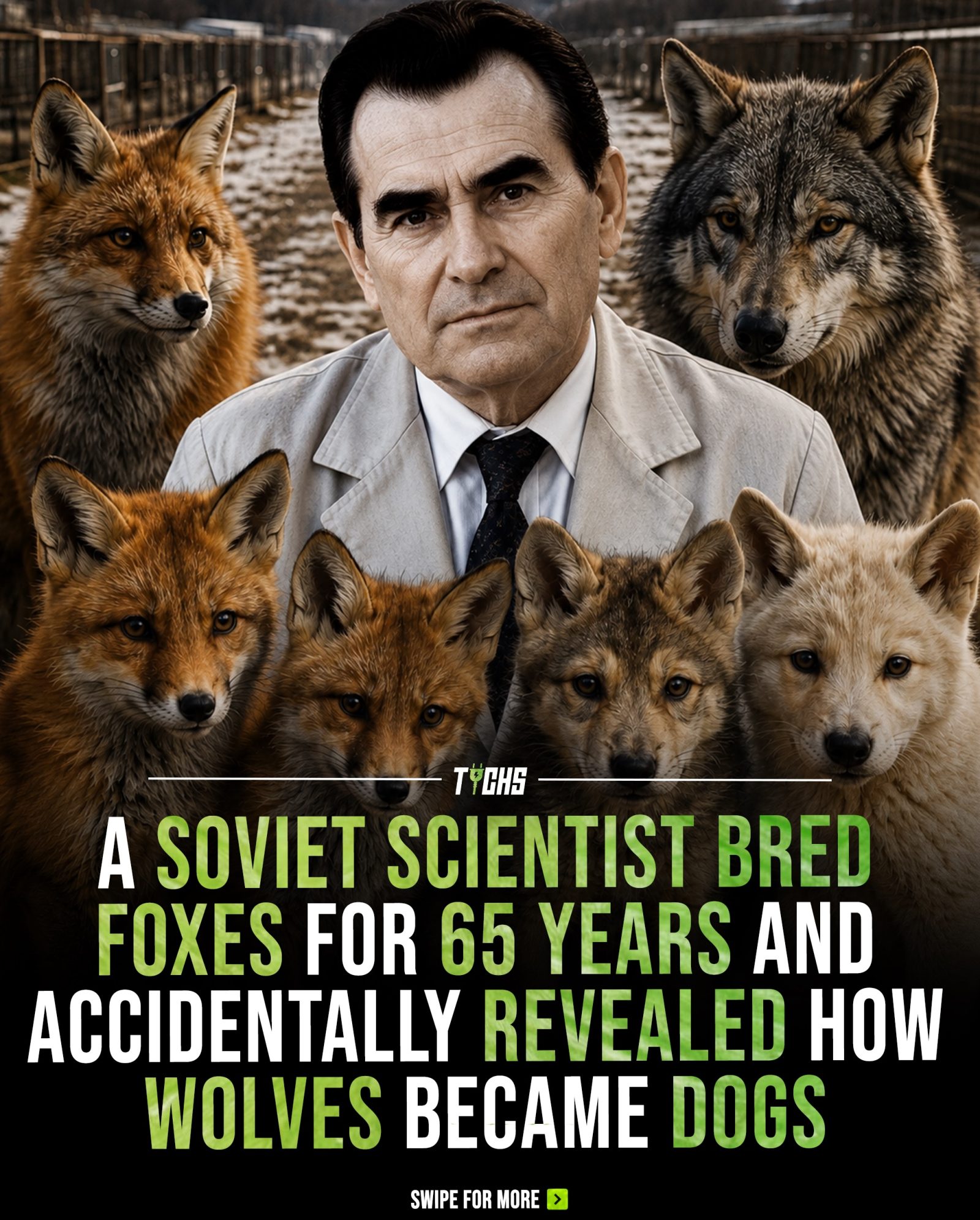
Fox Domestication
The story of how wolves evolved into domesticated dogs is a fascinating journey that has intrigued scientists and animal lovers alike. One of the most compelling experiments providing insights into this process involved Soviet scientists breeding foxes for 65 years. This experiment, begun in 1959, and the unexpected outcomes have provided valuable insights into the genetics, evolution, and behavior of domesticated animals.
The Experiment
In 1959, Soviet scientist Dmitry Belyaev initiated an experiment to study the domestication process by selectively breeding foxes. Alongside Belyaev, Lyudmila Trut continued the experiment. The focus was to breed only the friendliest 1–2% of foxes in each generation. Over time, the foxes exhibited remarkable changes in both behavior and physical appearance.
Behavioral Changes
The foxes not only became calmer and more social around humans but also displayed a range of behaviors similar to those seen in domesticated dogs. This included wagging their tails, whining, and exhibiting a strong desire for human attention. These changes occurred surprisingly quickly, much faster than initially anticipated.
Physical Changes
In addition to behavioral changes, the foxes began to develop physical traits commonly associated with domesticated animals. This included floppy ears, curly tails, spotted coats, and shorter snouts. These physical changes are similar to those seen in domesticated dogs, suggesting a strong genetic component to the domestication process.
More than 60 generations later, the experiment continues to provide insights into how selecting for reduced aggression and greater cooperation can significantly alter both the appearance and temperament of an animal.
Implications for the Domestication of Wolves
The results of this experiment have given scientists a unique perspective on how wolves may have evolved into the dogs we know today. The key takeaway is that the process of domestication might have started with wolves becoming less aggressive and seeking human interaction. These less aggressive wolves may have been allowed to live near human campsites, gradually evolving into domesticated dogs.
Self-Domestication Hypothesis
One intriguing hypothesis emerging from this experiment is the idea of self-domestication. This suggests that wolves may have domesticated themselves by becoming calmer and seeking human attention. Early humans might not have intentionally bred wolves but simply allowed the less aggressive ones to live near their campsites. Over time, these wolves would have evolved to become more dog-like, both in behavior and appearance.
Genetic Factors
The experiment highlighted the role of genetics in the domestication process. By selectively breeding foxes for friendliness, scientists were able to observe significant changes in both behavior and physical traits. This suggests that similar genetic mechanisms may have been at play when wolves evolved into dogs.
Key Genetic and Behavioral Factors
The Soviet fox domestication experiment has highlighted several key factors in the domestication process:
Genetic Selection
The experiment's core method was genetic selection. By choosing foxes with the most friendly behaviors and breeding them, the scientists observed that over time, other traits changed as well. This included changes in coat patterns, ear shapes, and tail structures, along with behavioral traits like increased sociability and reduced aggression.
Behavioral Changes
One of the most notable outcomes was the behavioral changes. Foxes started to exhibit dog-like behaviors such as whining, tail wagging, and seeking human attention. These changes occurred within a relatively short period, indicating that behavioral traits can evolve quickly when subjected to certain environmental pressures.
Physical Traits
Physical changes included traits such as floppy ears, curly tails, and shorter snouts, which are also seen in domesticated dogs. These physical changes suggest that the process of domestication can significantly alter an animal’s physical appearance over a few generations.
Practical Tips for Understanding Domestication
Understanding the domestication process can provide valuable insights for animal breeders, conservationists, and anyone interested in animal behavior. Here are a few practical tips:
Observe Behavior
Pay close attention to the behavior of the animals you're working with. Notice how they react to human interaction and whether they exhibit any social behaviors. These observations can give you a better understanding of the domestication process.
Selective Breeding
Consider the benefits and implications of selective breeding. While it can lead to significant changes in both behavior and physical traits, it's essential to do so ethically and responsibly. This includes ensuring the well-being of the animals and considering the long-term effects of your breeding practices.
Environmental Factors
Consider how the environment can influence behavior and physical traits. Animals living in human environments, such as farms or homes, may exhibit different behaviors and physical characteristics than their wild counterparts.
Research
Read and research extensively on the subject. The more you know about genetics, evolution, and animal behavior, the better equipped you'll be to understand and work with domesticated animals.
Important Takeaways
The Soviet fox domestication experiment has provided invaluable insights into how wolves may have evolved into dogs. Key takeaways include:
- Genetic Selection: Selecting for reduced aggression and greater cooperation can lead to significant changes in both behavior and physical traits.
- Behavioral Changes: Domesticated animals often exhibit behaviors that are more social and less aggressive, similar to what was observed in the foxes.
- Physical Changes: Domesticated animals can develop physical traits that are distinct from their wild counterparts, such as floppy ears, curly tails, and spotted coats.
Conclusion
The experiment initiated by Soviet scientist Dmitry Belyaev and continued by Lyudmila Trut has given us a unique glimpse into the domestication process. By selectively breeding foxes for friendliness, scientists were able to observe significant changes in both behavior and physical traits, providing valuable insights into how wolves may have evolved into dogs.
Understanding the domestication process can help us better appreciate the relationship between humans and animals, and provide valuable insights for breeders, conservationists, and anyone interested in animal behavior. By studying the genetic and environmental factors at play, we can better understand how domesticated animals evolve and adapt to their environments.
Watch the Reel
Questions readers ask
What were the primary goals of the Soviet fox experiment?
The primary goals of the Soviet fox experiment, initiated by Dmitry Belyaev, were to study the domestication process by selectively breeding foxes. The scientists aimed to select and breed only the friendliest foxes in each generation to observe the behavioral and physical changes that occurred over time. This involved understanding how selective breeding for specific traits could lead to long-term behavioral and physical changes.
How long did the Soviet fox breeding experiment last?
The Soviet fox breeding experiment lasted for approximately 65 years. This long duration allowed scientists to observe and document the significant changes in the foxes' behavior and physical appearance, providing a unique perspective on the domestication process from wolves to modern dogs.
What specific changes were observed in the selectively bred foxes?
Over the course of the experiment, the foxes exhibited remarkable changes, including becoming more friendly and docile. Physical changes were also observed, such as floppy ears, curly tails, and variations in coat color and patterns. These changes were similar to those seen in domesticated dogs, which offered insights into how wolves may have evolved into modern dogs through selective breeding.
What role did Lyudmila Trut play in the Soviet fox experiment?
Lyudmila Trut was a Soviet scientist who played a crucial role in continuing the fox breeding experiment after Dmitry Belyaev's death. She oversaw the experiment for many years, ensuring that the selective breeding process was maintained and that the data collected was meticulously documented. Her contributions were vital in providing a comprehensive understanding of the domestication process.
How did the Soviet fox experiment contribute to understanding the evolution of dogs from wolves?
By selectively breeding foxes for friendliness, the experiment demonstrated how domestication can lead to significant behavioral and physical changes. The foxes, after 65 years of selective breeding, exhibited traits commonly found in domesticated dogs, such as increased docility and distinct physical features. This provided a compelling model for how wolves may have evolved into modern dogs through selective breeding and domestication.
Why were only the friendliest foxes chosen for breeding in the Soviet fox experiment?
To study the effects of selective breeding on behavior and physical traits, only the friendliest 1–2% of foxes were chosen for breeding in each generation. This approach allowed the researchers to isolate and amplify the genes associated with friendliness, providing a clear view of how domestication can alter an animal's behavior and physical characteristics.
What are some of the physical changes that occurred in the foxes during the experiment?
Some of the physical changes observed in the foxes included changes in coat color and patterns, floppy ears, and curly tails. These physical traits are similar to those seen in modern domesticated dogs, reinforcing the idea that selective breeding for behavioral traits can also lead to distinct physical changes in an animal.
Related deep dives
Similar reads based on topic and creator.



Recent articles
Fresh deep dives from the latest Reels we unpacked.




Comments
Be the first to comment.