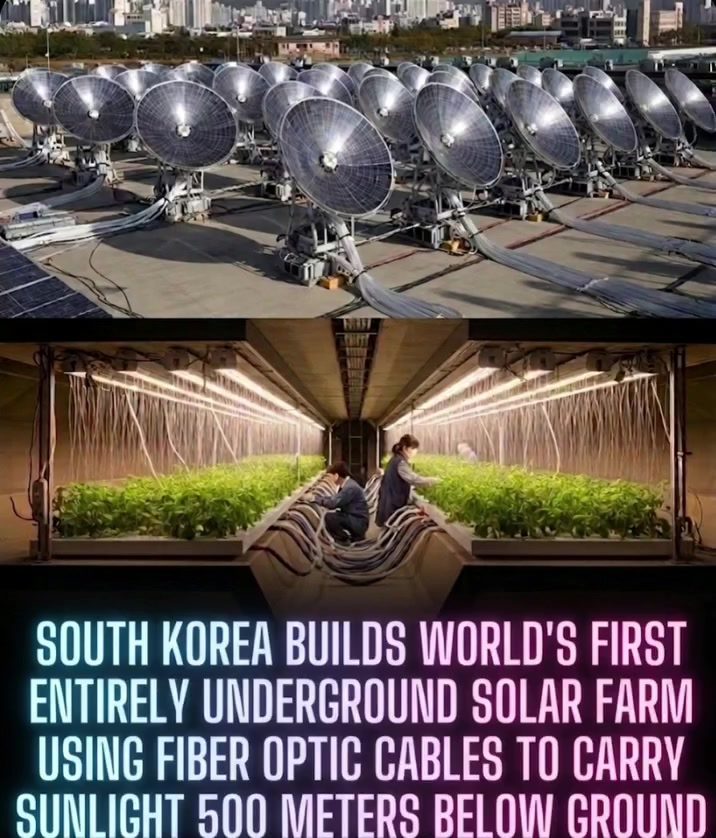
Underground Solar Farms
Underground solar farms represent an innovative approach to harnessing solar energy, particularly in densely populated or land-scarce areas. South Korea has made headlines by constructing the world's first entirely underground solar farm. This groundbreaking project utilizes advanced technology to maximize solar energy efficiency while minimizing land use.
Why This Matters
The development of underground solar farms holds significant implications for sustainable energy production. These farms address critical challenges such as land scarcity and environmental impact, making solar energy more accessible and efficient. By moving solar farms underground, countries can optimize land use and reduce the visual and environmental footprint of solar installations. This approach is particularly relevant for densely populated regions or areas with limited land availability, offering a viable solution for increasing energy demands sustainably.
The Technology
Underground solar farms rely on cutting-edge technology to capture and utilize sunlight in unique ways. At the heart of this innovation are fiber optic cables, which transport sunlight from the surface to underground solar panels. In the case of the South Korean project, sunlight is carried 500 meters below ground, where it is harnessed by solar concentrators. These concentrators gather and focus the sunlight, enhancing the efficiency of the solar panels.
Solar Concentrators
Solar concentrators are devices designed to capture and concentrate sunlight onto a smaller area, typically a solar cell. This concentration increases the amount of sunlight that the solar cell receives, boosting its energy output. In the context of underground solar farms, concentrators play a crucial role in maximizing the effectiveness of the limited sunlight available.
Fiber Optic Cables
Fiber optic cables are essential for transmitting sunlight to the underground solar panels. These cables are made of glass or plastic fibers that can transmit light over long distances with minimal loss. In the South Korean project, the cables transport sunlight from the surface to the underground panels, enabling the solar farm to function efficiently in a subterranean environment.
Underground Infrastructure
The underground infrastructure of these solar farms is carefully designed to accommodate the solar panels and the associated technology. The setup includes the fiber optic cables, solar concentrators, and robust support structures to ensure stability and efficiency. This infrastructure is built to withstand the unique environmental conditions of an underground setting, ensuring long-term reliability and performance.
Practical Tips for Setting Up an Underground Solar Farm
Creating an underground solar farm requires careful planning and execution. Here are some practical tips to consider:
Site Selection
Choose a site that has sufficient sunlight exposure and is close to existing infrastructure. The ideal location should have minimal shading and easy access to underground spaces.
Infrastructure Planning
Design the underground structure to accommodate the solar panels, fiber optic cables, and concentrators. Ensure that the space is well-ventilated and has a stable temperature to maintain optimal performance.
Technology Integration
Select high-quality solar concentrators and fiber optic cables to ensure efficient sunlight transmission. Invest in robust support structures to stabilize the underground infrastructure.
Safety and Compliance
Ensure that the project complies with local regulations and safety standards. Conduct thorough risk assessments and implement safety measures to protect workers and the environment.
Important Takeaways
Underground solar farms represent a significant advancement in renewable energy technology. By leveraging fiber optic cables and solar concentrators, these farms can effectively harness sunlight in areas with limited surface space. The South Korean project serves as a prime example of how innovative technology can address land scarcity and environmental concerns, paving the way for more sustainable energy solutions.
Conclusion
Underground solar farms offer a groundbreaking approach to renewable energy, particularly in densely populated or land-scarce regions. By utilizing advanced technology like fiber optic cables and solar concentrators, these farms can maximize energy efficiency and minimize environmental impact. As the world continues to seek sustainable energy solutions, underground solar farms present a promising avenue for harnessing the power of the sun in innovative ways.
Watch the Reel
Questions readers ask
What makes South Korea's underground solar farm a global first?
South Korea's underground solar farm is the world's first to be entirely subterranean. This means all solar panels are installed underground, with fiber optic cables transporting sunlight to them, which is a unique approach not seen in other solar farms around the world.
How does the underground solar farm in South Korea address land use challenges?
By placing solar panels underground, the farm frees up surface land for other uses, such as housing or infrastructure. This is particularly beneficial in densely populated areas where land is scarce and highly sought after.
What role do fiber optic cables play in South Korea's underground solar farm?
Fiber optic cables are crucial in this innovative design. They act as conduits, channeling sunlight from the surface down to the underground solar panels. This technology is instrumental in making the underground solar farm functional and efficient.
Can underground solar farms operate effectively in urban areas?
Yes, underground solar farms are well-suited for urban areas. They help mitigate the visual impact of traditional solar farms and make better use of limited land resources, which are common challenges in cities and densely populated areas.
What are the environmental benefits of South Korea's underground solar farm?
The underground solar farm reduces the need for large, above-ground solar installations, which can have significant environmental impacts. By going underground, it minimizes disruption to local ecosystems and habitats, and reduces the visual footprint of solar energy production.
How does the underground solar farm in South Korea compare to traditional solar farms?
Unlike traditional solar farms, which require large, open spaces, the underground solar farm in South Korea maximizes land use efficiency. It also reduces visual pollution and environmental impact, offering a more discrete and eco-friendly approach to solar energy generation.
What are the implications of South Korea's underground solar farm for other countries?
South Korea's breakthrough could inspire other countries, particularly those with high population densities and limited land resources, to explore similar solutions. It demonstrates a new approach to sustainable energy production and land management, which could be adapted and implemented globally.
Related deep dives
Similar reads based on topic and creator.




Recent articles
Fresh deep dives from the latest Reels we unpacked.




Comments
Be the first to comment.