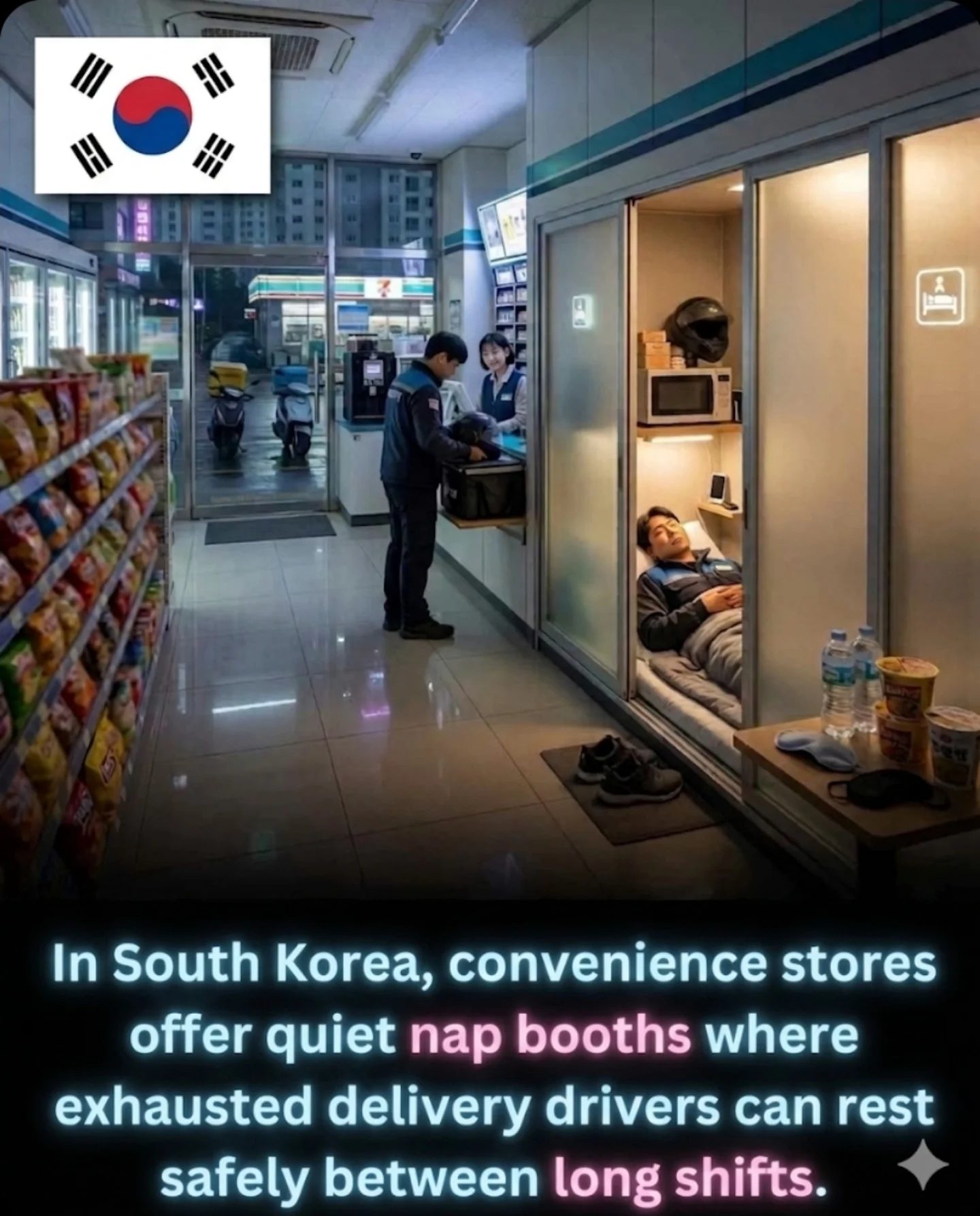
Nap Booths in South Korean Convenience Stores: A Commentary on Labor Conditions
In South Korea, the demands of the hyper-efficient delivery industry have sparked innovative solutions to support workers. Among these is the concept of nap booths in convenience stores, designed to provide exhausted delivery drivers with a safe and quiet space to rest between long shifts. While these booths are a fictional element in an AI-generated illustration, they serve as a powerful commentary on the real-world conditions faced by platform workers. This exploration delves into the socio-economic context, the importance of rest for delivery drivers, and the broader implications for worker welfare in South Korea.
Context / Why this Matters
The hyper-efficient delivery industry in South Korea is characterized by rapid, 24/7 service requirements. Delivery drivers, often employed by platforms like CU or GS25, work under intense pressure to meet delivery deadlines. The physical and mental toll of this work has raised significant concerns about worker welfare. Nap booths, while not currently integrated into standard convenience stores, represent a potential solution to this problem. They highlight the need for spaces where drivers can rest, recharge, and ensure their well-being, which is crucial for both their health and the quality of service they provide.
Dynamic Delivery Industry in South Korea
The Demand for Rapid Delivery
South Korea's delivery industry is renowned for its speed and efficiency. Couriers must navigate crowded urban areas, often under tight deadlines. This rapid pace of work can lead to exhaustion, stress, and even health issues. The intense work environment has sparked a socio-economic dialogue about the welfare of these platform workers, who are integral to the country's service economy.
The Role of Worker Rest Centers
The AI-generated illustration, which depicts nap booths inside convenience stores, actually mirrors the concept of South Korea's Worker Rest Centers, known as shyim-teo. These centers are government-funded hubs designed to provide couriers with climate-controlled spaces, charging stations, and seating. They serve as rest areas where delivery drivers can take short breaks, recharge their devices, and combat exhaustion. While these centers do not exist within standard convenience stores, they highlight the growing awareness of the need for rest and recovery in a high-stress work environment.
Real-World Implications
The Need for Rest and Recovery
The concept of nap booths in convenience stores underscores the critical need for rest and recovery in the delivery industry. Long shifts and the physical demands of the job can lead to burnout and health issues. Providing a safe and quiet space for drivers to rest can help mitigate these risks, ensuring that they are better equipped to handle their responsibilities.
The Future of Worker Welfare
The illustration, with its surreal layout and distorted text, serves as a thought-provoking commentary on the future of worker welfare. While the specific scene is fictional, it raises important questions about how society can better support platform workers. This includes not only providing physical spaces for rest but also addressing broader concerns such as fair compensation, job security, and mental health support. Such initiatives can also create a healthier work environment, improving overall service quality.
Practical Tips for Delivery Drivers
Planning Your Day
Effective time management can help delivery drivers avoid exhaustion. By planning their routes and breaks in advance, drivers can ensure they have adequate rest periods. This practice not only helps in maintaining efficiency but also reduces stress and the likelihood of burnout.
Utilizing Available Resources
Delivery drivers should take full advantage of available resources, such as rest centers and charging stations. These facilities are designed to provide relief and ensure that drivers can continue their work without compromising their health.
Maintaining Physical and Mental Well-Being
Beyond physical rest, it's essential for drivers to prioritize their mental health. This can be achieved through simple practices like mindfulness, staying hydrated, and eating healthily. Regular exercise and adequate sleep are also crucial for maintaining overall well-being.
Important Takeaways
The concept of nap booths in convenience stores, as depicted in the AI-generated illustration, offers a powerful commentary on the demanding labor conditions in South Korea's delivery industry. The illustration serves as a starting point for a broader discussion on the welfare of platform workers. It underscores the need for rest areas, better working conditions, and comprehensive support systems. The real-world existence of Worker Rest Centers, or shyim-teo, reveals a growing awareness of these issues. By implementing similar rest facilities in convenience stores, society can take a significant step toward improving the lives of delivery drivers.
Conclusion
The idea of nap booths in South Korean convenience stores, while currently fictional, highlights a critical need for rest and welfare in the delivery industry. This commentary shines a light on the demanding labor conditions faced by delivery drivers and the broader socio-economic dialogue surrounding their welfare. By providing a safe, quiet space for drivers to rest, society can support these essential workers, ensuring they are better equipped to handle their demanding roles. The real-world initiatives, such as Worker Rest Centers, offer a glimpse into the future of worker welfare, emphasizing the importance of rest, recovery, and overall well-being.
Watch the Reel
Questions readers ask
What are nap booths and why are they relevant to South Korea's delivery drivers?
Nap booths are small, enclosed spaces designed for short periods of sleep or rest. In the context of South Korea, they are relevant as a proposed solution for delivery drivers who often work long, irregular hours due to the country's 24/7 delivery service culture. These booths could provide much-needed rest areas for drivers during their shifts.
Why are convenience stores being considered as locations for nap booths?
Convenience stores are being considered because of their widespread presence and accessibility, making them ideal locations for drivers to take a quick nap. These stores are often open 24/7, aligning with the delivery drivers' irregular schedules. Additionally, convenience stores can provide essential services for drivers, such as restrooms and food.
What are the benefits of having designated rest areas for delivery drivers?
Designated rest areas, like nap booths, can help improve driver alertness and safety on the road. They also demonstrate a commitment to driver welfare, which can boost job satisfaction and retention. Resting during shifts helps drivers manage fatigue and reduces the risk of accidents.
Are nap booths already available in South Korea?
As of now, nap booths are not a common or real feature in South Korea. They are a fictional concept. However, the discussion around them highlights the urgent need for rest solutions for delivery drivers in the country. The idea of providing rest areas for drivers is a recent development.
How do nap booths fit into the broader conversation about worker welfare in South Korea?
Nap booths are a symptom of a larger conversation around the need for improved worker welfare in South Korea. The delivery industry's demanding nature and the lack of adequate rest for drivers highlights the importance of addressing these issues. Worker welfare is a critical topic in South Korea's labor landscape, and nap booths are a small component of a larger need for change.
What are the potential challenges in implementing nap booths for delivery drivers?
Potential challenges include logistical concerns, such as space and maintenance. There may also be regulatory hurdles, as well as potential resistance from convenience stores or drivers themselves. Additionally, ensuring the safety and privacy of drivers while they rest is crucial.
What other solutions can be explored to support the welfare of delivery drivers in South Korea?
Other solutions could include mandated rest periods, dedicated rest areas at delivery hubs, or incentives for drivers to take breaks. Addressing the overall work culture and ensuring fair compensation and benefits are also crucial. Additionally, promoting awareness about the importance of rest and self-care for drivers is vital.
Related deep dives
Similar reads based on topic and creator.




Recent articles
Fresh deep dives from the latest Reels we unpacked.




Comments
Be the first to comment.