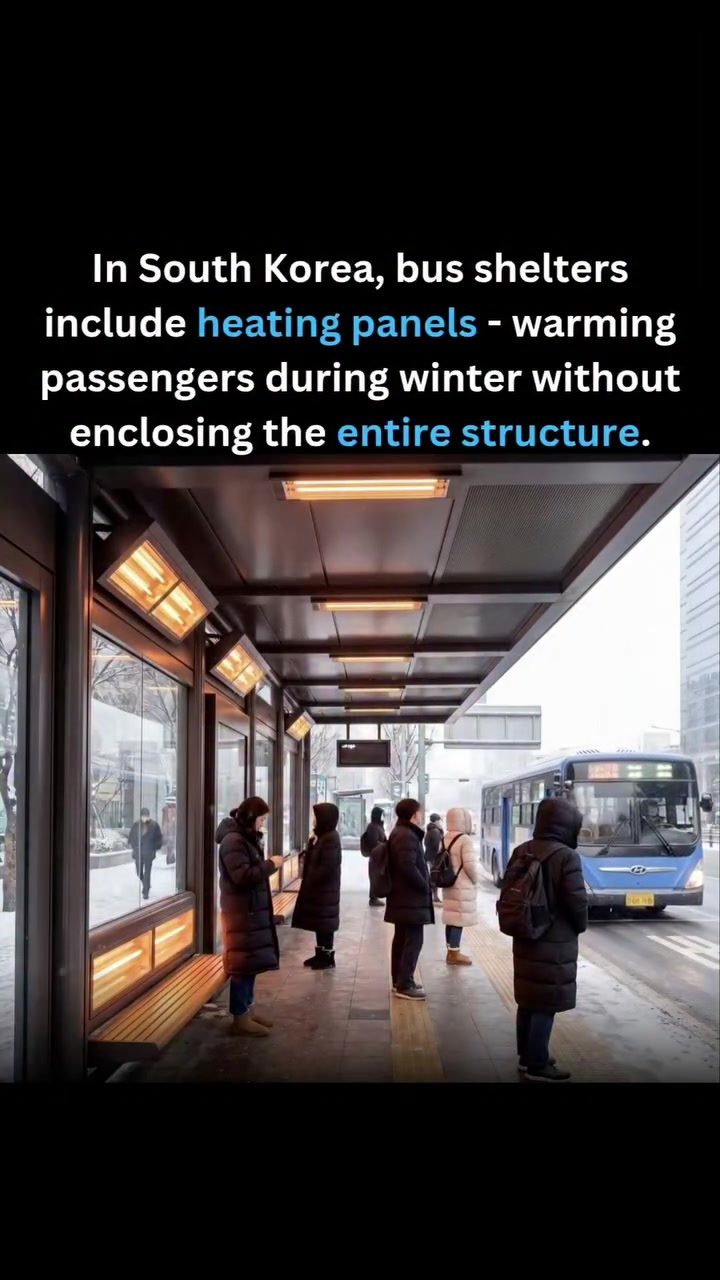
Bus Shelter Heating Panels in South Korea
Bus shelters in South Korea are equipped with innovative heating panels designed to enhance passenger comfort during the cold winter months. Unlike traditional enclosed structures, these shelters utilize a unique design that provides warmth without confining passengers in a fully enclosed space.
Why This Matters
Winter weather can be harsh, and bus stops are often areas where passengers are left vulnerable to the cold. The integration of heating panels in bus shelters helps mitigate this issue by offering a solution that balances warmth and open-air design.
Main Discussion
The Design of Heating Panels
These bus shelters feature heating panels mounted on the ceiling, which emit warmth downwards. This setup ensures that passengers waiting for the bus can stay warm without feeling claustrophobic. The panels are strategically placed to maximize heat distribution, providing a comfortable waiting experience even in the coldest conditions.
Benefits for Passengers
The primary benefit of these heating panels is the enhanced comfort they offer. Passengers no longer have to endure the biting cold while waiting for their bus. The open-air design also ensures that the shelter remains well-ventilated, which is crucial for maintaining good air quality. This design innovation not only improves passenger satisfaction but also contributes to overall public health and safety.
Efficient Use of Space
One of the most notable features of these bus shelters is their efficient use of space. The heating panels are discreetly integrated into the ceiling, leaving the floor area unobstructed. This allows for a more comfortable and spacious waiting area, accommodating more people without overcrowding issues.
Environmental Considerations
The choice of heating panels in bus shelters also has environmental implications. These panels are likely to be more energy-efficient than traditional heating methods, reducing the overall carbon footprint of the shelters. Additionally, the open-air design allows for natural ventilation, further reducing the need for excessive heating.
Versatile Urban Design
This design is a testament to the versatility of urban planning. By combining practicality and comfort, these shelters address a common problem faced by urban commuters. The solution is not only functional but also aesthetically pleasing, blending seamlessly with the urban landscape.
Practical Tips
If you are involved in urban design or public transportation planning, consider the following tips to enhance passenger comfort:
-
Integrate Heating Panels: Incorporate heating panels in bus shelters, especially in areas with harsh winters. This will significantly improve the waiting experience for passengers.
-
Open-Air Design: Opt for open-air designs to ensure good ventilation and a less claustrophobic environment. This design can be adapted to various urban landscapes, providing a flexible solution for different cities.
-
Strategic Placement: Ensure that heating panels are strategically placed to maximize heat distribution. This will prevent cold spots and ensure that all passengers benefit from the warmth.
-
Energy Efficiency: Choose energy-efficient heating options to reduce the environmental impact. This will not only save on energy costs but also contribute to a more sustainable urban environment.
-
Maintain Aesthetics: While focusing on functionality, do not overlook the aesthetic appeal of the shelters. A well-designed shelter can add to the visual appeal of the urban landscape.
Important Takeaways
Heating panels in bus shelters offer a practical solution to the problem of waiting in the cold. The open-air design of these shelters ensures that passengers can enjoy warmth without feeling confined. This innovation is a valuable addition to urban design, providing both comfort and efficiency.
Conclusion
The integration of heating panels in bus shelters in South Korea is a prime example of how urban design can be adapted to enhance passenger comfort. This innovative solution not only keeps passengers warm during winter months but also maintains good ventilation and a spacious waiting area. As urban planners and designers, considering such practical and comfortable solutions can significantly improve the overall commuting experience for passengers.
Watch the Reel
Questions readers ask
How do the heating panels in South Korean bus shelters work?
The heating panels in South Korean bus shelters are mounted on the ceiling and emit warmth downwards. This design allows passengers to stay warm without the need for a fully enclosed structure, ensuring open-air ventilation.
Why are open-air bus shelters preferable in South Korea during winter?
Open-air bus shelters in South Korea are preferable during winter because they provide ventilation and visibility, while the heating panels ensure passengers remain warm. Full enclosure may feel confining and could be stuffy.
What are the benefits of using heating panels in bus shelters?
Heating panels in bus shelters offer a practical solution to keep passengers warm during harsh winter months. They ensure comfort without the need for full enclosure, and they are an energy-efficient solution in public spaces.
Are there other countries using similar heating panel technology in public transport?
As of now, South Korea is notable for its widespread use of heating panels in bus shelters. While similar technologies might be employed in other countries, the specific design and integration seen in South Korea are unique.
How do heating panels improve public transport comfort during winter?
Heating panels improve public transport comfort during winter by providing direct warmth to passengers waiting at bus stops. This reduces the discomfort caused by cold temperatures and enhances the overall experience of using public transport.
Related deep dives
Similar reads based on topic and creator.




Recent articles
Fresh deep dives from the latest Reels we unpacked.




Comments
Be the first to comment.