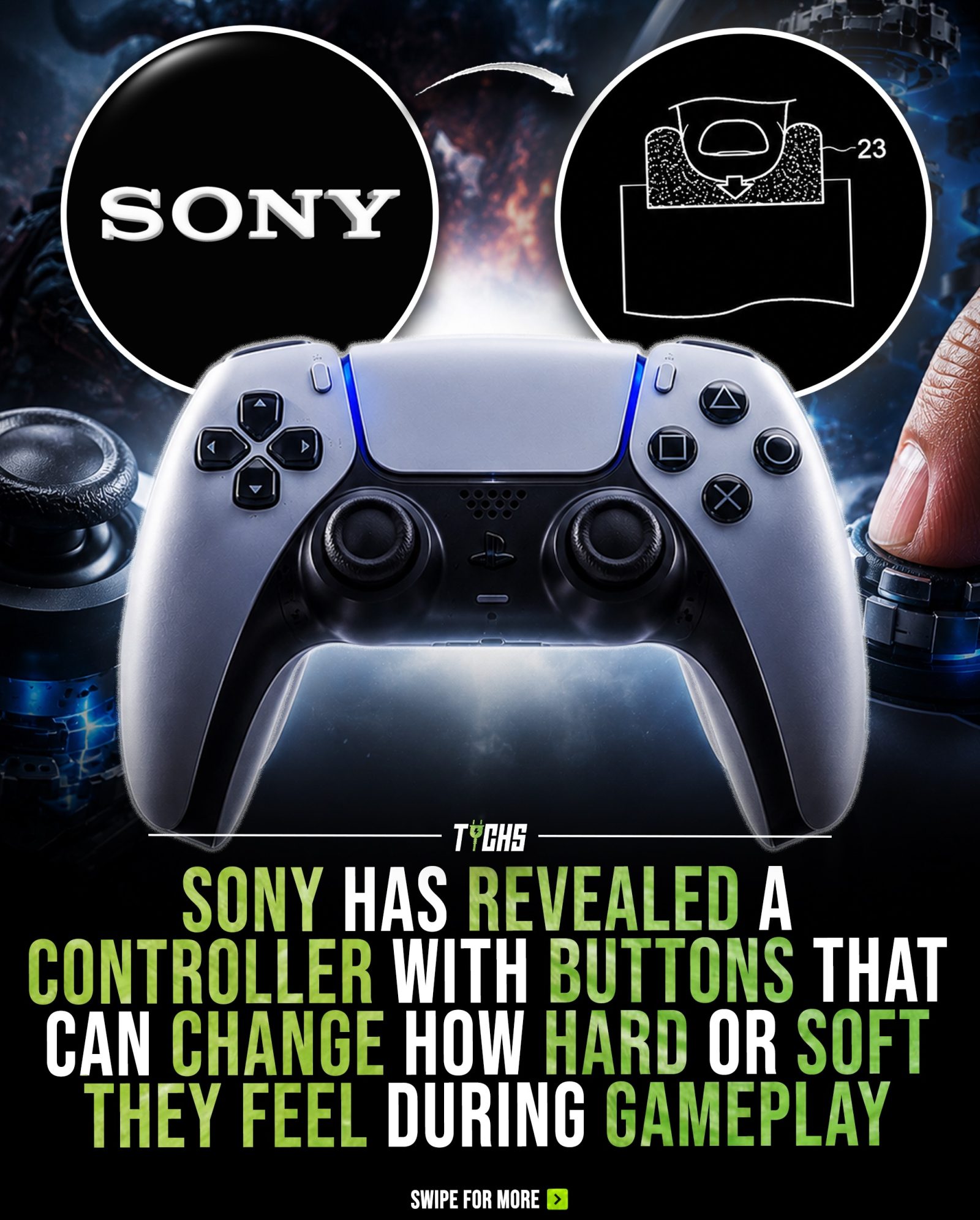
Sony's Adaptive Controller Concept: Changing the Game with Dynamic Button Resistance
Sony's newly revealed controller concept promises to revolutionize gaming by altering the physical feel of buttons in real-time, enhancing the immersive experience. This innovative technology, detailed in a patent filed in 2024 and published in 2026, leverages magnets and smart materials to adjust button resistance dynamically, synchronizing with in-game events.
Why This Matters
Modern gaming has come a long way, with advanced graphics, immersive storytelling, and sophisticated gameplay mechanics. However, the physical interaction with controllers has remained relatively static. Sony’s new concept aims to break this mold by integrating a new layer of tactile feedback, making the gaming experience more intuitive and engaging. This advancement could lead to a deeper connection between players and their virtual worlds, fostering an unprecedented level of immersion.
Inside the Adaptive Controller
Internal Mechanics and Materials
The controller employs a sophisticated system that uses magnets and advanced smart materials to adjust button resistance. This internal mechanism allows individual buttons to change how hard or soft they feel during gameplay, adapting to on-screen events seamlessly. The use of magnets and smart materials ensures that the adjustment is precise and instantaneous, providing a smooth and responsive experience.
Real-Time Adjustments
One of the standout features of this controller is its ability to dynamically adjust button resistance in real-time. For example, if a game character is grabbed or restrained, the controller can partially "trap" the player's finger by increasing the physical resistance of a button. This feature adds a new dimension to gameplay, making virtual interactions feel more tangible and immersive.
Practical Implications for Gamers
Enhanced Immersion
Imagine playing a game where the controller’s buttons physically respond to in-game actions. If your character is running, the buttons might feel softer, making the action feel more fluid. Conversely, if the character is under heavy fire, the buttons could feel harder, simulating the tension and stress of the situation. This level of tactile feedback could significantly enhance the emotional and physical experience of gaming, making players feel more connected to the gameplay.
Adaptive Gameplay
The adaptive nature of the controller can also create more challenging and varied gameplay. Developers could design levels and scenarios that require players to adapt to changing button resistances, adding a new layer of strategy and skill. For example, a game could feature sections where players need to press buttons with varying degrees of force to solve puzzles or execute complex actions.
Important Takeaways
Sony's adaptive controller concept represents a significant leap forward in gaming technology. By leveraging magnets and smart materials, this controller can dynamically adjust button resistance in real-time, providing a more immersive and adaptable gaming experience. While there is no confirmation that Sony plans to release this technology, the patent offers a glimpse into the future of gaming controllers, hinting at a new era of tactile feedback and immersive gameplay.
Conclusion
The future of gaming is poised to become even more immersive and interactive, thanks to innovations like Sony's adaptive controller. By changing the way buttons feel during gameplay, this concept could revolutionize how players interact with their virtual worlds, making experiences more physical and engaging. As gaming continues to evolve, such advancements will likely redefine the boundaries of what is possible, making the experience more dynamic and engaging for players worldwide.
Watch the Reel
Questions readers ask
How does Sony's Adaptive Controller change the button feel in real-time?
Sony's Adaptive Controller uses a combination of magnets and smart materials to adjust the resistance of the buttons dynamically. This allows the controller to change the button feel in real-time, synchronizing with the events happening in the game, including speed, force, or direction.
What are the benefits of dynamic button resistance in gaming?
Dynamic button resistance enhances the immersive gaming experience and offers real-time physical interactivity. The controller's ability to adjust button resistance in real-time can provide better feedback, making games more enjoyable and engaging.
What are the limitations of contemporary gaming controllers?
Contemporary gaming controllers typically have static button feedback, meaning the physical interaction remains consistent. This static nature can be a limitation, as it doesn't adapt to the changing demands of gameplay, potentially reducing the depth of the gaming experience.
How does Sony's Adaptive Controller improve gaming immersion?
The Adaptive Controller elevates gaming immersion by providing a new layer of tactile feedback thanks to its real-time button adjustments. This dynamic responsiveness can make gameplay more interactive, engaging, and immersive.
What role do magnets and smart materials play in the Adaptive Controller?
Magnets and smart materials are integral to the Adaptive Controller's functionality. They enable the controller to adjust button resistance dynamically, ensuring that the physical feel of the buttons can change in real-time, aligning with in-game events and actions.
What distinguishes Sony's Adaptive Controller from other gaming controllers?
Sony's Adaptive Controller stands out by incorporating real-time button adjustments, a feature not commonly found in other gaming controllers. This innovation allows for a more adaptive and interactive gaming experience, setting it apart in the market.
What are the potential applications of adaptive controller technology beyond gaming?
The technology behind Sony's Adaptive Controller has potential applications beyond gaming. Its ability to provide real-time, dynamic feedback could be beneficial in virtual reality experiences, remote control systems, and even medical rehabilitation tools, where tactile feedback can enhance user interaction.
Related deep dives
Similar reads based on topic and creator.




Recent articles
Fresh deep dives from the latest Reels we unpacked.




Comments
Be the first to comment.