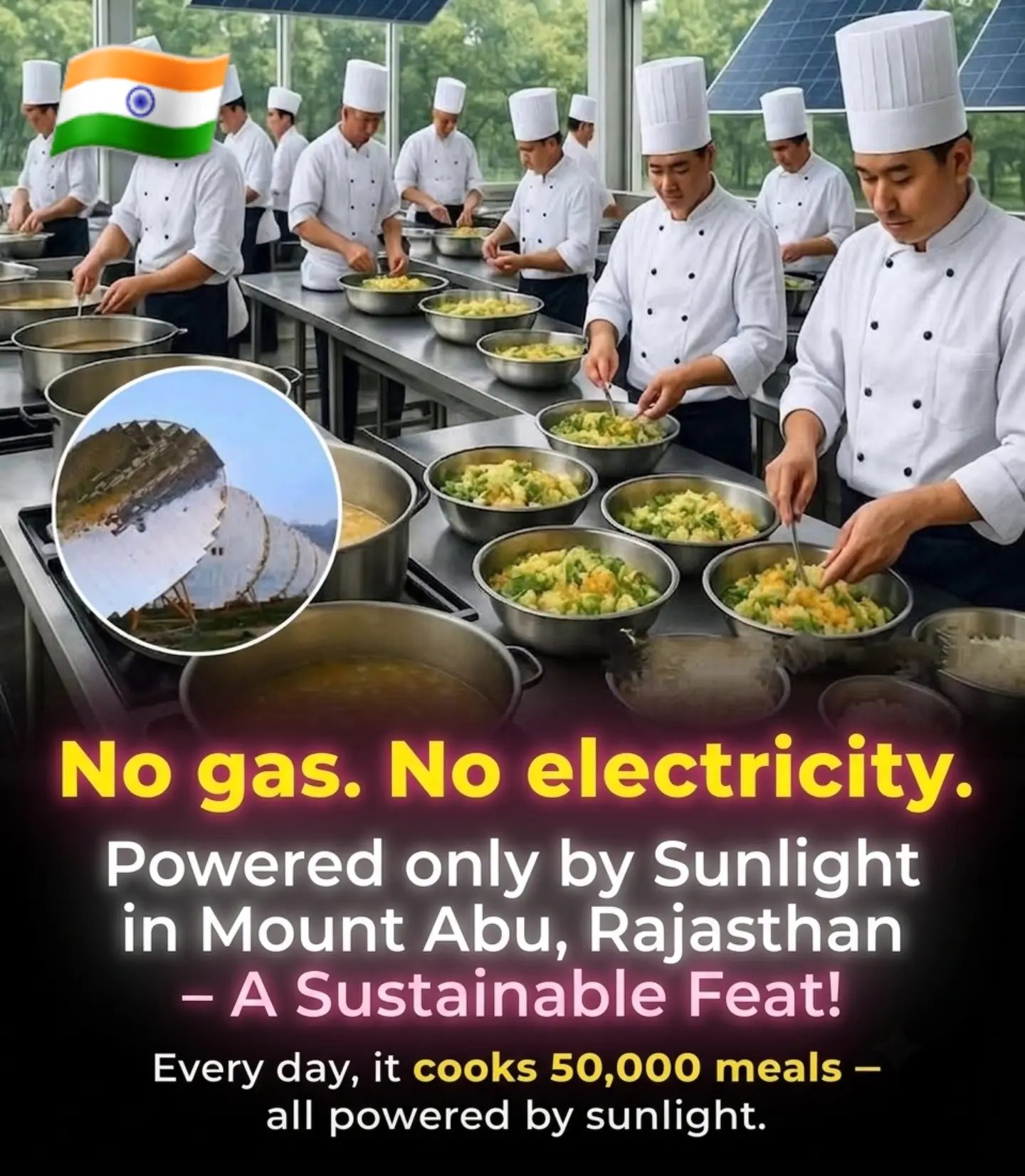
Understanding the World's Largest Solar-Powered Steam Cooking Kitchen
The world's largest solar-powered steam cooking kitchen is located in the serene town of Mount Abu, Rajasthan, India at the Brahma Kumaris' Shantivan Complex. This innovative culinary marvel was first established in 1998 with a mission to serve 20,000 meals per day. Thanks to continuous technological enhancements, its capacity has since grown to an impressive 50,000 meals daily. Unlike many solar-powered systems, this kitchen doesn't rely on photovoltaic solar panels. Instead, it leverages solar thermal energy through the use of 84 massive Scheffler reflectors—large parabolic mirrors that track the sun's position to concentrate solar radiation onto receivers.
Why This Matters
The kitchen's sustainable approach to generating steam for cooking is a significant feat in the world of sustainable energy. By harnessing solar power, the kitchen not only reduces its operational costs but also contributes to a cleaner environment. The elimination of LPG, firewood, or electricity drastically cuts down on carbon emissions, positioning this kitchen as a model for environmentally conscious cooking at a massive scale. Understanding how this system works can provide valuable insights into the future of sustainable food service operations.
Main Discussion
The Technology Behind the Kitchen
The kitchen's operation revolves around solar thermal energy, which is generated through 84 Scheffler reflectors. These mirrors are designed to follow the sun's path across the sky, ensuring that solar radiation is continuously focused onto receivers. The concentrated heat reaches temperatures between 500°C and 800°C, generating over 3,500 kilograms of steam daily. This steam is then directly piped into large, insulated cooking vessels where rice, lentils, and vegetables are prepared. The steam is also used to sterilize utensils, ensuring a high standard of hygiene.
The Impact of Solar Power
The use of solar power in this kitchen has far-reaching benefits. By eliminating the need for fossil fuels and electricity, the kitchen saves approximately 1.18 lakh liters of diesel annually. This massive reduction in diesel consumption directly translates to a significant decrease in carbon emissions, contributing positively to the environment. Additionally, the absence of gas and electricity means the kitchen operates without emitting harmful pollutants, making it a cleaner and safer option.
The Evolution of the Kitchen
Since its inception in 1998, the kitchen has undergone several technological upgrades. These improvements have not only increased its capacity from 20,000 to 50,000 meals daily but have also enhanced its efficiency. The use of advanced solar thermal energy systems and Scheffler reflectors has made the kitchen a model of sustainable engineering. The kitchen's journey from a modest operation to a large-scale sustainable endeavor highlights the potential of renewable energy in transforming traditional industries.
Practical Tips
For those interested in adopting similar sustainable practices, there are a few key takeaways:
- Invest in Solar Thermal Energy: Unlike photovoltaic solar panels, solar thermal energy can be used directly for cooking, providing a reliable and efficient source of heat.
- Utilize Scheffler Reflectors: These large, tracking parabolic mirrors are highly effective in concentrating solar radiation, making them ideal for large-scale cooking operations.
- Optimize Steam Usage: Steam generated from solar energy can be used not just for cooking but also for sterilizing utensils, improving overall kitchen hygiene.
- Continuous Upgrades: Regular technological upgrades can significantly enhance efficiency and capacity, making sustainable operations more viable.
Important Takeaways
- Solar Thermal Energy: This form of energy is vital for large-scale cooking operations, providing a reliable and efficient source of heat.
- Scheffler Reflectors: These mirrors are crucial in concentrating solar radiation, making them essential for sustainable cooking.
- Steam Usage: Efficient use of steam generated from solar energy can enhance both cooking and hygiene.
- Continuous Improvement: Regular technological upgrades are key to enhancing the capacity and efficiency of sustainable operations.
Conclusion
The world's largest solar-powered steam cooking kitchen in Mount Abu, Rajasthan, serves as a shining example of how renewable energy can be harnessed to meet large-scale food service demands sustainably. Its innovative use of solar thermal energy, coupled with state-of-the-art technology, has transformed it into a model of sustainable engineering. By eliminating the need for fossil fuels and electricity, this kitchen not only reduces operational costs but also contributes significantly to environmental conservation. For those looking to adopt similar practices, investing in solar thermal energy, utilizing Scheffler reflectors, optimizing steam usage, and continuously upgrading technology are essential steps.
Watch the Reel
Questions readers ask
What is the primary source of energy for the Mount Abu solar-powered steam cooking kitchen?
The kitchen utilizes solar thermal energy, harnessing the power of the sun using 84 large Scheffler reflectors. These mirrors concentrate solar radiation onto receivers to generate steam for cooking.
How many meals does the solar-powered steam cooking kitchen in Mount Abu serve daily?
The kitchen has the capacity to prepare and serve approximately 50,000 meals daily, making it one of the largest solar-powered cooking facilities in the world.
What makes the solar-powered steam cooking kitchen in Mount Abu unique compared to other solar-powered systems?
Unlike many other solar-powered systems that use photovoltaic solar panels, this kitchen employs solar thermal energy through the use of massive Scheffler reflectors, which track the sun's position to concentrate solar radiation.
What are the benefits of using solar thermal energy for cooking in the Mount Abu kitchen?
Solar thermal energy reduces operational costs by eliminating the need for fossil fuels. It also significantly decreases the environmental impact by lowering greenhouse gas emissions associated with traditional cooking methods.
How has the capacity of the solar-powered steam cooking kitchen in Mount Abu changed since its inception?
The kitchen was first established in 1998 with a capacity to serve 20,000 meals per day. Through continuous technological enhancements, its capacity has grown to 50,000 meals daily, showcasing significant advancements in solar cooking technology.
Where is the world's largest solar-powered steam cooking kitchen located?
The world's largest solar-powered steam cooking kitchen is located at the Brahma Kumaris' Shantivan Complex in the scenic town of Mount Abu, Rajasthan, India.
How does the solar-powered steam cooking system in Mount Abu generate steam for cooking?
The system uses 84 large Scheffler reflectors to focus solar radiation onto receivers, converting the energy into heat and generating steam for cooking. This process is managed by a complex system of mirrors and reflectors that track the sun's position throughout the day.
Related deep dives
Similar reads based on topic and creator.




Recent articles
Fresh deep dives from the latest Reels we unpacked.




Comments
Be the first to comment.