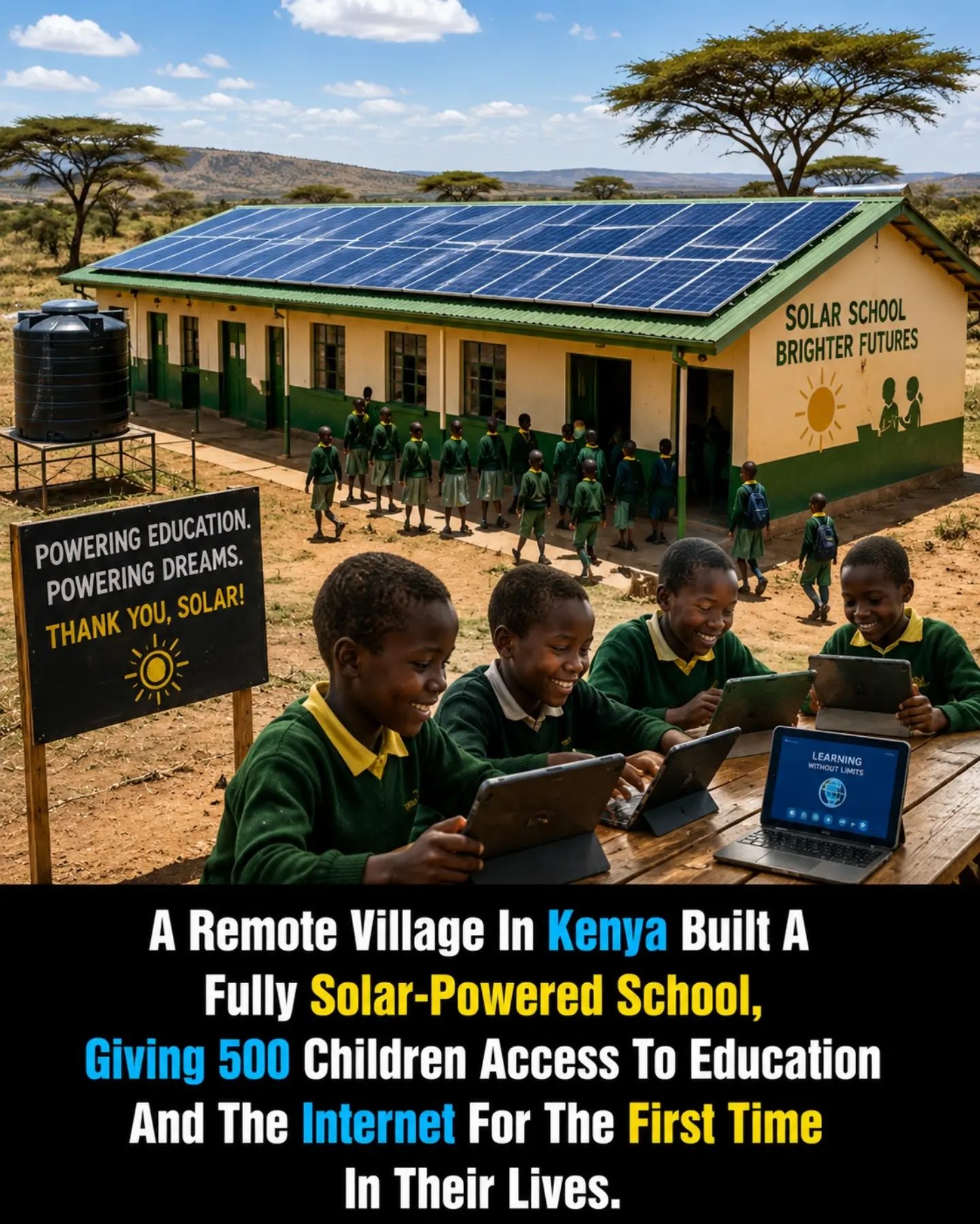
Solar-Powered School in Kenya
In the heart of a remote village in Kenya, a remarkable initiative has transformed the lives of 500 children through the establishment of a fully solar-powered school. This innovative project not only provides access to education but also brings the internet to these students for the first time in their lives.
Why this matters
In rural and remote areas, access to electricity can be a significant barrier to education. Traditional schools often rely on diesel generators, which are expensive, noisy, and environmentally harmful. Solar power offers a sustainable and cost-effective alternative, enabling schools to operate efficiently even in the absence of grid electricity.
Main discussion
The Impact of Solar Power on Education
The solar-powered school in Kenya serves as a testament to the transformative power of renewable energy in educational settings. By harnessing the sun's energy, the school can power classrooms, computers, and other essential equipment. This not only ensures a consistent supply of electricity but also reduces operational costs, allowing the school to allocate more resources to educational programs and materials.
Access to Technology
One of the most significant advantages of the solar-powered school is the introduction of technology. Children are now using tablets and laptops, which provide access to a wealth of educational resources and online learning platforms. This technological integration bridges the digital divide, ensuring that students in remote areas have the same opportunities as their urban counterparts.
Sustainable Infrastructure
The school's infrastructure, which includes solar panels and a water tank, is designed to be sustainable and self-sufficient. Solar panels generate clean energy, reducing the school's carbon footprint. The water tank ensures a steady supply of water, addressing another critical need in remote areas. This holistic approach to sustainability creates an environment conducive to learning and growth.
Empowering Children Through Education and Technology
The initiative aims to empower children through education and technology. By providing access to quality education and the internet, the school enables students to explore new horizons, develop critical thinking skills, and pursue their dreams. The integration of technology into the curriculum prepares students for a future where digital literacy is essential, equipping them with the skills needed to thrive in an increasingly technology-driven world.
Challenges and Solutions
Building and maintaining a solar-powered school in a remote village presents unique challenges. These include the initial cost of installing solar panels, the need for technical expertise to maintain the system, and the logistical challenges of transporting equipment to remote areas. However, the long-term benefits outweigh these initial hurdles. The cost savings from reduced energy bills and the positive impact on students' lives make it a worthwhile investment.
Community Involvement
Community involvement is crucial for the success of such initiatives. Local residents can play a vital role in maintaining the solar panels and ensuring the school's smooth operation. By involving the community, the school fosters a sense of ownership and responsibility, ensuring the sustainability of the project in the long run.
Practical tips
Integrating Solar Power in Educational Settings
For schools and educational institutions looking to integrate solar power, here are some practical tips:
- Assess Energy Needs: Conduct a thorough assessment of the energy requirements to determine the size and capacity of the solar system needed.
- Choose High-Quality Equipment: Invest in high-quality solar panels and batteries to ensure longevity and reliability.
- Training and Maintenance: Provide training for staff on how to operate and maintain the solar system. Regular maintenance is essential to keep the system running efficiently.
- Community Engagement: Engage the local community in the project to ensure their support and involvement in maintaining the school's infrastructure.
Utilizing Technology in Remote Areas
To maximize the benefits of technology in remote areas, consider the following:
- Internet Connectivity: Ensure reliable internet connectivity, as it is crucial for accessing online educational resources.
- User-Friendly Devices: Choose devices that are user-friendly and durable, suitable for use by students of all ages.
- Digital Literacy Programs: Implement digital literacy programs to help students and teachers make the most of the available technology.
Important takeaways
Access to education and technology is a game-changer for children in remote areas. The solar-powered school in Kenya exemplifies how renewable energy can transform educational landscapes, providing students with the tools and opportunities they need to succeed. By integrating solar power and technology, the school not only empowers children but also fosters a sustainable and self-sufficient community.
Conclusion
The solar-powered school in Kenya is a shining example of how innovative solutions can overcome barriers to education in remote areas. By providing access to clean energy, technology, and quality education, the school is paving the way for a brighter future for its students. This initiative highlights the potential of solar power in educational settings and serves as an inspiration for similar projects around the world. With continued support and community involvement, such initiatives can bring lasting positive change to countless lives.
Watch the Reel
Questions readers ask
How does solar power benefit schools in remote areas of Kenya?
Solar power provides a reliable and sustainable source of electricity, eliminating the need for expensive and environmentally harmful diesel generators. This ensures that schools in remote areas can operate consistently, even without access to grid electricity, enhancing the learning environment and enabling the use of technology.
What impact does the solar-powered school have on the digital divide in Africa?
By providing the first internet access to students in remote villages, the solar-powered school in Kenya is bridging the digital divide. This initiative opens up new opportunities and resources, allowing students to engage with the world and gain skills that are vital in today's technologically driven society.
What challenges does solar power solve for schools in remote areas of Kenya?
Solar power solves several key challenges for schools in remote areas, including the high cost of diesel generators, the noise and pollution they produce, and the lack of reliable electricity. By providing a clean and cost-effective solution, solar energy enables schools to operate more effectively and invest more in resources for students.
How does the solar-powered school in Kenya improve learning experiences for students?
The solar-powered school enhances learning experiences by providing a consistent supply of electricity, which powers technology and resources. This allows students to access digital tools and the internet, broadening their learning horizons and enabling the teachers to use modern teaching methods.
What technology is integrated into the solar-powered school to support students' learning?
The solar-powered school integrates various technologies, including computers, tablets, and internet connectivity. These tools are powered by the solar energy system, ensuring that students can access digital resources, online educational materials, and communication tools to support their learning and development.
Related deep dives
Similar reads based on topic and creator.



Recent articles
Fresh deep dives from the latest Reels we unpacked.




Comments
Be the first to comment.