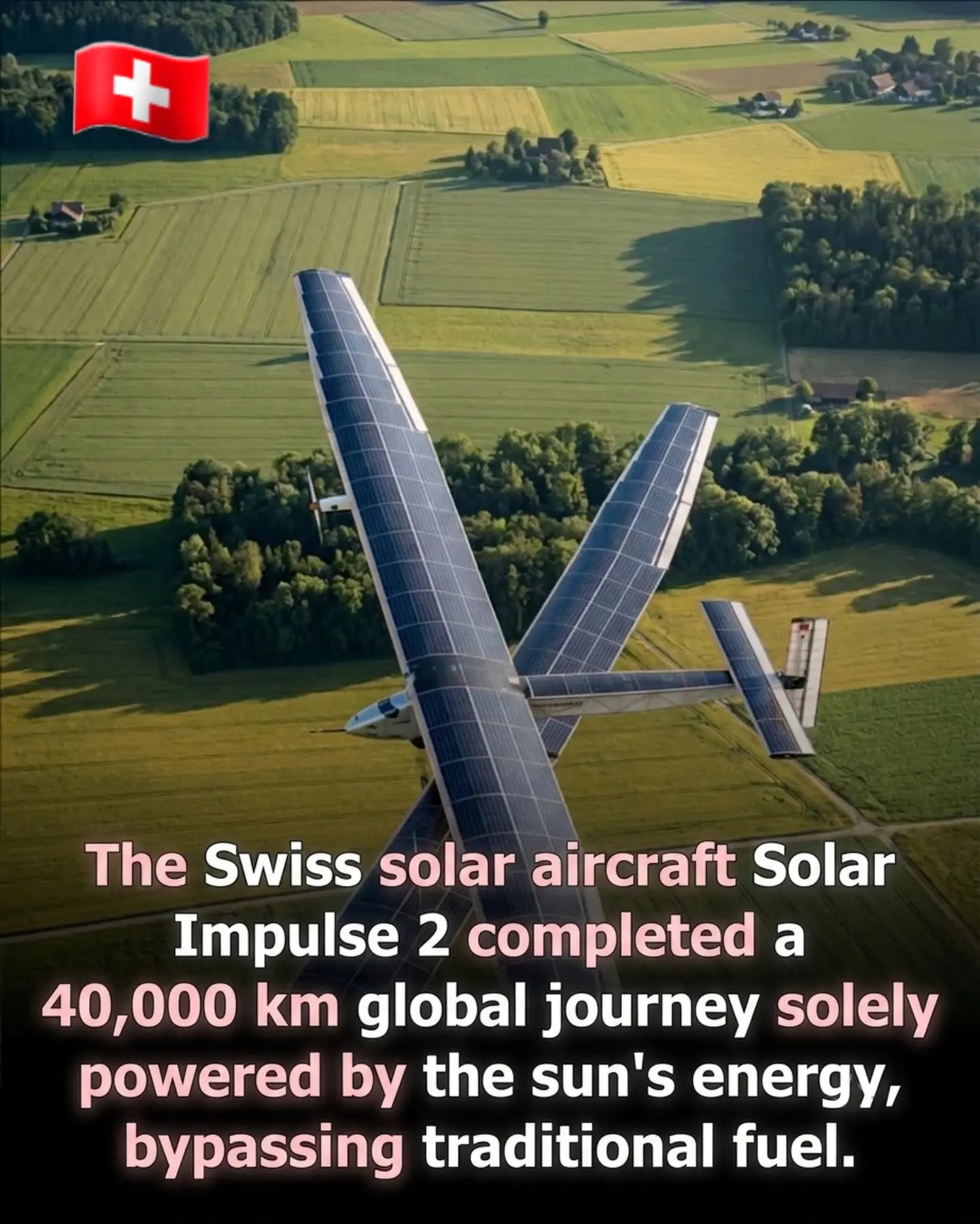
Solar Airplane Flight
The Impulse 2 solar airplane completed a monumental journey by flying over 40,000 kilometers (24,800 miles) around the world, powered entirely by solar energy. This remarkable achievement underscores the potential of renewable energy and clean technology in aviation.
Context / Why this matters
The Impulse 2's journey is more than just a feat of aviation; it serves as a testament to the power of innovation and the possibilities of sustainable energy. By completing a 40,000 km global journey powered solely by the sun's energy, the Impulse 2 has demonstrated that renewable energy can achieve what once seemed impossible.
Main discussion
The Technology Behind the Impulse 2
The Impulse 2 is a marvel of engineering. Its massive wingspan, wider than that of a Boeing 747, is covered in over 17,000 solar cells. These solar cells harness the sun's energy to propel the aircraft during daylight hours. Additionally, the aircraft is equipped with lithium-ion batteries that store excess energy generated during the day, allowing it to fly continuously through the night.
Day and Night Flying
One of the most impressive aspects of the Impulse 2's design is its ability to fly both day and night. During daylight, the solar cells generate more energy than the aircraft needs to fly, allowing the surplus energy to be stored in the batteries. This stored energy is then used to power the aircraft during the night, ensuring continuous flight without the need for traditional fuel sources.
The Pilots
Bertrand Piccard and André Borschberg were the two pilots who took turns flying the Impulse 2. Their expertise and dedication played a crucial role in the success of the mission. The pilots had to navigate various challenges, including weather conditions and technical issues, to complete the journey safely.
The Goal
The primary goal of the Impulse 2 mission was not to develop a commercial solar plane overnight but to prove that clean technology and renewable energy can achieve what once seemed impossible. The success of the mission has opened up new possibilities for sustainable aviation and renewable energy.
Practical tips
Harnessing Solar Power
If you're interested in harnessing solar power for your own projects, consider the following tips:
- Invest in High-Quality Solar Panels: The efficiency of solar panels can vary widely. Investing in high-quality panels can ensure that you generate as much energy as possible.
- Optimize Energy Storage: Use efficient energy storage solutions like lithium-ion batteries to store excess energy generated during the day.
- Plan for Day and Night Use: Design your system to use stored energy efficiently during the night or periods of low sunlight.
Innovating in Renewable Energy
Innovation in renewable energy is key to addressing climate change and reducing our dependence on fossil fuels. Here are some tips for innovating in this field:
- Research and Development: Continuously invest in research and development to improve the efficiency and reliability of renewable energy technologies.
- Collaborate with Experts: Work with experts in the field to gain insights and expertise that can help drive innovation.
- Stay Updated with Latest Trends: Keep up with the latest trends and advancements in renewable energy to stay ahead of the curve.
Sustainable Aviation
While sustainable aviation is still in its early stages, there are several ways to promote it:
- Support Green Initiatives: Support initiatives aimed at promoting sustainable aviation and renewable energy.
- Advocate for Policy Changes: Advocate for policies that encourage the adoption of renewable energy in aviation and other industries.
- Invest in Research: Invest in research aimed at developing new technologies and improving existing ones to make aviation more sustainable.
Important takeaways
The Impulse 2's journey around the world powered solely by solar energy is a remarkable achievement that showcases the potential of renewable energy and clean technology. The mission's success has paved the way for future innovations in sustainable aviation and renewable energy. By investing in high-quality solar panels, optimizing energy storage, and planning for day and night use, you can harness the power of the sun for your own projects. Additionally, continuous innovation and collaboration in the field of renewable energy are crucial for addressing climate change and reducing our dependence on fossil fuels.
Conclusion
The Impulse 2's journey is a testament to the power of innovation and the possibilities of sustainable energy. By completing a global journey powered solely by the sun's energy, the Impulse 2 has demonstrated that renewable energy can achieve what once seemed impossible. The mission's success has opened up new possibilities for sustainable aviation and renewable energy, paving the way for future innovations in this field.
Watch the Reel
Questions readers ask
How long did it take for the Solar Impulse 2 to complete its global flight?
The Solar Impulse 2 completed its global flight over the course of approximately 16 months. The journey began in March 2015 and concluded in July 2016, with the aircraft making several stops along the way.
What is the wingspan of the Solar Impulse 2 and why is it significant?
The Solar Impulse 2 has a wingspan of 72 meters (236 feet), which is wider than that of a Boeing 747. This extensive wingspan allows for a large surface area of 17,000 solar cells helping to power the aircraft during the day and store energy for nighttime flight.
How many solar cells are installed on the Solar Impulse 2?
The Solar Impulse 2 is equipped with 17,248 solar cells. These cells are integrated into the aircraft's wings, which enable it to capture and convert sunlight into electrical energy to propel the plane.
What challenges did the Solar Impulse 2 face during its global flight?
The Solar Impulse 2 encountered several challenges, including navigating adverse weather conditions, managing the pilot's endurance during long solo flights, and ensuring the aircraft's systems remained functional during extreme temperatures and pressures.
What is the top speed of the Solar Impulse 2?
The Solar Impulse 2 has a relatively low top speed of about 140 kilometers per hour (87 miles per hour) due to its focus on efficient, low-energy consumption rather than speed. This design is crucial for maximizing the use of solar energy during its flights.
How many pilots flew the Solar Impulse 2 around the world?
The Solar Impulse 2 was piloted by two individuals, André Borschberg and Bertrand Piccard, who alternated flights. Each leg of the journey required meticulous planning and coordination between the two pilots to ensure the success of the mission.
What kind of batteries did the Solar Impulse 2 use to store energy for night flights?
The Solar Impulse 2 is equipped with high-density lithium polymer batteries, which store the energy generated by the solar cells. These batteries power the aircraft during the night, allowing it to fly continuously during the 24-hour periods.
Related deep dives
Similar reads based on topic and creator.



Recent articles
Fresh deep dives from the latest Reels we unpacked.




Comments
Be the first to comment.