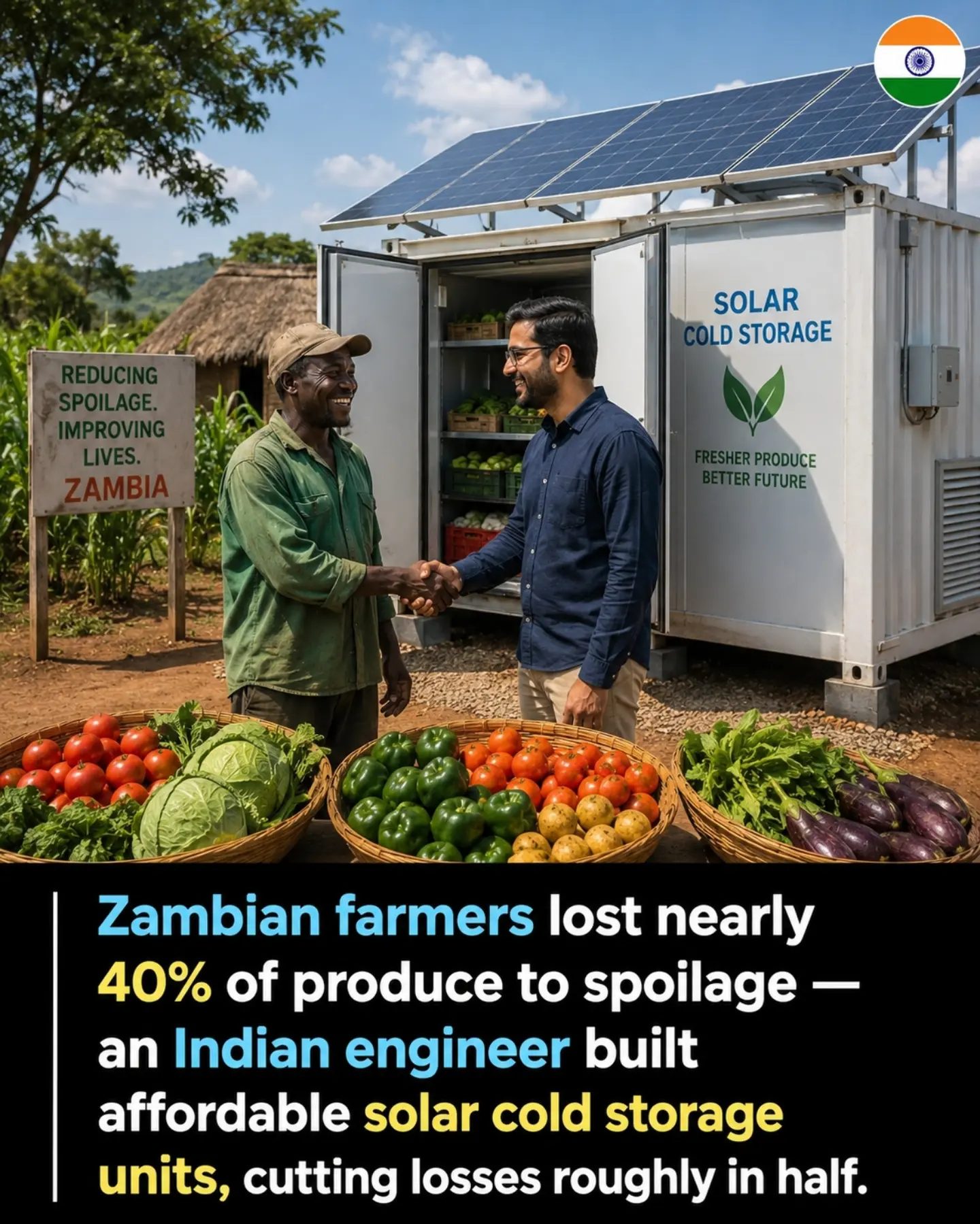
Reducing Post-Harvest Losses with SOLAR Cold Storage Units in Zambia
Solar cold storage units are revolutionizing agriculture in Zambia by significantly reducing post-harvest losses. These units, designed and built by an Indian engineer, are proving to be a game-changer for local farmers who have historically struggled with produce spoilage. The units utilize solar power to maintain optimal storage conditions, ensuring that fresh produce like tomatoes, eggplants, and green peppers remain viable for longer periods.
Why This Matters
In Zambia, post-harvest losses have been a major challenge for farmers. Nearly 40% of produce goes to waste due to spoilage, which translates to substantial financial losses and reduced food availability. The introduction of affordable solar cold storage units is cutting these losses roughly in half, providing a lifeline to farmers and improving food security in the region.
Main Discussion
The Technology Behind Solar Cold Storage
Solar cold storage units operate using renewable energy, making them both eco-friendly and cost-effective. The units are equipped with solar panels that capture sunlight and convert it into electricity, which is then used to power the refrigeration system. This setup ensures that the units can function in rural areas where access to grid electricity is limited or non-existent.
The refrigeration system within the units maintains a consistent temperature, preventing produce from spoiling. This is crucial for extending the shelf life of perishable goods, allowing farmers to sell their produce at a later date when prices are more favorable. Additionally, the units are designed to be durable and low-maintenance, which is essential for their longevity in challenging environmental conditions.
Impact on Zambian Farmers
The introduction of SOLAR cold storage units has had a profound impact on Zambian farmers. By reducing spoilage, these units help farmers maximize their yields and improve their livelihoods. With less produce going to waste, farmers can generate more income and invest in further improving their agricultural practices. The units are particularly beneficial for small-scale farmers who often lack the resources to invest in traditional cold storage solutions.
The units also contribute to a better future for the local community. By ensuring a steady supply of fresh produce, they help improve food security and nutritional outcomes. This is especially important in regions where access to fresh, nutritious food is limited.
Design and Implementation
The design of the SOLAR cold storage units is a result of innovative engineering. The units are built to be affordable, making them accessible to a wide range of farmers. This affordability is crucial for widespread adoption, as it ensures that even small-scale farmers can benefit from the technology. The units are also designed to be easy to use and maintain, which is essential for their effective operation in rural settings.
The implementation of these units involves a collaborative effort between engineers and local communities. The engineer behind the design works closely with farmers to understand their specific needs and tailor the units accordingly. This collaborative approach ensures that the technology is not only effective but also culturally and environmentally appropriate.
Practical Tips
For farmers looking to adopt solar cold storage solutions, several practical tips can help ensure successful implementation:
Conduct a Needs Assessment
Before investing in a solar cold storage unit, it's important to conduct a thorough needs assessment. This involves evaluating the types of produce you grow, their storage requirements, and the potential benefits of using a cold storage unit. Understanding these factors will help you choose the right unit for your needs.
Ensure Proper Installation
Proper installation is crucial for the effective operation of a solar cold storage unit. Ensure that the unit is installed in a location that receives adequate sunlight and is protected from extreme weather conditions. Proper installation will optimize the unit's performance and extend its lifespan.
Maintain Regular Maintenance
Regular maintenance is essential for keeping the solar cold storage unit in good working condition. This includes cleaning the solar panels, checking the refrigeration system, and addressing any issues promptly. Regular maintenance will ensure that the unit continues to function efficiently and reliably.
Collaborate with Local Communities
Collaboration with local communities can enhance the effectiveness of solar cold storage units. Engaging with local farmers and community members can provide valuable insights into the specific challenges and needs of the area. This collaborative approach can help tailor the implementation of the units to better meet local requirements.
Important Takeaways
The adoption of solar cold storage units in Zambia represents a significant step forward in addressing post-harvest losses. These units provide a sustainable and cost-effective solution for preserving fresh produce, benefiting both farmers and the broader community. By leveraging renewable energy, they offer a viable alternative to traditional cold storage solutions, making them accessible to a wider range of farmers.
Conclusion
SOLAR cold storage units are transforming agriculture in Zambia by significantly reducing post-harvest losses. These units offer a sustainable and affordable solution for preserving fresh produce, benefiting farmers and improving food security. As the technology continues to evolve, its potential to enhance agricultural practices and improve livelihoods in other regions becomes increasingly evident.
Watch the Reel
Questions readers ask
How do solar cold storage units work in Zambia's agriculture?
Solar cold storage units use solar energy to power refrigeration systems. These systems maintain optimal temperatures and humidity levels, keeping fresh produce like tomatoes and green peppers viable for extended periods. This helps farmers reduce spoilage and extend the shelf life of their harvest.
What benefits do solar cold storage units bring to Zambian farmers?
Solar cold storage units help Zambian farmers by significantly reducing post-harvest losses, which historically have been as high as 40%. By keeping produce fresh for longer, these units enable farmers to sell more of their harvest, boosting their income and contributing to better food availability.
Who designed the solar cold storage units in Zambia?
The solar cold storage units in Zambia were designed and built by an Indian engineer. These units are tailored to the specific needs of local farmers, addressing the challenges they face with produce spoilage and ensuring optimal storage conditions.
What types of produce benefit from solar cold storage in Zambia?
A variety of fresh produce benefits from solar cold storage in Zambia, including tomatoes, eggplants, and green peppers. By maintaining the right temperature and humidity, these units keep these fruits and vegetables fresh and marketable for longer periods.
How does solar energy play a role in Zambia's agriculture innovations?
Solar energy is a key component in Zambia's agriculture innovations, particularly through the use of solar cold storage units. These units harness solar power to maintain optimal storage conditions, reducing post-harvest losses and enhancing the viability of farm produce.
What is the impact of post-harvest losses on Zambia's agriculture?
Post-harvest losses significantly impact Zambia's agriculture by leading to substantial financial losses for farmers and reducing food availability. Nearly 40% of produce goes to waste due to spoilage, making innovations like solar cold storage units crucial for improving the efficiency and profitability of farming.
What is the current state of fresh produce storage in Zambia?
Traditionally, fresh produce storage in Zambia has been challenging due to high post-harvest losses. However, the introduction of solar cold storage units is transforming this situation by providing an affordable and effective solution for keeping produce fresh, thereby boosting farm freshness and reducing waste.
Related deep dives
Similar reads based on topic and creator.




Recent articles
Fresh deep dives from the latest Reels we unpacked.




Comments
Be the first to comment.