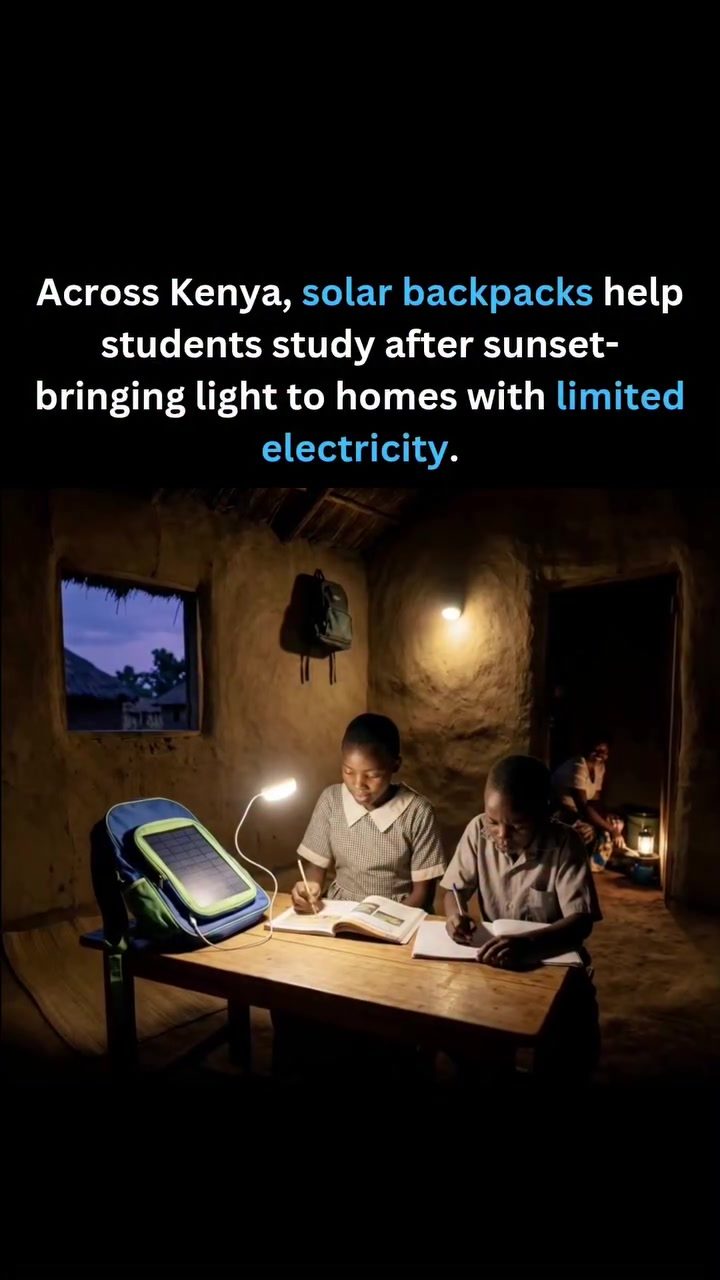
Solar Backpacks: Empowering Students in Kenya
Solar backpacks are transforming the way students in Kenya study, particularly in areas with limited access to electricity. These innovative backpacks provide a practical solution for students who need to study after sunset, bringing light to homes that might otherwise rely on dim or no light sources.
Context: Why this matters
In many parts of Kenya, reliable access to electricity is a luxury, not a given. This constraint can significantly impact a student's ability to study, especially after dark. Electricity is essential for lighting, charging devices, and powering educational tools. Solar backpacks offer a sustainable and cost-effective solution to this problem, enabling students to continue their education without interruption.
Main discussion
The design and functionality of solar backpacks
Solar backpacks are designed with integrated solar panels that convert sunlight into electrical energy. This energy is then stored in a battery, which can be used to power a variety of devices, including lights, tablets, and even small appliances. The backpacks are designed to be robust and durable, withstanding the rigors of daily use and outdoor conditions.
During the day, students can carry their solar backpacks to school or around their community, allowing the solar panels to charge throughout the day. Once the sun sets, they can unpack the built-in lighting and other devices to continue their studies.
The impact on education
For students in Kenya, solar backpacks are more than just a source of light—it's a beacon of educational continuity. By providing a reliable source of electricity, these backpacks enable students to:
- Extend Study Hours: Students can use the light to read and study long after sunset, extending their study hours and improving their learning outcomes.
- Charge Devices: Other vital devices, like tablets and laptops, can also be charged using the backpack's battery, ensuring students have access to digital educational resources.
- Improve Learning Environments: A well-lit study area can significantly enhance learning conditions, making it easier for students to concentrate and engage with their studies.
Success stories and community impact
Across Kenya, solar backpacks have made a tangible difference in the lives of students. In many regions, these backpacks have become a lifeline, bringing light to homes with limited electricity. Students who previously struggled to study in dimly lit environments now have the tools they need to excel academically. This has not only improved their academic performance but also boosted their confidence and motivation to pursue higher education.
Community feedback highlights the transformative impact of solar backpacks. Teachers and parents alike have noted a significant improvement in students' performance and engagement with their studies. The backpacks have also empowered students to take more initiative in their learning, fostering a sense of independence and responsibility.
Practical tips
To make the most of solar backpacks, consider the following practical tips:
Maximizing solar charging
- Position the Solar Panels Optimally: Ensure the solar panels are positioned to maximize exposure to sunlight. Place the backpack in a sunny spot during the day, and if possible, adjust its angle to capture more sunlight.
- Keep the Panels Clean: Regularly clean the solar panels to remove any dust or debris that might reduce their efficiency. Use a soft cloth or a brush to gently clean the panels.
- Avoid Shade: Ensure the backpack is not placed in shaded areas, as this can significantly reduce the amount of energy it can generate.
Battery management
- Regular Use: Use the backpack’s battery regularly to maintain its efficiency. Avoid leaving the battery unused for extended periods.
- Store in a Cool Place: When not in use, store the backpack in a cool, dry place to prolong the battery's lifespan.
- Check the Battery Indicator: Regularly check the battery indicator to ensure you have sufficient power for your studies. Some backpacks come with indicator lights that show the battery level.
Maintenance and care
- Inspect Regularly: Regularly inspect the backpack for any signs of wear and tear. Check the stitching, zippers, and straps to ensure they are in good condition.
- Protect from Moisture: Keep the backpack dry to prevent damage to the electrical components. Use a waterproof cover if necessary.
- Replace Parts if Needed: If any parts of the backpack, such as the solar panels or battery, show signs of damage, replace them promptly to maintain the backpack's functionality.
Important takeaways
Solar backpacks are a game-changer for students in Kenya. They provide a sustainable and reliable source of electricity, enabling students to study after sunset and access digital educational resources. By maximizing the use of solar backpacks, students can overcome the challenges posed by limited electricity and achieve better academic outcomes. Regular maintenance and optimal use of solar panels can ensure these backpacks remain a reliable tool for educational success.
Conclusion
Solar backpacks are more than just a practical tool; they are a catalyst for change in the educational landscape of Kenya. By providing light and power to students in areas with limited electricity, these backpacks empower students to continue their studies despite the challenges they face. As solar technology advances, the potential for solar backpacks to transform education in developing regions grows, making them an essential component of modern educational strategies.
Watch the Reel
Questions readers ask
How do solar backpacks work and what benefits do they provide to students in Kenya?
Solar backpacks are equipped with solar panels that harness sunlight during the day and store energy in a built-in battery. This energy can then be used to power an attached LED light or charge small devices, like phones or tablets. For students in Kenya, these backpacks provide a reliable source of light for studying after sunset and help keep essential devices charged, ensuring that learning can continue even in off-grid areas.
What makes solar backpacks a sustainable solution for students in Kenya?
Solar backpacks are a sustainable solution because they rely on renewable solar energy, reducing the need for non-renewable resources like kerosene or batteries. They also decrease the carbon footprint associated with traditional lighting methods and lower the cost burden on families, as they don't require ongoing purchases of fuel or batteries. Additionally, solar backpacks are durable and designed to withstand the rigorous conditions of daily use in Kenya.
Can solar backpacks be used for purposes other than lighting?
Yes, solar backpacks offer versatility beyond just lighting. They can also charge small electronic devices, such as smartphones and tablets, which students might use for research, digital learning resources, or communication with teachers and peers. This makes them a valuable tool for enhancing study habits in Kenya, where access to electricity and technology is limited.
How do solar backpacks help students in areas with limited access to electricity?
In off-grid areas of Kenya, solar backpacks provide a portable solar power source that ensures students can study after sunset and access essential resources. They eliminate the dependency on grid electricity, enabling students to maintain their study habits and continue their learning journey without interruptions due to power outages or lack of electricity infrastructure.
What impact do solar backpacks have on study habits in Kenya?
Solar backpacks significantly improve study habits in Kenya by providing consistent access to light and power. This allows students to establish regular study routines, complete homework assignments, and prepare for exams more effectively. By enabling students to study longer and more efficiently, solar backpacks contribute to enhanced academic performance and greater opportunities for success.
Are solar backpacks suitable for use in all weather conditions in Kenya?
Solar backpacks are designed to be robust and durable, making them suitable for a variety of weather conditions. However, their effectiveness depends on the amount of sunlight they receive. While they can still function on cloudy days, optimal performance is achieved with direct sunlight. Additionally, many models come with features like water resistance to handle the rainy seasons common in Kenya.
How do solar backpacks contribute to the broader goal of improving access to learning resources in Kenya?
By providing a sustainable and portable source of power, solar backpacks enable students to access a wider range of learning resources. This includes digital tools, online educational content, and communication devices that can connect students with teachers and peers. This enhanced access to resources fosters a more comprehensive and inclusive learning environment, supporting the broader goals of improving learning outcomes and opportunities in Kenya.
Related deep dives
Similar reads based on topic and creator.



Recent articles
Fresh deep dives from the latest Reels we unpacked.




Comments
Be the first to comment.