Soccer and Politics
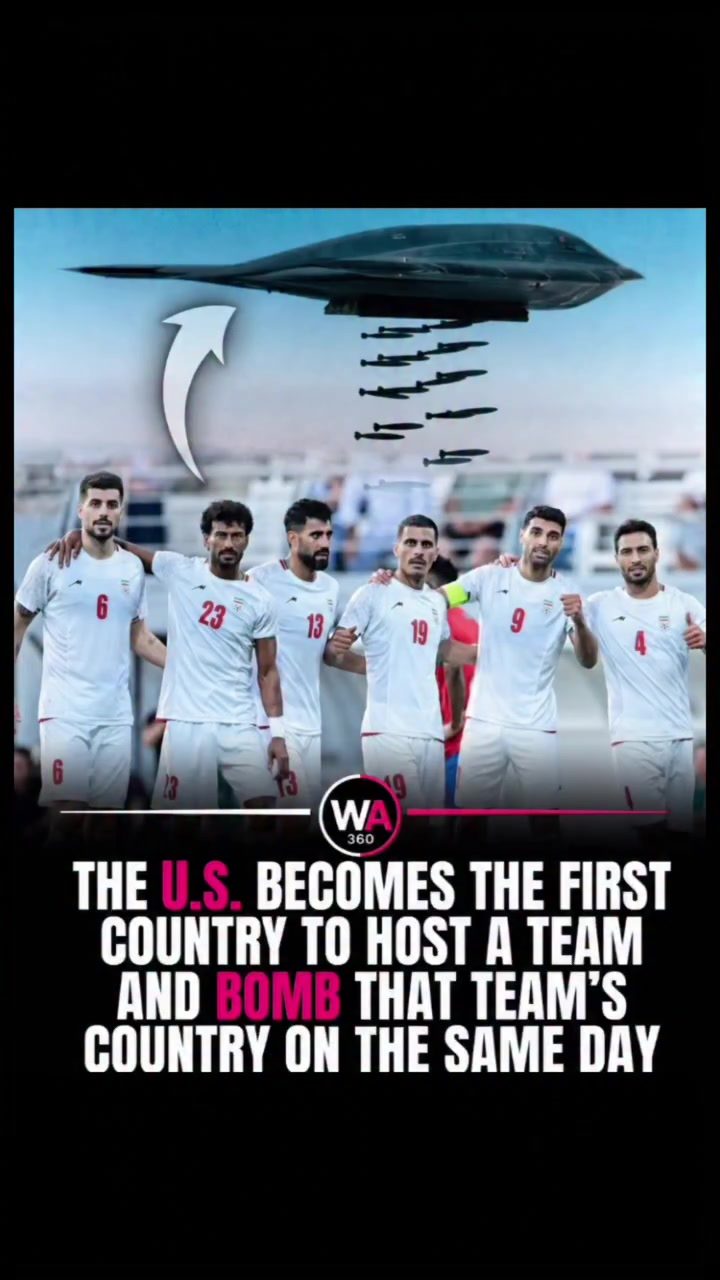
The intersection of global sports and international conflict often creates surreal and deeply complex moments in modern history. The relationship between soccer and politics is one of the most intriguing aspects of this intersection.
Context / Why this matters
Understanding this intersection helps us grasp the broader implications of international relations and how they can manifest in seemingly unrelated arenas, such as sports. The collision of soccer and geopolitics is particularly poignant because it highlights the delicate balance between diplomacy and military action. This balance is often tested when global events unfold on the same day, creating a stark contrast between diplomatic efforts on the soccer field and military actions in the skies.
The United States and International Soccer
One of the most striking examples of this intersection is the claim that the United States has hosted a soccer team and bombed that team's country on the same day. This provocative statement underscores the complex nature of international relations and the delicate balance between diplomacy and military action. The United States, with its significant involvement in global politics, often finds itself in the spotlight when it comes to the intersection of sports and geopolitics.
Main discussion
Historical Context
The historical context of soccer and geopolitics is rich with examples of how these two worlds collide. Throughout history, soccer has been used as a tool for diplomacy and as a platform for political statements. For instance, during the Cold War, soccer matches between the Soviet Union and the United States were often seen as proxy battles, reflecting the broader geopolitical tensions of the time. The 1966 World Cup, held in England, was a prime example of how sports and politics intersected. The tournament was marred by disputes over the inclusion of teams from countries that were politically isolated, such as North Korea and Rhodesia. These disputes highlighted the political tensions of the time and how they spilled over into the sporting arena.
The Impact on International Relations
The intersection of soccer and geopolitics has a significant impact on international relations. Soccer matches often serve as a platform for diplomatic efforts, as well as a means of expressing political views. For example, during the 1970s, when the United States hosted the Soccer World Cup, there were tensions surrounding the participation of teams from countries that were politically aligned with the Soviet Union. These tensions highlighted the broader geopolitical issues of the time and how they played out in the sporting arena.
However, the intersection of soccer and geopolitics is not always about diplomacy and political statements. It also involves the broader implications of military action and how it affects international sports. For example, during the 2006 World Cup in Germany, there were concerns about the security of the players and fans, particularly in light of the ongoing conflict in the Middle East. These concerns highlighted the broader geopolitical issues of the time and how they affected international sports.
Soccer as a Tool for Diplomacy
Soccer has also been used as a tool for diplomacy, particularly in times of conflict. For example, during the 1990s, when the United States and Iran were involved in a tense standoff, soccer matches between the two countries were seen as a means of improving relations. The matches served as a platform for diplomatic efforts, as well as a means of expressing political views. They highlighted the broader geopolitical issues of the time and how they played out in the sporting arena.
The Role of Military Action
Military action also plays a significant role in the intersection of soccer and geopolitics. For example, during the 1990s, when the United States and Iraq were involved in a tense standoff, soccer matches between the two countries were used as a means of expressing political views. The matches were seen as a platform for diplomatic efforts, as well as a means of expressing political views. They highlighted the broader geopolitical issues of the time and how they played out in the sporting arena.
Practical tips
Understanding the intersection of soccer and geopolitics can provide valuable insights into the broader implications of international relations. Here are some practical tips for navigating this complex landscape:
- Stay Informed: Keep up with current events and understand the broader geopolitical context of sporting events. This will help you grasp the significance of these events and how they reflect broader geopolitical issues.
- Recognize the Symbolism: Pay attention to the symbolism of sporting events and how they are used as a platform for diplomatic efforts and political statements. This will help you understand the deeper meaning behind these events.
- Consider the Impact of Military Action: Understand how military action affects international sports and how it plays out in the sporting arena. This will help you grasp the broader implications of military action and how it affects international relations.
Important takeaways
The intersection of soccer and geopolitics highlights the delicate balance between diplomacy and military action in international relations. It underscores the significance of sports as a platform for diplomatic efforts and political statements, as well as the broader implications of military action on international sports. Understanding this intersection can provide valuable insights into the complex nature of international relations and how they play out in the sporting arena.
Conclusion
The intersection of soccer and geopolitics is a complex and multifaceted issue that highlights the broader implications of international relations. Understanding this intersection can provide valuable insights into the delicate balance between diplomacy and military action, as well as the significance of sports as a platform for diplomatic efforts and political statements. By staying informed, recognizing the symbolism, and considering the impact of military action, you can navigate this complex landscape and gain a deeper understanding of the broader implications of international relations.
Watch the Reel
Questions readers ask
How has soccer historically intersected with geopolitics?
Soccer has often served as a platform for geopolitical expression and tension. For example, during the Cold War, matches between teams from the Soviet Union and Western countries were more than just sporting contests; they were proxy battles reflecting broader geopolitical rivalries. Other historical examples include boycotts and bans imposed as political statements, further highlighting the intricate connection between soccer and geopolitics.
Can you provide examples of surreal moments where soccer and geopolitics collided?
One notable instance is when a country hosted a soccer team while simultaneously engaging in military action against that team's nation. Such moments underscore the surreal and complex nature of these intersections, where diplomatic efforts on the soccer field contrast starkly with military actions off it. These events often leave a lasting impact on both the sporting and political landscapes.
How do global conflicts influence soccer tournaments and events?
Global conflicts can significantly impact soccer tournaments, leading to boycotts, match cancellations, or even the relocation of games. For instance, during times of war or political unrest, teams may refuse to play against opponents from conflicting nations, or matches may be moved to neutral locations to avoid exacerbating tensions. This dynamic showcases how sports and geopolitics are intrinsically linked, with each influencing the other in profound ways.
What role does soccer play in diplomacy between nations?
Soccer often serves as a tool for diplomacy, fostering dialogue and understanding between nations during geopolitical tensions. Friendly matches and international tournaments can provide opportunities for leaders to meet and discuss important issues. Additionally, the shared love of the sport can build bridges and promote peaceful relations, acting as a unifying force in times of conflict.
Are there instances where soccer has facilitated military de-escalation?
While soccer's direct impact on military de-escalation is limited, it can create opportunities for dialogue and goodwill. For example, international matches between countries in conflict can serve as neutral grounds for leaders to discuss peace and diplomacy. Moreover, the global reach of soccer can raise awareness about conflicts, potentially generating support for peace efforts and humanitarian initiatives, indirectly aiding in de-escalation.
Related deep dives
Similar reads based on topic and creator.

Recent articles
Fresh deep dives from the latest Reels we unpacked.




Comments
Be the first to comment.