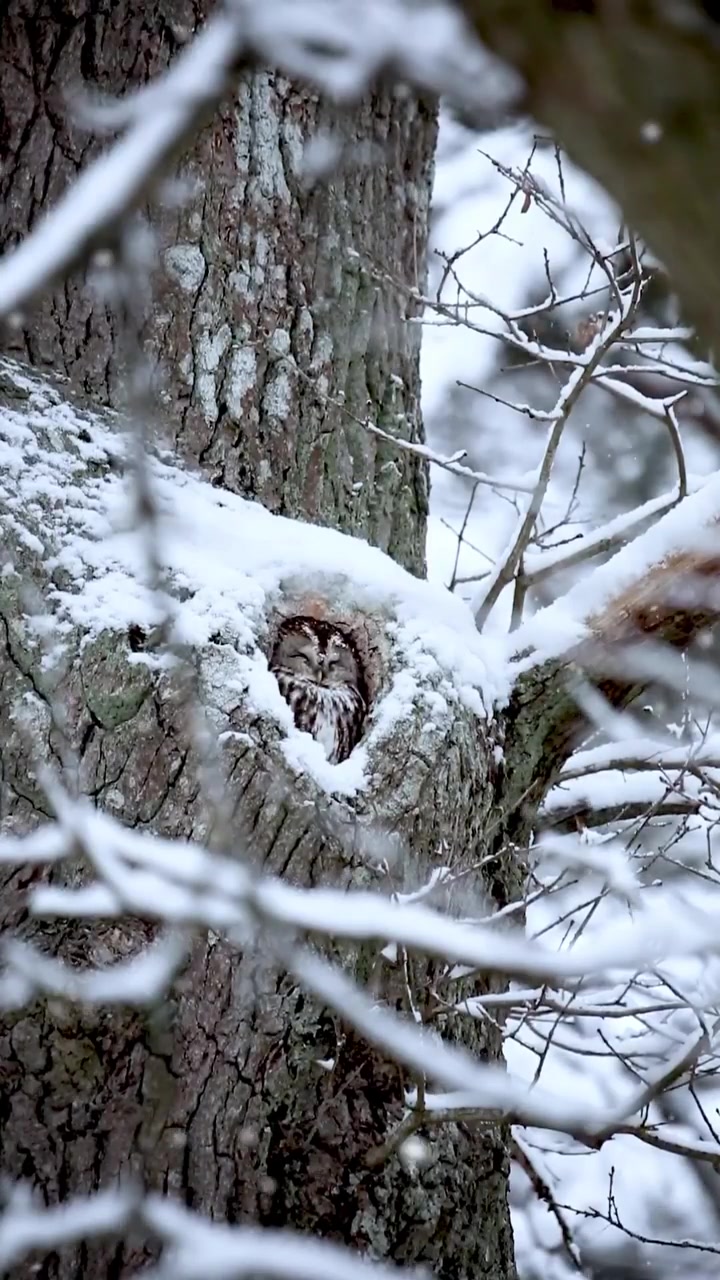
A snowy owl in Sweden is a close encounter with nature, helping birds blend into forest scenes. Europe and Asia are home to these territorial birds primarily active at night. The tawny owl's tricks for daytime survival are essential for these majestic creatures to thrive. Snowy owls often nest in tree cavities. These birds of prey are nocturnal, sleeping during the day.
The Mastery of Camouflage in Tawny Owls in Sweden
Tawny owls leverage their distinctive appearance to evade predators. Swedish landscapes favor the tawny owl's adaption, using snow-covered trees as concealment. Their feathers help tawny owls hide, blending in seamlessly with snowy environments. These birds' camouflage techniques help them stay safe during the day. Tawny owls are active at night, but they have tricks to stay safe during the daytime. Cleaning their wings in snow ensures all of their enemies can’t spot them easily, making it easier for them to blend into their surroundings.
The Nature of Tawnyness — Their Environment
The owls' ability to thrive across Europe and Asia is remarkable. These birds of prey are adaptable, especially in colder regions like Sweden. Appearance helps them survive, ensuring that prey and predators cannot spot them easily. Tawny owls' main strategy for survival is their camouflage. Their sleek appearance helps tawny owls blend in with their surroundings. They also resort to hiding in cavities and holes in trees, which helps them protect their nests. Prey and predators are less likely to spot them. Their nocturnal nature means they are more active at night when it is harder for predators to spot them. Tawny owls' camouflage strategies also include hiding in tree holes and nests. These nests are usually smaller holes in trees that keep predators away.
The Tawny Owl's Nest
Tawny owl nests are often smaller tree holes where they can hide from any predators. Tawny owls' plumage also helps them blend in with their surroundings, standing out as one of the most advantageous camouflage techniques in their species.
A Day for Tawny Owls
Tawny owls, are nocturnal birds of prey, mainly active in the night, are typically found asleep in their nest during the day. When sleeping, tawny owls ensure they are not easily spotted by any predator. These nocturnal creatures also stay active during the night and sleep during the day, staying safe from enemies.
The Tawny Owl's Wing
The tawny owl's wing is essential to its survival. Snowy owls clean their wings with snow, making it easier to blend into their surroundings. This process helps them get rid of any dirt or odors that could make it easier for their enemies to find them. These owls also benefit from their surroundings, making them harder to spot than other birds of prey.
Beholding the Tawny owl
Tawny owls give viewers a glimpse into the life of a nocturnal bird of prey. The Swedish forests are the perfect backdrop for these snowy creatures. The maintenance of trees and forests helps tawny owls blend in. Tawny owls' plumage blends with snow-covered forests, making them almost invisible to predators.
How to replicate the experience
- Locate high-altitude forests: Head to forests and snow-covered trees to be able to view tawny owls from a distance. This will give you a clearer view of these birds.
- Suggested gear: Opt for binoculars to get a closer view of the tawny owl while in its habitat. Without tracking or disturbing their natural habitat, it is difficult to get a clear view.
Watch the Reel
Questions readers ask
What makes the snowy owl's nest in Sweden's winter forests so unique?
The snowy owl's nest in Sweden's winter forests is unique because it offers a rare opportunity to observe these elusive birds in their natural habitat. The nest is often found in tree cavities, which provides excellent camouflage and protection from predators. Additionally, the snowy owl's distinctive appearance allows it to blend seamlessly into the snowy environment, making it a fascinating subject for birdwatchers and nature enthusiasts.
How do tawny owls use camouflage to survive in Sweden's landscapes?
Tawny owls in Sweden use their distinctive feathers to blend into the snowy environment, making them almost invisible to predators. They also clean their wings in the snow to remove any dirt or odors that could give away their presence. Additionally, they often hide in tree cavities and holes, which helps them stay safe during the day when they are less active.
Why do tawny owls prefer to be active at night?
Tawny owls are primarily nocturnal, meaning they are most active during the night. This behavior helps them avoid predators and hunt more effectively. During the day, they sleep in their nests, which are often small holes in trees that provide excellent camouflage and protection.
What role does the tawny owl's wing play in its survival?
The tawny owl's wing is crucial for its survival as it helps the owl blend into its surroundings. By cleaning their wings in the snow, tawny owls can remove any dirt or odors that might attract predators. This behavior, combined with their natural camouflage, makes them exceptionally hard to spot in their snowy environment.
Is it possible to spot a tawny owl during the day?
Spotting a tawny owl during the day is quite challenging because they are nocturnal and tend to sleep in well-concealed nests during daylight hours. Their excellent camouflage, including their ability to blend into snowy landscapes and hide in tree cavities, makes them nearly invisible to the untrained eye. However, with patience and a keen eye, it is possible to catch a glimpse of these elusive birds.
Can I see a tawny owl nest in Sweden?
Yes, you can see a tawny owl nest in Sweden, especially if you visit during the winter months. The best way to locate a nest is to explore the forests and look for small holes in trees. However, it's important to be respectful and keep a safe distance to avoid disturbing the owls. Many guided tours and nature reserves can help you spot these birds in their natural habitat.
How do tawny owls' nocturnal behaviors help them thrive in Sweden?
Tawny owls' nocturnal behaviors are crucial for their survival in Sweden. By being active at night, they can avoid many daytime predators and hunt more effectively under the cover of darkness. During the day, they sleep in well-concealed nests, which helps them stay safe from predators and blend into their surroundings.
Related deep dives
Similar reads based on topic and creator.




Recent articles
Fresh deep dives from the latest Reels we unpacked.




Comments
Be the first to comment.