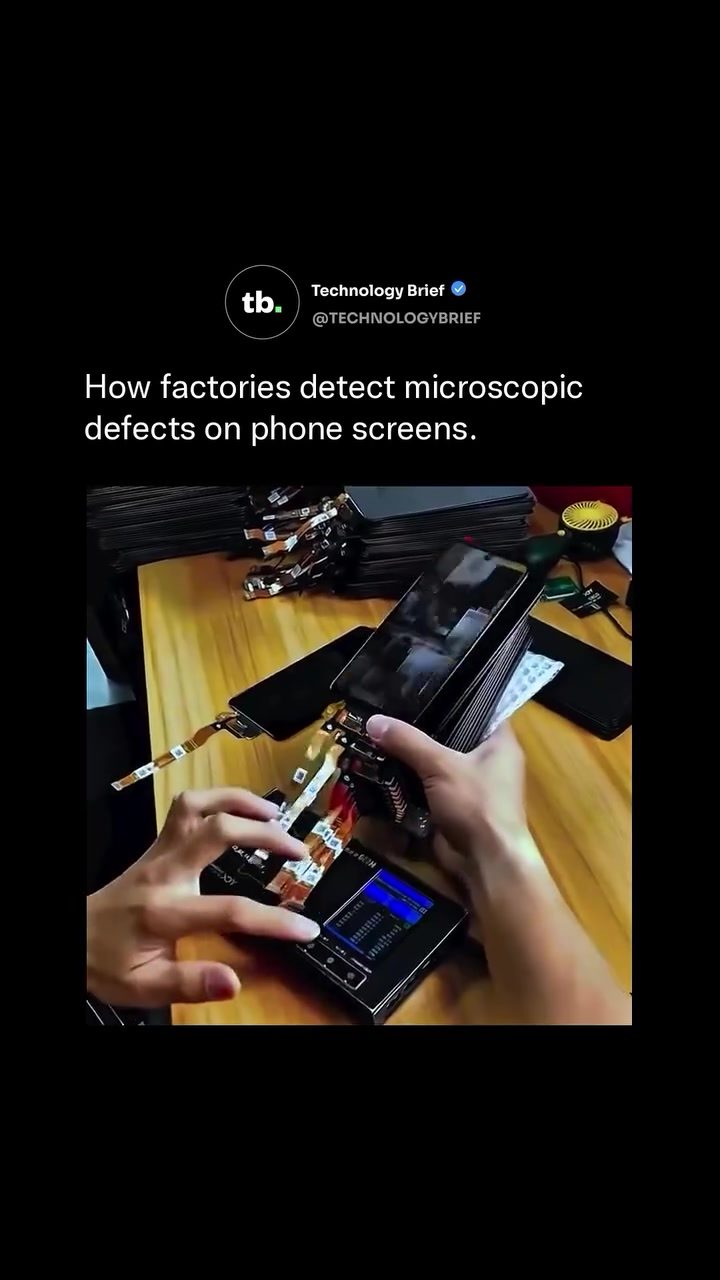
Phone Screen Defect Detection
Before a smartphone screen reaches a consumer, it undergoes a rigorous multi-step quality control process. This process is essential for ensuring that every device leaving the factory meets high standards of performance and reliability.
Why This Matters
Phone screens are one of the most critical components of a smartphone. Any defect can significantly impact the user experience, leading to returns and warranty claims. Detecting and rectifying these defects early in the production process is vital for maintaining customer satisfaction and reducing costs associated with post-sale repairs.
Main Discussion
The Quality Control Process
The quality control process for phone screens involves several key steps, each designed to identify and eliminate defects before the screen is integrated into the final product.
Powering and Diagnostic Checks
Technicians begin by plugging each screen's flexible ribbon cable into a dedicated test board. This board powers the screen and runs it through a series of diagnostic checks. These checks include color accuracy, brightness uniformity, and touch responsiveness.
- Color Accuracy: Ensures that the colors displayed on the screen are true to the intended hues, which is crucial for applications like photography and media consumption.
- Brightness Uniformity: Checks that the screen's brightness is consistent across all areas, preventing hotspots or dim zones.
- Touch Responsiveness: Tests the screen's ability to detect and respond to touch inputs accurately, which is essential for usability.
Identifying Common Defects
During the diagnostic checks, the test board's display provides real-time technical data, flagging any panels that fall short of the required standards. Common defects caught at this stage include:
- Dead Pixels: These are individual pixels that fail to light up, resulting in small black dots on the screen.
- Backlight Leaks: Occur when light from the screen's backlight leaks out, causing visible bright spots or lines.
- Color Distortion: Refers to inaccuracies in color representation, which can make images and videos appear unnatural or distorted.
Touch Performance Testing
To test the screen's touch performance, technicians manually draw lines across the screen. This process confirms that every zone on the screen responds correctly to touch inputs. This step is crucial as touch responsiveness is a key factor in user satisfaction.
The Importance of Early Detection
Display defects have historically been one of the leading causes of device returns. By checking screens before assembly, factories significantly reduce the likelihood of defective screens being built into finished phones. This proactive approach helps in:
- Preventing Defective Devices: Early detection ensures that only high-quality screens are used in the final assembly.
- Reducing Rejection Rates: Some quality control batches see rejection rates as high as 20% of panels received. Early detection helps in minimizing this rate.
- Cost Savings: Detecting and rectifying issues early prevents the additional costs associated with post-assembly repairs and returns.
Advanced Inspection Machines
Factories employ advanced inspection machines to detect microscopic defects on phone screens. These machines use sophisticated technology to scan the screens for even the smallest imperfections. The precision and efficiency of these machines are crucial for maintaining high-quality standards in phone manufacturing.
Practical Tips
For those interested in the quality control processes of electronic devices, here are some practical tips:
- Understand the Importance of Early Detection: Early detection of defects can prevent costly recalls and repairs, ensuring a better user experience.
- Focus on Key Metrics: Prioritize metrics like color accuracy, brightness uniformity, and touch responsiveness during quality checks.
- Invest in Advanced Technology: Utilize advanced inspection machines to ensure the highest level of quality control.
- Regular Training: Ensure that technicians are well-trained and updated on the latest quality control techniques and technologies.
Important Takeaways
- Phone screens undergo a rigorous multi-step quality control process to detect and eliminate defects.
- Key diagnostic checks include color accuracy, brightness uniformity, and touch responsiveness.
- Common defects like dead pixels, backlight leaks, and color distortion are flagged during the inspection process.
- Early detection of defects prevents defective screens from being integrated into finished phones, reducing costs and enhancing user satisfaction.
- Advanced inspection machines play a vital role in detecting microscopic defects, ensuring high-quality standards.
Conclusion
The quality control process for phone screens is a meticulous and essential step in ensuring that every smartphone delivered to consumers meets the highest standards. By detecting and eliminating defects early, manufacturers can provide a better user experience, reduce costs, and maintain their reputation for quality and reliability. Understanding this process offers valuable insights into the intricate world of smartphone manufacturing and the importance of quality control in industrial technology.
Watch the Reel
Related deep dives
Similar reads based on topic and creator.




Recent articles
Fresh deep dives from the latest Reels we unpacked.




Comments
Be the first to comment.