CVE-2024-20017: Understanding the Click Exploit in MediaTek Wi-Fi Chipsets
The CVE-2024-20017 vulnerability is a critical security flaw in MediaTek Wi-Fi chipsets that affects both routers and smartphones. This exploit allows attackers to gain unauthorized access and control over devices by exploiting a vulnerability in the chipsets. The exploit can be tested using a smartphone, making it a significant concern for users of Wi-Fi-enabled devices.
Context: Why This Matters
MediaTek Wi-Fi chipsets are commonly used in a wide range of devices, including routers and smartphones. The CVE-2024-20017 vulnerability poses a significant risk because it can be exploited remotely, allowing attackers to take control of these devices. This vulnerability highlights the importance of keeping firmware and software up-to-date to protect against such exploits.
Understanding the Exploit
The Vulnerability
The CVE-2024-20017 vulnerability is a click exploit that affects MediaTek Wi-Fi chipsets. This means that an attacker can exploit the vulnerability without any user interaction, making it particularly dangerous. The exploit involves sending a specially crafted payload to the device, which can then be used to gain control over the device.
Exploitation Techniques
One of the key techniques used in exploiting this vulnerability is Return-Oriented Programming (ROP). ROP is a method that allows attackers to execute arbitrary code on a device by chaining together small pieces of existing code, known as gadgets. This technique is particularly effective in environments where traditional code execution is restricted.
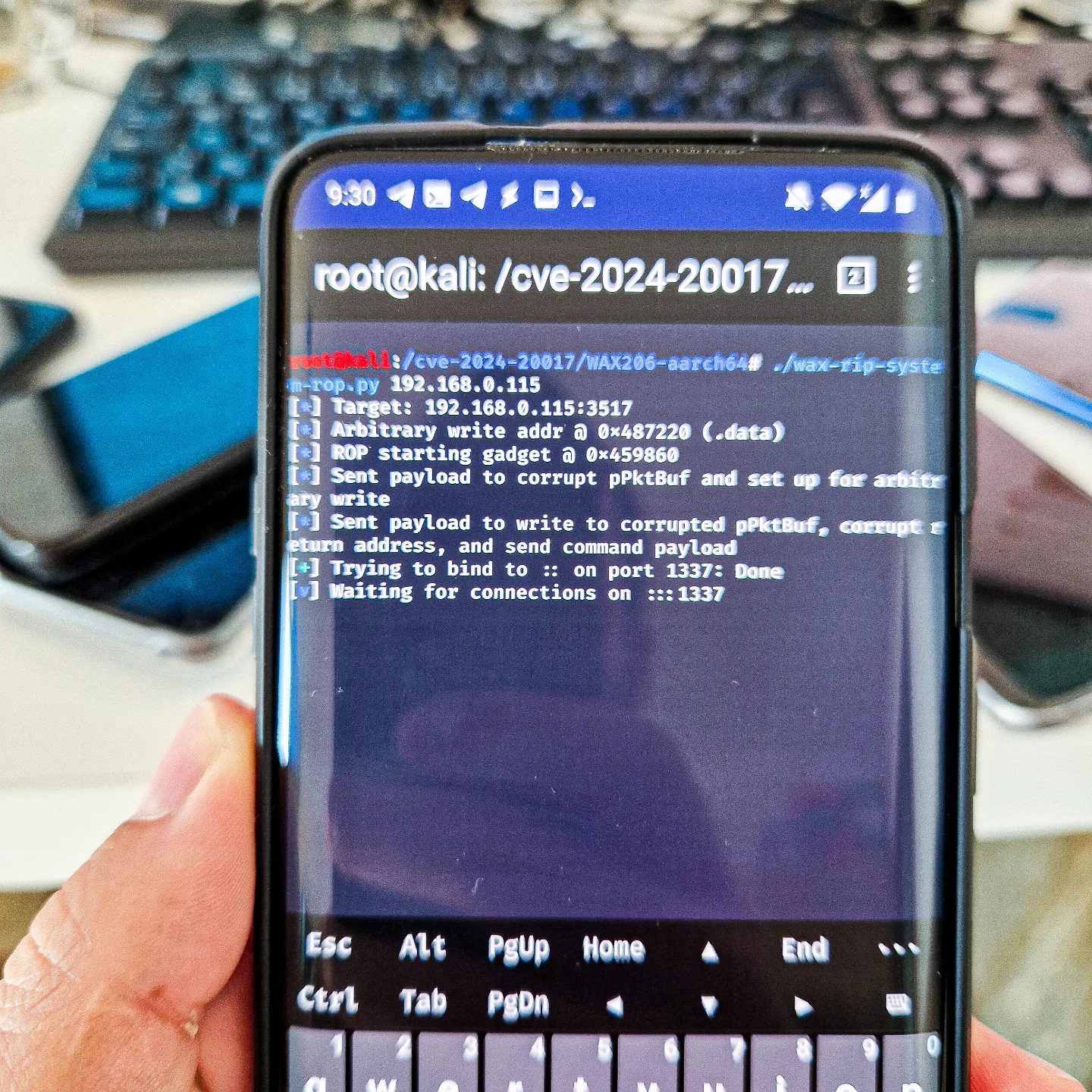
The on-screen text from the demonstration shows a terminal interface on a smartphone running Kali Linux, a popular distribution for penetration testing. The terminal commands and code snippets provide a glimpse into the methods used to exploit the vulnerability.
Testing the Exploit
The proof-of-concept (PoC) for CVE-2024-20017 can be tested even from a smartphone, making the vulnerability particularly concerning. The PoC is available on GitHub, and detailed technical information can be found on the blog post by Coffinsec.
Practical Tips for Protecting Your Devices
Update Firmware and Software
The first line of defense against the CVE-2024-20017 exploit is to ensure that your devices are running the latest firmware and software updates. Manufacturers often release patches to address known vulnerabilities, so keeping your devices up-to-date is crucial.
Use Strong Passwords
Ensure that your Wi-Fi networks and devices are protected with strong, unique passwords. Weak passwords can be easily guessed or cracked, making it easier for attackers to gain access to your devices.
Enable Network Security Features
Many routers and smartphones come with built-in security features such as WPA3 encryption and firewalls. Enable these features to add an extra layer of protection against potential exploits.
Regularly Monitor Network Traffic
Monitor your network traffic for any unusual activity. Unauthorized access attempts or unusual data transfers can be signs of an active exploit. Regular monitoring can help you detect and mitigate potential threats more quickly.
Important Takeaways
- The CVE-2024-20017 vulnerability affects MediaTek Wi-Fi chipsets in routers and smartphones, allowing for remote exploitation.
- The exploit can be tested using a smartphone, making it a significant risk.
- Keeping firmware and software up-to-date is the first line of defense against such vulnerabilities.
- Using strong passwords, enabling network security features, and regularly monitoring network traffic can help protect your devices.
Conclusion
The CVE-2024-20017 click exploit in MediaTek Wi-Fi chipsets is a serious concern for users of affected devices. Understanding the nature of the vulnerability and the techniques used to exploit it can help users take appropriate measures to protect their devices. By keeping firmware and software up-to-date, using strong passwords, enabling network security features, and regularly monitoring network traffic, users can significantly reduce the risk of falling victim to such exploits.
Watch the Reel
Questions readers ask
What is the CVE-2024-20017 vulnerability and why is it a concern for smartphone users?
The CVE-2024-20017 vulnerability is a critical flaw in MediaTek Wi-Fi chipsets, which are used in many smartphones. It allows attackers to gain unauthorized control of devices without any user interaction. This is a significant concern as it can lead to unauthorized access and potential misuse of personal data.
How can the CVE-2024-20017 exploit be tested?
The CVE-2024-20017 exploit can be tested using a smartphone, making it a practical tool for demonstrating and understanding the vulnerability. This method underscores how easily this flaw can be exploited in real-world scenarios, particularly by those with malicious intent.
What devices are affected by the MediaTek Wi-Fi chipset vulnerability?
Devices affected by the CVE-2024-20017 vulnerability in MediaTek Wi-Fi chipsets include smartphones and routers. These devices are commonly used in homes and businesses, making the impact of the vulnerability widespread and significant.
Can the CVE-2024-20017 exploit be used remotely?
Yes, the CVE-2024-20017 exploit can be used remotely. This means that attackers do not need physical access to the device to exploit the vulnerability, making it a critical security concern for users of Wi-Fi-enabled devices.
How can users protect their devices from the CVE-2024-20017 vulnerability?
Users can protect their devices from the CVE-2024-20017 vulnerability by keeping their firmware and software up to date. Manufacturers often release updates to patch known vulnerabilities, so regularly checking for and applying these updates is essential for maintaining device security.
What steps should be taken if a device is suspected to be compromised by the CVE-2024-20017 exploit?
If a device is suspected to be compromised, users should immediately disconnect it from the network to prevent further unauthorized access. It is also important to contact the device manufacturer or a trusted security provider for guidance on securing the device and recovering any compromised data.
What is the significance of the hacker00 CVE-2024-20017 proof of concept (PoC)?
The hacker00 PoC for CVE-2024-20017 provides a demonstration of how the vulnerability can be exploited in a controlled environment. This PoC is valuable for security researchers and manufacturers, as it helps in understanding the exploit and developing effective countermeasures to protect users
Related deep dives
Similar reads based on topic and creator.




Recent articles
Fresh deep dives from the latest Reels we unpacked.




Comments
Be the first to comment.