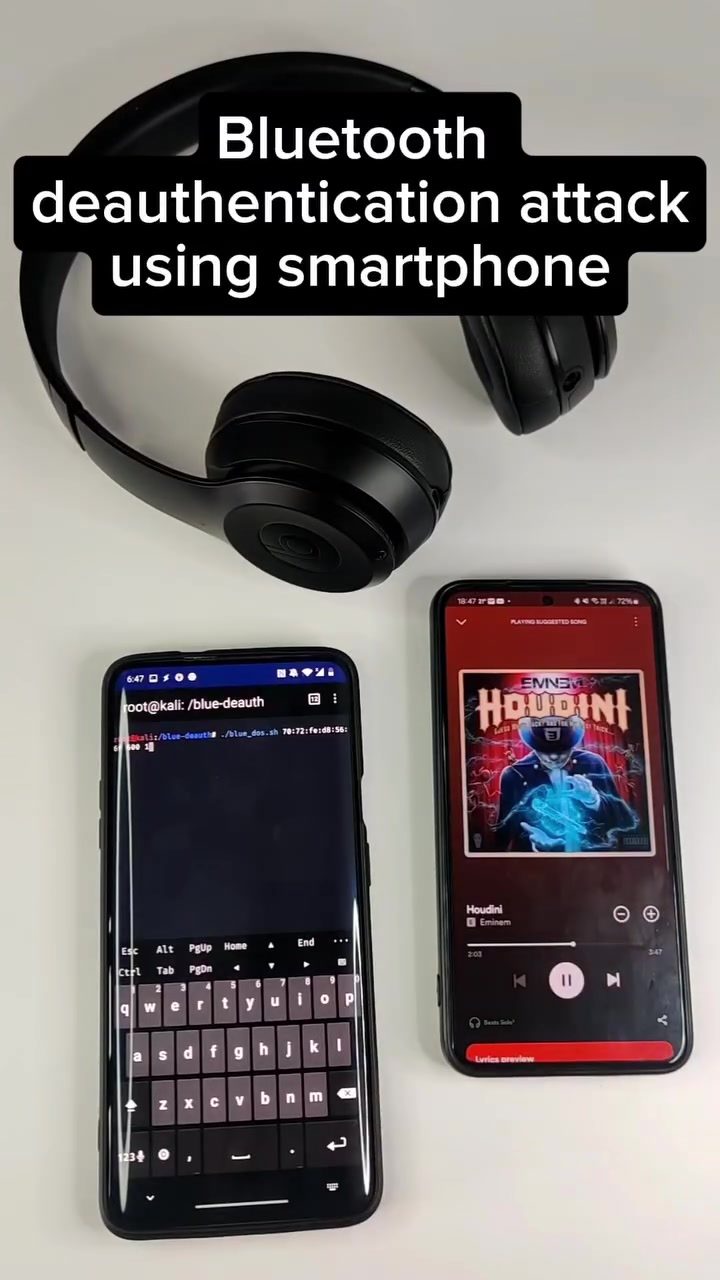
Bluetooth Deauthentication Attack
Bluetooth technology has become an integral part of our daily lives, enabling wireless communication between devices. However, like any wireless technology, Bluetooth is susceptible to various attacks. One such attack is the Bluetooth deauthentication attack, which can disrupt or force the unpairing of Bluetooth devices. This type of attack can be carried out using a smartphone, demonstrating the vulnerability of even the most common devices.
Why this Matters
Understanding the mechanics of a Bluetooth deauthentication attack is crucial for anyone concerned about the security of their wireless devices. Whether you're a cybersecurity enthusiast or simply someone who uses Bluetooth devices frequently, knowing how these attacks work can help you protect your devices and data from potential threats.
Main Discussion
What is a Bluetooth Deauthentication Attack?
A Bluetooth deauthentication attack involves disrupting the connection between two paired Bluetooth devices. This type of attack can force the devices to unpair, effectively disconnecting them. The attack exploits the vulnerability in the Bluetooth protocol, particularly in how devices authenticate and maintain their connections. By injecting malicious packets, an attacker can trick the devices into believing the connection is compromised, leading to disconnection.
How is the Attack Executed?
The attack can be executed using a smartphone. Kali Linux, a popular Linux distribution used for penetration testing, is often employed in such demonstrations. The process typically involves using specific tools and scripts designed to intercept and manipulate Bluetooth communication. The smartphone, running a tool like NetHunter, can be used to execute the attack by injecting deauthentication packets into the Bluetooth traffic.
Tools and Techniques
Several tools and techniques are used to carry out a Bluetooth deauthentication attack. One of the most notable tools is NetHunter, which is specifically designed for mobile hacking. NetHunter provides a comprehensive suite of tools for penetration testing and can be installed on smartphones running Android. This toolkit includes various scripts and utilities that can be used to intercept and manipulate Bluetooth traffic.
NetHunter
NetHunter is an essential tool for those interested in mobile hacking. It transforms an Android smartphone into a powerful penetration testing platform. With NetHunter, you can perform a wide range of security assessments, including Bluetooth deauthentication attacks. The toolkit includes pre-installed scripts and utilities that simplify the process of executing the attack. For those unfamiliar with Kali Linux, NetHunter provides a user-friendly interface that makes it accessible even to beginners.
Security Implications
The ability to execute a Bluetooth deauthentication attack using a smartphone highlights the potential security risks associated with wireless communication. Attackers can use this method to disrupt the functionality of Bluetooth devices, causing inconvenience or even compromising sensitive data. For example, an attacker could force a smartwatch to disconnect from a smartphone, potentially disrupting important notifications or communications.
Practical Tips
Protecting Your Devices
To protect your devices from Bluetooth deauthentication attacks, consider the following steps:
-
Keep Your Devices Updated: Ensure that your Bluetooth devices are running the latest firmware and software updates. Manufacturers often release patches to address known vulnerabilities.
-
Use Strong Pins and Passwords: When pairing devices, use strong, unique PINs or passwords to prevent unauthorized access.
-
Limit Bluetooth Visibility: Keep your Bluetooth devices in non-discoverable mode when not in use. This reduces the risk of being targeted by attackers.
-
Disable Bluetooth When Not in Use: Turn off Bluetooth when you're not actively using it. This minimizes the window of opportunity for an attacker to exploit the connection.
-
Install Security Software: Use security software designed to monitor and protect your Bluetooth connections. Some software can detect and alert you to potential threats.
Detecting and Responding to Attacks
If you suspect that your Bluetooth devices have been targeted by a deauthentication attack, take the following steps:
-
Scan for Malicious Activity: Use tools like NetHunter to scan for any unusual activity on your Bluetooth network. Look for signs of deauthentication packets or other malicious activity.
-
Reconnect Devices: If you notice that your devices have been disconnected, try reconnecting them and monitor for any further disruptions. This can help you determine if the attack is ongoing.
-
Investigate the Source: If possible, try to identify the source of the attack. This can help you take appropriate measures to protect your devices in the future.
-
Report the Incident: If you believe that your devices have been targeted by a sophisticated attack, consider reporting the incident to the appropriate authorities. This can help in monitoring and mitigating similar threats in the future.
Important Takeaways
Bluetooth deauthentication attacks are a real and present danger to the security of wireless devices. By understanding how these attacks work and taking proactive measures to protect your devices, you can minimize the risk of falling victim to such threats. Always stay informed about the latest security trends and tools, and be vigilant in monitoring your Bluetooth connections to ensure they remain secure. Consider using tools like NetHunter to enhance your device's security and stay ahead of potential threats.
Conclusion
Bluetooth deauthentication attacks highlight the vulnerabilities inherent in wireless communication technologies. By leveraging tools like NetHunter and following best practices for device security, you can protect your devices from such attacks. Stay informed, stay vigilant, and take the necessary steps to safeguard your Bluetooth connections.
Watch the Reel
Questions readers ask
What exactly is a Bluetooth deauthentication attack?
A Bluetooth deauthentication attack is a type of cyber threat that targets the wireless connections between paired Bluetooth devices. By exploiting vulnerabilities in Bluetooth protocols, these attacks force the devices to disconnect or unpair, disrupting their communication.
Can a smartphone be used to perform a Bluetooth deauthentication attack?
Yes, a smartphone can be used to execute a Bluetooth deauthentication attack. With the right tools, such as specific hacking apps, an attacker can exploit Bluetooth protocols and cause connected devices to disconnect.
What tools are commonly used for Bluetooth hacking on smartphones?
Several tools are available for Bluetooth hacking on smartphones. KNoT, for example, is a tool that can perform deauthentication attacks on specific Bluetooth profiles. Other tools like Nethunter can also be used for this purpose, offering a suite of hacking utilities that can be installed on compatible Android devices.
How can I protect my Bluetooth devices from deauthentication attacks?
To protect your Bluetooth devices, keep your Bluetooth settings updated and use strong, non-default pairing codes. Additionally, avoid keeping your Bluetooth ON when it's not in use, as this can make your device more susceptible to attacks.
What should I do if my Bluetooth devices keep disconnecting unexpectedly?
If your Bluetooth devices are experiencing frequent, unexpected disconnections, it could be a sign of a deauthentication attack. First, check for any unusual apps or processes running on your smartphone. If the issue persists, consider consulting with a cybersecurity professional.
Why does a Bluetooth deauthentication attack pose a threat to mobile device security?
Bluetooth deauthentication attacks pose a threat to mobile device security because they can disrupt important wireless connections, such as those between a smartphone and a car's Bluetooth system. Moreover, they can interfere with data transfers and other sensitive communications.
Related deep dives
Similar reads based on topic and creator.

Recent articles
Fresh deep dives from the latest Reels we unpacked.




Comments
Be the first to comment.